
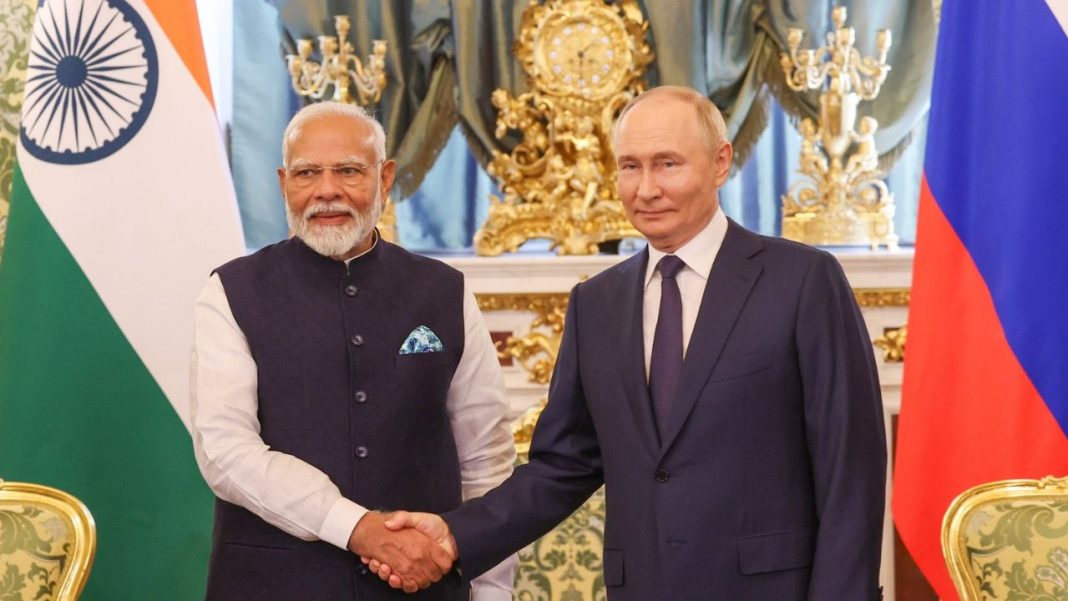

Morning air hung cool around Hyderabad House as cameras clicked, shoes scuffed marble, and aides whispered last-minute notes. The 23rd India–Russia Summit arrived with familiar protocol and a tighter clock. India–Russia Annual Summit headlines filled feeds. Trade, defence, energy, and calm messaging took center stage. That’s how it looked. for Current News.
What Is the India–Russia Annual Summit? Understanding Its Strategic Importance
This annual format sits at the top of the India–Russia engagement ladder. Leaders meet, review deliverables, set the next run of targets. It has survived policy shifts, oil shocks, and market moods. The design is practical. One table, two principals, fewer excuses. Sometimes that is enough.
The summit grew out of long security ties and dependable energy flows. Rail corridors, shipping routes, space cooperation, education exchanges, all get parked here for inspection. The frame is old school. Tight schedules, clear communiqués, a short list of signatures. Not flashy, still sturdy.
Key Highlights of the 23rd India–Russia Summit in 2025
Security consultations stayed at the front. Energy supply stability followed, loud but measured. Trade settlement systems drew unusual attention, thanks to banks fretting about risk. Industry bodies pushed for faster certification of pharma and agri products. Officials nodded. Then asked for checklists.
Another visible thread. Connectivity. North-South routes, port handling, and a practical question about insurance costs in choppy waters. The mood in the room, by most accounts, stayed calm. Small smiles, careful phrasing, tea cooling a bit too fast. That’s how we see it anyway.
Full Agenda: Defence, Energy, Trade and Geopolitical Discussions
Defence
- Service support for legacy platforms, spare parts timelines, joint work on maintainability.
- Talks on air defence coverage, maritime surveillance, and flight safety training.
- Industry-to-industry repairs inside India to cut downtime.
Energy
- Long-term crude supply windows and grade flexibility.
- Payment security, shipping availability, and seasonal pricing.
- Civil nuclear projects, fuel cycle planning, workforce skilling.
Trade
- Faster product testing, labels, and port clearances.
- Food, pharma, machinery, and light engineering targets.
- Settlement rails designed around predictability, not novelty.
Geopolitics
- Regional briefings, conflict risks, supply lines, and basic consular safety.
- Coordination inside BRICS-plus and SCO calendars.
- Sometimes the simple agenda items take the most time.
Read More: Putin’s Alaska Summit Ends Without Ukraine Ceasefire as Trump Delivers Optics, Not Outcomes
Comparison at a Glance: India–Russia Cooperation Areas
| Area | Current Focus | Practical Outcome | Near-Term Need |
| Defence sustainment | Spares, repairs, training | Higher availability rates | On-ground vendor hubs |
| Air defence/maritime | Coverage, surveillance | Fewer operational gaps | Joint testing schedules |
| Crude oil | Grade and tenure | Stable refinery runs | Freight and insurance clarity |
| Civil nuclear | Project pacing, skills | Predictable baseload | Component timelines |
| Pharma & agri trade | Testing, labels | Faster shelf entry | Shared certification stack |
| Connectivity | Ports, rail, risk cover | Lower transit time | Consistent insurance terms |
| Education & culture | Labs, exchanges | Talent pipelines | Visa and calendar sync |
| Payments | Settlement rails | Lower friction | Clear compliance notes |
That table reads like shop-floor notes, which is exactly the point.
Major Agreements and MoUs Expected at the 23rd Summit
Officials prepared MoUs on technical standards, training programs, and logistics cooperation. A framework on energy flows looked likely, along with project-specific annexures that usually sit behind closed doors. Defence side arrangements focused on availability rates and transparent timelines. Nothing dramatic, just the kind that keeps fleets running.
Trade facilitation documents aimed at fewer repeat inspections, shared digital certificates, and a pilot for quicker dispute resolution. Education desks pushed for joint labs and visiting faculty lists, small but effective. Culture folks, as usual, brought touring exhibits and film weeks. Feels routine, still helpful.
Impact on India’s Economy, Defence, and Energy Security
A predictable oil line cushions transport costs and retail fuel math. Airlines feel that first, then farms, then freight firms. Defence serviceability improves when parts arrive on time and technicians train together. Fewer hangar queens, more aircraft flying. Ground crews like that sort of thing.
For the economy, exporters prefer certainty. Clear rules on packaging, shelf-life tags, and product codes cut wastage. Ports move smoother. On energy, nuclear cooperation strengthens baseload planning for states struggling with peak demand and sweaty summers. This is daily life logistics, not grand theory. Sometimes it’s the small habits that matter.
Challenges and Diplomatic Balancing Ahead of the Summit
Bank compliance teams remain cautious. Insurance pricing swings with every headline. Shipping routes keep getting rerouted, then rerouted again. Payment corridors need quiet stability, not constant patches. Businesses hate guessing games.
Diplomatically, India balances old partnerships and new forums. Capital flows and tech access sit on one side, historic defence ties on the other. The task is to talk to everyone and promise little that cannot be delivered. Sounds boring, saves pain later. Maybe they’re right.
FAQs on the 23rd India–Russia Summit
Q1. Why does the 23rd India–Russia Summit draw sustained attention across ministries and industry groups this year?
It links defence serviceability, refinery planning, and trade paperwork into one calendar slot that can unlock practical movement across sectors.
Q2. What stands out in the defence conversations besides platform purchases and big numbers on paper?
Service support, repair cycles inside India, and technician training pipelines that keep equipment flying or sailing without long pauses.
Q3. How could energy discussions shape transport costs and household budgets in the near term?
Stable crude supply and predictable freight translate into steadier pump prices, which filter into food logistics and cab meters fairly quickly.
Q4. Which trade simplifications are most likely to show up in warehouse operations by quarter end?
Shared testing formats, barcode standards, and dispute windows that do not eat weeks just to fix a simple labeling mismatch at port.
Q5. What matters most for payment settlements that businesses can actually use without late-night panic?
Clear bank notes, repeatable routes, and insurance language that does not change with every rumor hitting the screen.