
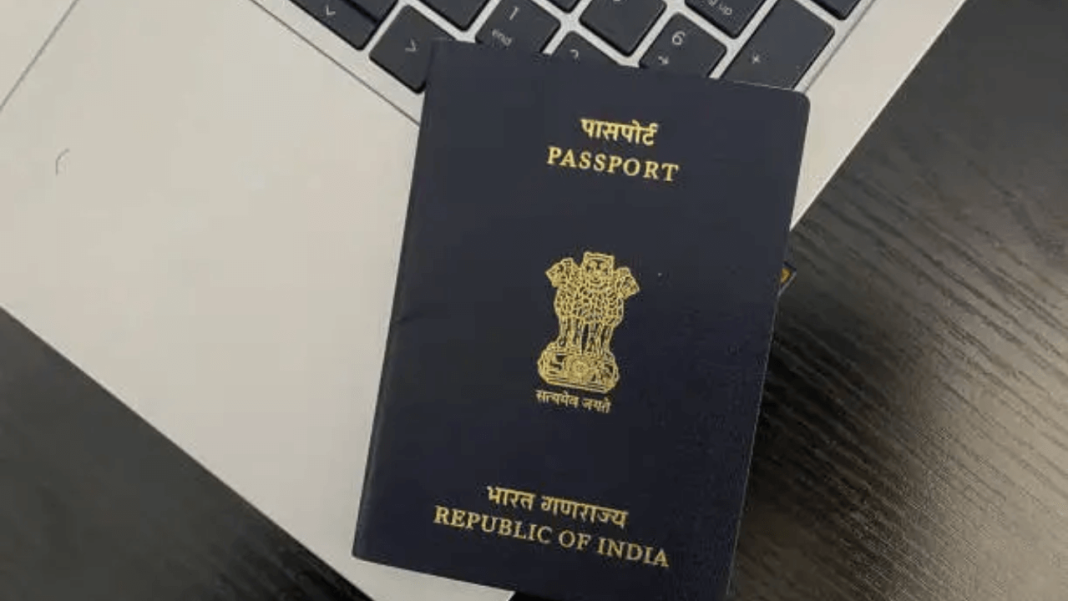

India has started issuing the new e-Passport, a chip-enabled passport meant to tighten identity checks and speed up airport processing. The topic sits on every traveller’s list right now: who can apply, how to apply, application fee, benefits, and key security upgrades, making it part of the Latest News in India for frequent and first-time flyers alike. The process stays close to the regular passport route, but the booklet carries stronger safeguards. It feels like a small change, yet it can save time in real lines.
What Is India’s New e-Passport and Why It Matters
India’s e-Passport is a passport booklet with an embedded electronic chip inside the cover. The chip stores key identity details that match the printed page and the machine-readable zone. So the booklet is not only paper any more. That’s the point.
The government’s push links to two everyday problems: fake documents and slow verification at checkpoints. With a chip, checks can happen faster and with less manual back-and-forth. The aim sounds simple, and it is, even if the tech is serious. Sometimes the simplest upgrades carry the biggest relief.
Who Is Eligible to Apply for an e-Passport in India
Eligibility follows the same rules used for regular Indian passports. Any Indian citizen who qualifies for a passport can seek an e-Passport once issuance is active at the selected centre. No separate “special category” test exists. That’s how it looks right now.
Typical eligible groups include:
- Fresh passport applicants (adult or minor)
- Renewal or re-issue applicants after expiry
- Applicants seeking replacement due to damage or loss (as per usual re-issue rules)
Availability can depend on the Passport Seva Kendra or Post Office Passport Seva Kendra handling that appointment. Some centres issue e-Passports, others may still be transitioning. It can feel a bit uneven, and that happens during rollouts.
How to Apply for an e-Passport: Step-by-Step Process
The application path stays nearly identical to the standard passport process. The main change is the final booklet type issued after processing. And yes, it still runs on appointments, documents, and verification.
Step-by-step process
- Register and log in on the Passport Seva system.
- Select the service: fresh passport, re-issue, or renewal.
- Fill the online form and double-check spellings and dates. Small errors waste days.
- Pay the fee online and book an appointment at the chosen PSK/POPSK.
- Visit the centre for photograph and biometrics capture.
- Complete police verification if required under the case category.
- Track status, then receive the passport by delivery after printing.
One practical note: appointment slots can move quickly in big cities. That’s not news, but it still surprises people.
Documents Required for the e-Passport Application
Document requirements match the regular passport checklist. The chip does not remove the need for identity and address proof. So paperwork still matters, even in 2026.
Commonly needed documents include:
- Proof of identity (government-issued ID)
- Proof of address (current residence proof)
- Proof of date of birth
- Existing passport, in renewal or re-issue cases
- Minor applicants: additional parent/guardian documents as applicable
Carrying originals plus self-attested photocopies avoids last-minute trouble at the counter. It sounds basic, yet many forget one sheet.
e-Passport Fees in India: Updated Cost Structure
The fee structure generally mirrors the standard passport fee schedule. There is no widely stated separate “chip fee” added as a special surcharge in routine cases. Fees can still vary by service type and urgency. That’s the part people notice.
Typical fee snapshot (common categories)
| Service type | Booklet | Usual validity | Fee (₹) |
| Adult fresh / re-issue | 36 pages | 10 years | 1,500 |
| Adult fresh / re-issue | 60 pages | 10 years | 2,000 |
| Minor fresh / re-issue | 36 pages | 5 years | 1,000 |
| Tatkaal add-on (where applicable) | Any | As issued | #ERROR! |
Fee rules can change under official notifications, so applicants generally confirm during payment on the portal. People often trust screenshots shared online, and that can mislead.
Top Benefits of India’s Newly Launched e-Passport
The biggest benefit is stronger verification with less human judgement involved at every step. The chip helps match the person, the booklet, and the stored data. It reduces “manual doubt” situations. And that matters at busy airports.
Key benefits seen in practice
- Faster chip reading at compatible immigration counters
- Better protection against booklet tampering and identity swaps
- Smoother checks in countries that support e-gates and chip validation
- Cleaner validation during airline checks and border scans
Not every airport lane will change overnight, but the direction is clear. Some travellers will notice it early, others later.
Key Security Upgrades in the e-Passport System
The e-Passport strengthens security mainly through chip-based authentication and cryptographic checks. The stored data is designed to be hard to copy, hard to alter, and easier to verify using authorised readers. So the fraud space gets tighter.
Security upgrades commonly linked to e-Passports
- Embedded chip storing secure identity data and biometrics reference elements
- Digital signatures used to confirm data integrity during scanning
- Stronger resistance to photo substitution and page tampering
- Better machine readability with consistent formatting standards
No document is “unbreakable”, and that is the honest truth. But the bar becomes higher, which is the real point.
How e-Passports Improve International Travel for Indians
International travel often stalls at verification points: airport check-in, immigration exit, immigration entry, and sometimes transit checks. With an e-Passport, automated readers can confirm data quickly when infrastructure supports it. That reduces time spent on manual checks. It feels like real work sometimes.
There is also a soft benefit: consistent global standards can mean fewer odd questions during document inspection. Travellers carrying older or worn-out booklets know that awkward pause at counters. A cleaner, verifiable chip can reduce that pause. Not always, but often
Frequently Asked Questions About India’s e-Passport
1) Is the e-Passport mandatory for Indian citizens applying now?
No mandate applies in routine messaging; regular passports remain valid, and issuance depends on centre availability.
2) Can an existing passport holder switch to an e-Passport before expiry?
Switching typically happens through re-issue rules; early switching may require re-issue grounds and the usual process.
3) Does the e-Passport change police verification rules in India?
Police verification rules stay tied to the applicant category and case type; the chip does not remove verification steps.
4) Will the e-Passport work at every airport e-gate abroad?
It works best where chip-reading e-gates exist; compatibility depends on the destination airport’s systems and lanes.
5) Do fees increase for the e-Passport compared to a regular passport?
Fees generally follow the standard schedule shown during payment; applicants confirm exact charges during portal checkout.