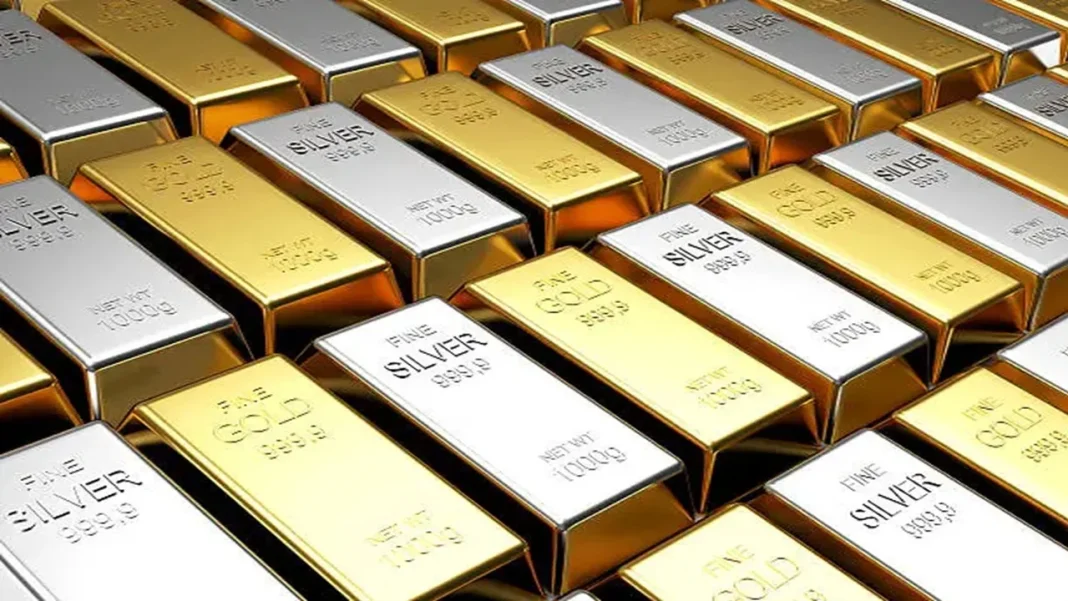

There was a time when gold and silver moved mostly inside the finance pages. Now they move like front-page editors. Every fresh jolt in global politics, every wobble in central-bank credibility, every inflation scare, and every question mark over growth seems to echo through bullion first. That is why gold and silver no longer look like old-fashioned defensive assets. They look like the market’s live anxiety meter.
The signal is hard to miss. Gold demand topped 5,000 tonnes in 2025, the highest on record, while the LBMA gold price set 53 all-time highs during that year. In January 2026, gold and silver both pushed to fresh peaks again, with spot silver hitting a record $92.23 an ounce before extending the rally later that month. Analysts in Reuters’ 2026 poll then lifted their median gold forecast to $4,746.50 an ounce, the highest annual forecast in that survey’s history.
Why Bullion Now Reacts Like A Global Stress Barometer
Gold has always had a reputation for safety. Silver has always carried a split identity, part store of value and part industrial metal. What has changed is the speed and intensity of the reaction. Investors are not only buying metals when they fear inflation. They are buying when they fear policy error, war spillover, currency weakness, debt expansion, and a wider loss of trust in official guardrails.
That broader trust issue is what makes the current cycle different. Gold is no longer just a hedge against one risk. It is a hedge against too many risks arriving together. When oil spikes, when rate-cut hopes vanish, when conflict widens, when the dollar jumps, and when bond investors start asking uneasy questions, bullion becomes a shorthand verdict on the mood of the world.
Silver, meanwhile, has become the sharper pulse. Gold often moves like a warning. Silver often moves like a warning with an amplifier attached. Because silver is tied to industrial demand as well as investor fear, it can surge when markets price both scarcity and stress. That helps explain why silver raced above $100 an ounce in January after already posting a massive 2025 rally. It was not only about panic. It was about panic colliding with structural demand.
The 2026 Panic Trade Has Not Been Linear
A true anxiety meter does not move in one neat direction. It jumps, retreats, and then jumps again. That is exactly what gold and silver have done this year.
In early April, a U.S.-Iran ceasefire briefly cooled the temperature. Gold climbed toward a three-week high as the dollar softened and traders looked again at rate-cut possibilities. Days later, renewed tensions, higher oil prices, and lower expectations for Fed easing pushed bullion lower as the dollar strengthened. That kind of move can look contradictory only if you still treat gold as a simple fear trade. It is not. It is trading the full package: conflict risk, inflation risk, dollar direction, and monetary-policy odds at the same time.
That is why the current message from metals is more subtle than “buy fear.” The message is this: investors do not feel settled. Even when one pressure point eases, another takes over. A truce can calm crude. A stronger dollar can hit gold. A fresh blockade threat can revive inflation worries. None of that sounds like confidence returning with force. It sounds like markets are moving from one form of unease to another.
Central Banks Are Quietly Telling The Same Story
Private investors are not alone in this trade. Central banks have kept feeding it. China’s central bank added gold for a seventeenth straight month in March 2026, lifting holdings to 74.38 million fine troy ounces. That steady buying came even after a sharp drop in the value of those reserves, which tells you the motive is bigger than short-term mark-to-market comfort. It is about reserve strategy.
This is where the op-ed point becomes impossible to ignore. When households buy gold, it can be a caution. When funds buy gold, it can be positioned. When central banks keep buying gold, it starts to look like a vote on the system itself. Not a collapse vote. Not a doomsday vote. But certainly not a glowing endorsement either.
What Gold And Silver Are Saying About Trust
Gold’s rise is often described as a price story. It is better read as a credibility story. The more fractured the geopolitical map looks, the more expensive neutrality becomes. Gold offers that neutrality. It has no earnings call, no treasury secretary, no election cycle, and no balance-sheet promise from a state that may change course in six months.
Silver says something slightly different. It says fear is bleeding into the production economy. Silver is used in electronics and solar panels, so when it runs hard, the market is often pricing industrial strain along with monetary unease. That gives silver a special role in 2026. It is not only measuring nerves. It is measuring whether those nerves are spilling into manufacturing expectations, supply worries, and future demand bets.
So yes, gold and silver have become the world’s anxiety meter. But more than that, they have become a scoreboard for confidence. Right now the scoreboard is not flashing calm. It is flashing hedging, doubt, and a search for assets that do not require too much faith in anyone’s promise.
Stay Ahead With Smart Market & Investment Insights
How France Manages Gold Reserve Strategy?
Explore how France ensures long-term financial stability with gold reserves.
Why Are Indians Choosing Silver Now?
Discover why investors are shifting focus from gold to silver.
Why Is Stock Market Crashing Today?
Check key reasons behind Sensex, Nifty fall and oil shock.
When Will DA DR Be Announced?
Explore the latest updates on delay affecting employees in 2026.
How To Buy Silver ETF Easily?
Discover simple steps to invest in silver ETFs using Groww app.
This Rally Is Not Just About Price, It Is About Mood
That is the final point many market notes miss. Bullion is not climbing only because investors expect a tidy macro thesis to play out. It is climbing because the global backdrop feels brittle. Record demand, record highs, rising forecast revisions, and relentless central-bank accumulation all point the same way. Gold and silver are doing what smoke alarms do. They do not tell you the full source of the problem. They tell you the room is no longer comfortable.
And until that feeling changes, the metals market will keep acting less like a niche corner of commodities and more like the world’s collective nerve ending.
FAQs
Why are gold and silver rising in 2026?
War risk, inflation worries, rate uncertainty, and central-bank buying are lifting both metals globally.
Why is silver more volatile than gold?
Silver tracks investor fear and industrial demand, so price swings usually arrive faster.
Do central banks still buy gold heavily?
Yes, reserve diversification remains active, especially among countries reducing dollar dependence.
Can gold fall even during geopolitical tension?
Yes, a stronger dollar and higher-rate fears can temporarily pressure bullion prices.
What does bullion strength usually signal?
It often signals weak confidence in policy stability, currencies, and near-term market calm.