

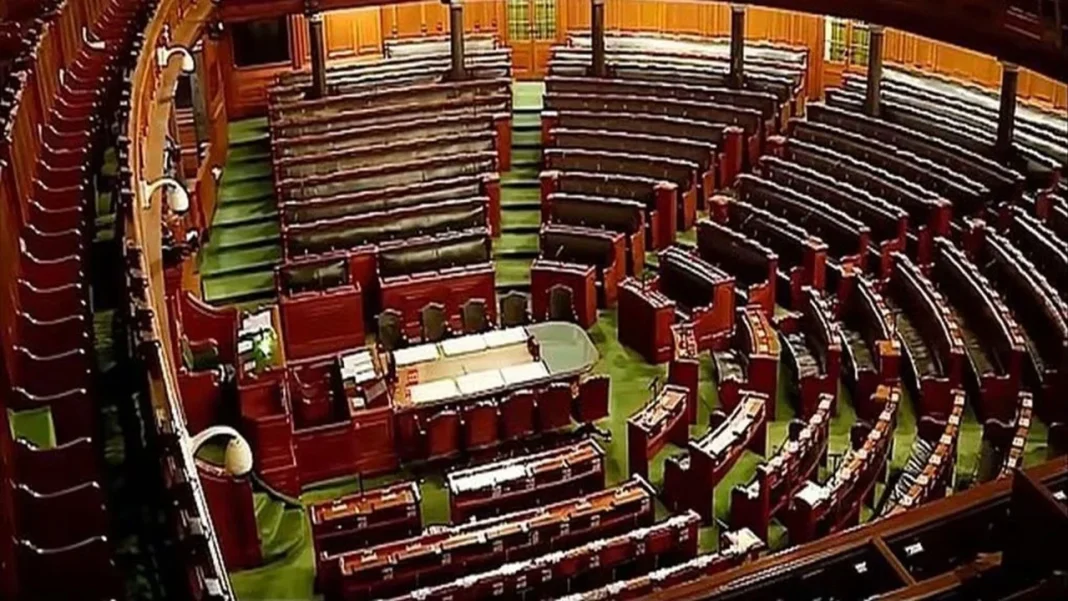

India’s next big political argument is not only about adding seats to the Lok Sabha. It is about who gains voice, when fresh census numbers are used, and why women’s reservation still cannot begin until delimitation is completed fully across the country.
The trigger is simple. The women’s reservation law was passed in 2023, but its rollout was tied to a census published after the law and a later delimitation exercise. Now, with the Union government reviving the seat-expansion and boundary-redraw process during the April 2026 special session, the issue has turned into a political storm.
Why Delimitation Is Back On The National Agenda
Delimitation means redrawing constituency boundaries so each MP represents a more balanced population. India’s last full delimitation of Lok Sabha constituencies was based on the 2001 Census, while the overall seat distribution among states has stayed frozen for decades under the constitutional framework that deferred the next interstate reset until after 2026.
In 2026, that freeze has become the centre of the fight. Reports around the current bill package say the Lok Sabha could be expanded sharply, with some reports placing the number between 816 and 850 seats. That would make room for one-third reservation for women without shrinking the existing political map overnight. As of April 16, 2026, those figures are still being reported in news coverage around the special session rather than a publicly posted final bill text.
What The Census Link Really Means
This is the part many people miss. The Nari Shakti Vandan law does not switch on automatically just because Parliament passed it in 2023. Its own design says reservation will kick in only after a census conducted after the law is published, followed by delimitation.
That is why the government’s December 2025 census approval matters so much. Officially, houselisting began in April 2026 and population enumeration is scheduled for February 2027, with snow-bound areas on a different timeline. Until that data is published and used for delimitation, women’s quota in the Lok Sabha remains a promise with a constitutional lock on it.
Why Southern States Are Pushing Back
The sharpest resistance is coming from southern leaders, and the reason is political arithmetic. If seats are redistributed mainly by population growth, states that controlled fertility earlier fear they may lose relative weight in Parliament even if their absolute seat numbers rise. Tamil Nadu, Kerala, Telangana, Karnataka, Punjab, and Odisha voices have all raised versions of that warning this week.
The Real Fear Is Relative Power
This is not only about whether a state gets more MPs on paper. It is about whether its share of national power falls. That is why critics support women’s reservation in principle but question the formula, timing, and census base behind delimitation.
Stay Updated With India’s Key Highlights 🇮🇳
How to check your voter name?
Check simple steps to find your name before polling.
What will Vijay announce in manifesto?
Discover key promises expected in the upcoming release.
What is self enumeration in census?
Explore how digital counting will work in 2027.
Why is India UAE visit important?
Understand the strategy behind the diplomatic move.
How to apply birth certificate online?
Follow easy steps to complete your application.
What Happens Next And Why It Matters Beyond 2029
The immediate question is whether the government settles for expanding seats across all states while avoiding a harsh inter-state reshuffle, or pushes a stricter population-linked formula. News reports today suggest the Centre may argue that every state will see a rise in seats. Other reports say opposition parties remain unconvinced about the formula and its political effect.
Either way, the issue now reaches beyond election maths. It touches federal balance, representation for faster-growing regions, and the delayed arrival of more women in Parliament. If the census stays on schedule and the legal steps move without fresh delay, the 2029 Lok Sabha election could become the first national contest fought on a bigger House, new boundaries, and a real women’s quota.
FAQs
1. Has women’s reservation already become law?
Yes. It became law in 2023, but implementation still depends on census publication and delimitation first.
2. Will the Lok Sabha definitely rise to 850 seats?
Not confirmed yet. News reports mention 816 to 850, but final public bill text matters.
3. Why are southern states objecting so strongly?
They fear population-based redistribution may reduce their relative influence despite better population control over decades.
4. Can women’s reservation start before the new census?
No. The law ties implementation to a post-Act census and delimitation exercise being completed.
5. Could the 2029 election be the first under new rules?
Yes, if census timelines hold and Parliament clears the required delimitation-linked legal steps in time.