
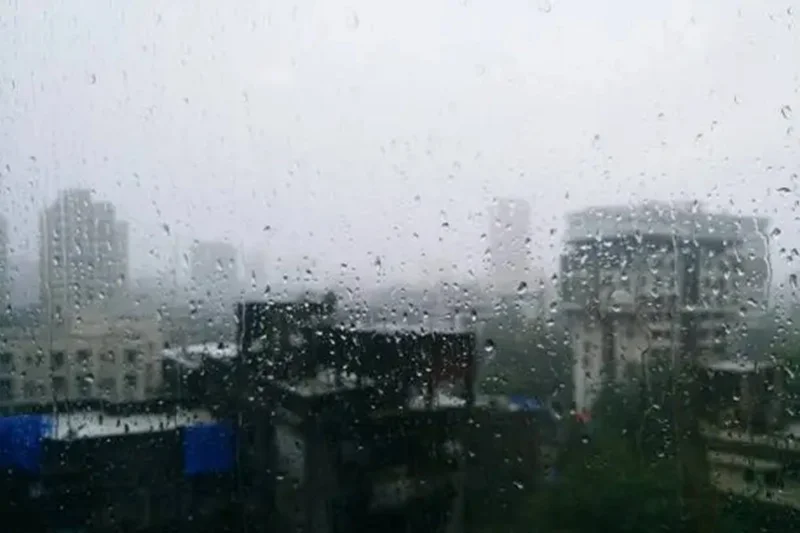

Mumbai woke up to its heaviest rain spell of the 2026 monsoon on Wednesday, June 24. Several pockets recorded more than 200 mm between 10 p.m. on June 23 and 6 a.m. on June 24. The Brihanmumbai Municipal Corporation reported average rainfall of 184 mm in the city, 154 mm in the eastern suburbs and 138 mm in the western suburbs during those eight hours.
The Mumbai Rain Alert became urgent before the morning rush as intense showers flooded low-lying roads, shut the Andheri subway and slowed movement. The India Meteorological Department warned of thunderstorms, lightning, intense to very intense rainfall and gusty winds reaching 40–60 kmph. Office-goers, railway passengers and parents should check official updates instead of forwarded messages.
Did All Of Mumbai Actually Receive More Than 200mm Rain?
The “200 mm overnight” figure is accurate for several monitoring stations, but it does not represent one uniform total across Mumbai. Multiple Automatic Weather Stations crossed 200 mm during the eight-hour spell. BMC’s zone-wise averages remained lower, though 184 mm in the city area within eight hours is still an exceptionally intense downpour.
Street conditions can differ sharply within a few kilometres. One neighbourhood may have passable roads while another faces deep water, stalled vehicles or a closed underpass. Commuters should check ward-level rainfall and conditions near their destination before starting.
The official BMC rainfall post on X gives the eight-hour city, eastern suburb and western suburb totals. BMC also shared a weather nowcast warning residents about intense spells, lightning and strong winds.
What Should Office-Goers And Road Commuters Check First?
People travelling by car, cab, bus or two-wheeler should not judge conditions only from the rain outside their window. Waterlogging can continue after rainfall weakens because drains, underpasses and busy junctions take time to clear.
The Andheri subway was closed after severe water accumulation. Reports also showed flooded roads, stranded vehicles and slow traffic in parts of Mumbai and Navi Mumbai. Anyone travelling towards Andheri, Saki Naka, Kurla, King’s Circle, Hindmata or other flood-prone stretches should check Mumbai Traffic Police and BMC updates before departure.
Five Checks Before Starting For Work
- Confirm whether the office has allowed remote work, flexible reporting or delayed attendance.
- Check live congestion across the complete route, not only roads near home.
- Avoid underpasses, waterlogged lanes and unfamiliar shortcuts during intense rainfall.
- Keep a charged phone, power bank, rain protection and emergency contacts ready.
- Never drive through standing water when its depth or road surface is unknown.
Employers should avoid forcing staff to travel when official alerts warn of intense rain. A delayed arrival is safer than becoming trapped inside a flooded vehicle or station approach road.
Are Mumbai Local Trains Running And Where Can Delays Appear?
Mumbai’s suburban rail network continued operating during the morning, but conditions were not identical across every corridor. Western Railway said services on the Churchgate–Dahanu and Harbour routes were running normally during an early update. Other reports indicated delays of around 10–15 minutes on parts of the network as rain affected tracks and station approaches.
Passengers should check Western Railway’s official X account and DRM Mumbai Central Railway before leaving home. Platform indicators and railway announcements remain important because conditions can change rapidly.
Long-distance passengers face another issue unrelated to flooding. Central Railway scheduled a 56-hour infrastructure block at Lokmanya Tilak Terminus from June 24 to June 26. Some mail and express services may be rescheduled or short-terminated. Travellers using LTT should verify their train number through official railway channels.
The Mumbai Rain Alert also affects the final kilometre. A local train may run, yet flooded roads outside the station can stop buses, autos and cabs. Check both railway status and onward transport.
Are Schools Closed And What Should Parents Verify?
As of the latest verified morning update, no citywide closure of Mumbai schools and colleges had been officially announced for June 24. Parents should not treat viral WhatsApp forwards, old screenshots or recycled posts as a holiday order.
Closures may be announced by BMC, district authorities or individual institutions depending on local conditions. Parents should check the school’s official app, verified message group, email or direct notice before sending children out. They should also confirm whether the school bus route crosses flooded subways or low-lying roads.
Parents of younger children should ask who will receive them if buses are delayed, whether classes will shift online and whether early dispersal is possible. Schools should send written communication rather than depend only on informal messages.
For weather updates, residents can use the IMD Regional Meteorological Centre Mumbai portal. BMC’s verified account remains the key source for rainfall readings, road restrictions and emergency guidance.
Heavy rain may return in intense bursts even when skies briefly brighten. Before leaving home, check the Mumbai Rain Alert, railway account, traffic route and school or workplace notice together. One verified update can prevent hours of disruption.
FAQs
1. Did Mumbai Receive 200mm Of Rain Overnight?
Several locations crossed 200 mm, while BMC recorded an average of 184 mm overnight overall.
2. Are Mumbai Local Trains Running Today?
Most suburban services were operating, though passengers should expect delays and check official railway updates.
3. Are Mumbai Schools Closed On June 24?
No citywide closure was officially confirmed during the morning update; parents must verify directly first.
4. Which Mumbai Road Was Closed After Heavy Rain?
Andheri subway was closed to vehicles after severe waterlogging made the route unsafe for commuters.
5. What Should Office-Goers Check Before Leaving?
Check rainfall alerts, train status, traffic congestion, office instructions and flooded routes before starting tavel.