

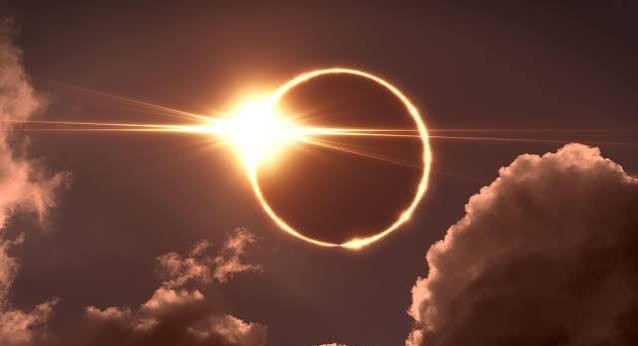

Millions of people across Europe looked skyward on August 12, 2026, as the Moon briefly blocked the Sun during one of the continent’s most anticipated astronomical events in decades. Totality swept through Greenland, western Iceland, northern Spain and a small corner of northeastern Portugal, while much of Europe saw a deep partial eclipse. For mainland Europe, it was the first total solar eclipse since 1999, turning an ordinary summer evening into a shared spectacle across cities, beaches and rural viewing sites.
What Happened During Europe’s August 12 Total Solar Eclipse?
The eclipse began over the far north before the Moon’s shadow moved across Greenland, Iceland and the North Atlantic toward the Iberian Peninsula. According to NASA’s eclipse guide, totality also crossed northern Russia before reaching Spain and northeastern Portugal. Most of Europe, parts of North America and northwestern Africa experienced a partial eclipse instead.
Near the point of greatest eclipse west of Iceland, totality lasted about two minutes and 18 seconds. Spain received the shadow late in the day, with the Sun sitting unusually low over the western horizon. The Spanish National Geographic Institute said the path crossed provincial capitals including A Coruña, Oviedo, León, Bilbao, Zaragoza and Valencia before moving toward the Mediterranean.
Across Britain, Germany, France, Italy and other countries outside the totality zone, people still watched the Sun shrink to a crescent. Parks, observatories and coastlines filled with viewers using certified eclipse glasses as the light changed noticeably before sunset.
Why Spain And Iceland Became The Main Viewing Hotspots
Spain drew some of the largest crowds because the path of totality crossed a broad section of the country during peak summer travel season. Reuters reported packed viewing sites, including Buitrago de Lozoya near Madrid, while authorities deployed about 25,000 police officers and nearly 100 aircraft amid traffic pressure and high wildfire risk. A small fire in Peñíscola was quickly contained.
The event also became a tourism story. Hotels, rural towns and viewing locations filled with eclipse chasers, families, photographers and astronomy groups. Spain’s traffic authority had prepared for as many as 1.5 million additional road movements linked to eclipse travel. Some couples even timed weddings around totality, while Queen guitarist and astrophysicist Brian May was among the high-profile visitors reported in Spain.
Iceland welcomed roughly 80,000 visitors for the event, although clouds complicated viewing around Reykjavík. Clearer breaks farther west gave some spectators a better look at the corona. Even where clouds hid the Sun, the sudden darkening remained striking.
What Made The 2026 Eclipse Such A Major Astronomy Story?
The eclipse arrived during an unusually busy skywatching period, close to the Perseid meteor shower and a morning planetary alignment. That combination helped turn August 12 into a full-day astronomy event rather than a single two-minute attraction.
The biggest talking points included:
- Mainland Europe experienced totality for the first time in 27 years.
- Spain saw its first mainland total solar eclipse since 1912.
- Maximum totality reached about two minutes and 18 seconds near Iceland.
- NASA streamed the event and supported research using aircraft and scientific balloons.
- ESA held public activities and broadcast coverage from Spain.
NASA used the eclipse to study the solar corona and changes in Earth’s atmosphere. ESA also promoted public observation and educational events. In an official eclipse-day post on X, the European Space Agency reminded followers that Greenland, Iceland, northeastern Portugal and Spain were inside the totality path, with most of Europe seeing a partial eclipse.
When Will Europe See Another Total Solar Eclipse?
Europe will not have to wait long. The next total solar eclipse visible from the region arrives on August 2, 2027, with totality crossing southern Spain before continuing through North Africa and the Arabian Peninsula. ESA’s European eclipse schedule already lists the 2027 event as Europe’s next total eclipse.
The 2027 eclipse will be even longer globally. NASA calculations put maximum totality at six minutes and 23 seconds near Egypt. In Spain, Cádiz should see around three minutes, while Ceuta could approach four minutes and 48 seconds, according to Spain’s official eclipse information.
Spain then gets another unusual event on January 26, 2028, when an annular solar eclipse produces a “ring of fire” effect instead of complete darkness. That three-year run makes the Iberian Peninsula one of the world’s standout eclipse destinations this decade.
Frequently Asked Questions
When was the 2026 total solar eclipse visible in Europe?
It crossed parts of Europe on August 12, 2026, with totality reaching Iceland and Spain.
Where was totality visible during the 2026 European eclipse?
Totality crossed Greenland, western Iceland, northern Spain, northeastern Portugal and remote areas of northern Russia.
How long did the 2026 total solar eclipse last?
Maximum totality lasted about two minutes and 18 seconds near the western coast of Iceland.
When is the next total solar eclipse visible from Europe?
The next European total solar eclipse arrives August 2, 2027, crossing southern Spain during morning.
Will Spain see another eclipse after the 2027 event?
Yes, Spain will experience an annular solar eclipse on January 26, 2028, creating a ring.
Agni Nakshatram 2026: Why South India Avoids Heat Till May 28 — Cooling Foods List
NASA Invites ISRO To Join Moon Base Programme After Bengaluru Space Talks