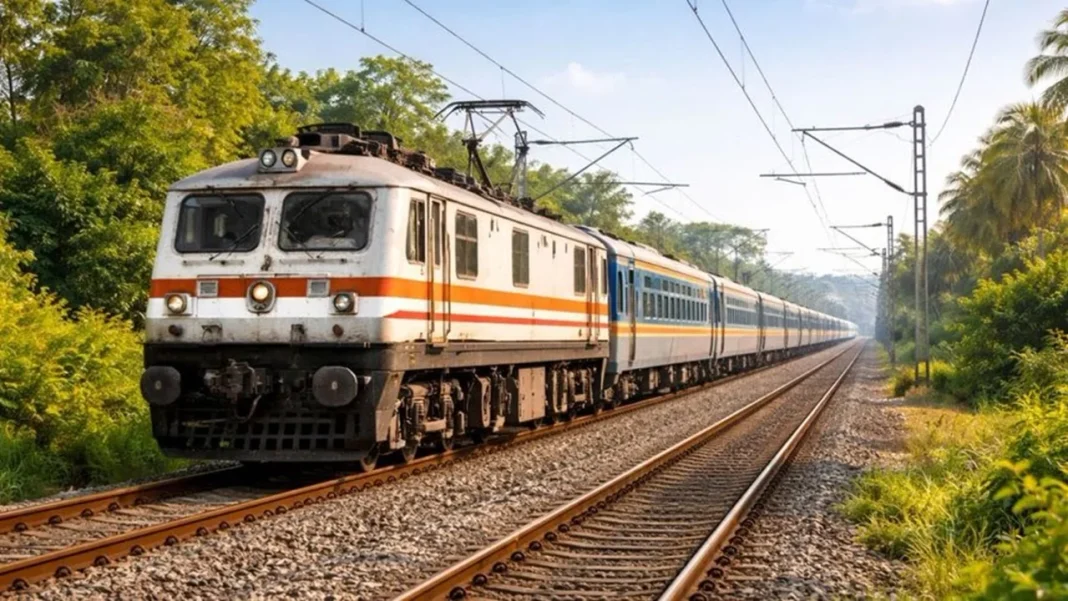
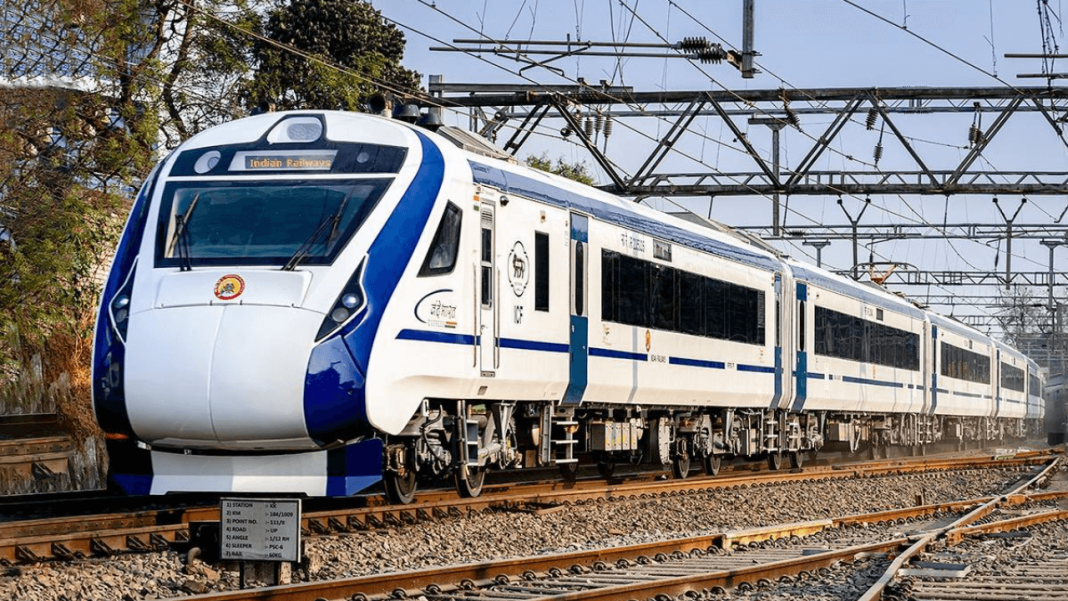

Fresh footage of a Vande Bharat train moving across the Chenab Railway Bridge at close to 100 kmph has pushed Kashmir’s railway story back into focus. The bridge is not just a dramatic landmark over the Chenab gorge. It is one of the toughest pieces of the Udhampur-Srinagar-Baramulla Rail Link, the corridor that finally gave the Kashmir Valley an all-weather railway connection with the rest of India.
The exact speed in the circulating clip has not been independently verified. However, 100 kmph is the bridge’s official design speed. An August 20 report on the Katra-Banihal speed upgrade said the Ministry of Railways approved a 100 kmph maximum permissible speed on the 111-km section on August 19, replacing lower limits used earlier.
Why Is The Nearly 100 Kmph Chenab Bridge Run Important?
A Vande Bharat crossing the world’s highest railway arch bridge near its design speed is more than a striking railway video. It shows how the Katra-Banihal mountain corridor is shifting from cautious early operations towards faster regular running.
Indian Railways designed the Chenab Bridge for 100 kmph operations. The structure stands 359 metres above the riverbed, stretches 1,315 metres and has a 120-year design life. It was engineered for severe wind and seismic conditions, according to the Press Information Bureau’s Chenab Bridge details.
The latest development follows repeated inspections and speed testing. In January 2025, the Commissioner of Railway Safety authorised the newly completed Katra-Reasi section and Katra-Banihal route at 85 kmph on the main line, although an inspection train had touched around 110 kmph during testing.
Key points from the latest development include:
- Vande Bharat is being seen crossing Chenab Bridge close to its 100 kmph design ceiling.
- The wider Katra-Banihal stretch has reportedly received a 100 kmph maximum permissible speed.
- The section includes Chenab Bridge, Anji Khad Bridge and a heavily tunnelled Himalayan alignment.
- A higher permitted speed can help punctuality and shorten journey time where track conditions allow.
- Rail becomes more useful when weather or repairs disrupt road travel on the Jammu-Srinagar highway.
How Does The Chenab Bridge Fit Into The Kashmir Rail Network?
The bridge is part of the 272-km USBRL project, dedicated to the nation in June 2025. Government data lists 36 tunnels spanning 119 km and 943 bridges across the project. Chenab Bridge and India’s first cable-stayed railway bridge at Anji are its headline engineering features.
Regular Vande Bharat services first linked Katra and Srinagar. In April 2026, the train was extended to Jammu Tawi and expanded from 8 coaches to 20 after strong demand. The Ministry of Railways’ April 2026 update said the extension strengthened direct passenger connectivity between Jammu and the Kashmir Valley.
The Ministry has also been sharing the route’s striking visuals. Its official Ministry of Railways post on X in July showed Vande Bharat moving through monsoon clouds over Chenab Bridge, giving passengers a clear look at the now-operational corridor.
What Could Faster Running Change For Passengers And Freight?
A 100 kmph ceiling does not mean the train will maintain that speed across the entire mountain route. Curves, gradients, tunnels, station approaches, signalling and local restrictions still affect actual running. Even so, a higher permissible limit gives railway controllers more room to recover delays and improve timings.
That flexibility is useful in Jammu and Kashmir. In August 2026, Northern Railway ran special trains after NH-44 was closed by heavy rain, moving around 2,200 stranded passengers. The episode showed how rail can step in when highway movement stalls.
Freight is expanding as well. In April, Railway Minister Ashwini Vaishnaw said nearly 2 crore kg of apples had already moved from Srinagar to the rest of India by rail. Cement, foodgrains, fertilisers, salt and milk were also being carried into the Valley. Railways said cement movement had helped lower prices by about ₹50 per bag.
What Comes Next For Kashmir Rail Connectivity?
The next phase is likely to focus on capacity, reliability and network expansion rather than simply completing the link. Railways has said doubling between Qazigund and Baramulla is underway, while proposed links towards Poonch-Rajouri and an extension from Baramulla to Uri are at planning or DPR stages.
For passengers, the near-100 kmph Chenab Bridge run points to a more mature mountain railway. For the region, the larger change is already visible: the same corridor now carries tourists, commuters, emergency traffic and freight through the Himalayas.
FAQs
1: How High Is The Chenab Railway Bridge?
It stands 359 metres above the Chenab riverbed, the world’s highest railway arch bridge today.
2: What Is The Chenab Bridge’s Design Speed?
Indian Railways designed the bridge for train operations at a maximum speed of 100 kmph.
3: When Did Vande Bharat Services Reach Jammu?
The extended Jammu-Srinagar Vande Bharat service was flagged off on April 30, 2026, for travel.
4: Why Is The Katra-Banihal Section Important?
It completes the difficult Himalayan rail link connecting Jammu with the Kashmir Valley by train.
5: Will Trains Run At 100 Kmph Everywhere?
No. Curves, tunnels, stations, gradients and operational restrictions can require lower speeds on specific stretches.
More Railway News
New Railway Rule 2026: Why Your Old Disability Certificate Won’t Work For Train Travel Anymore