
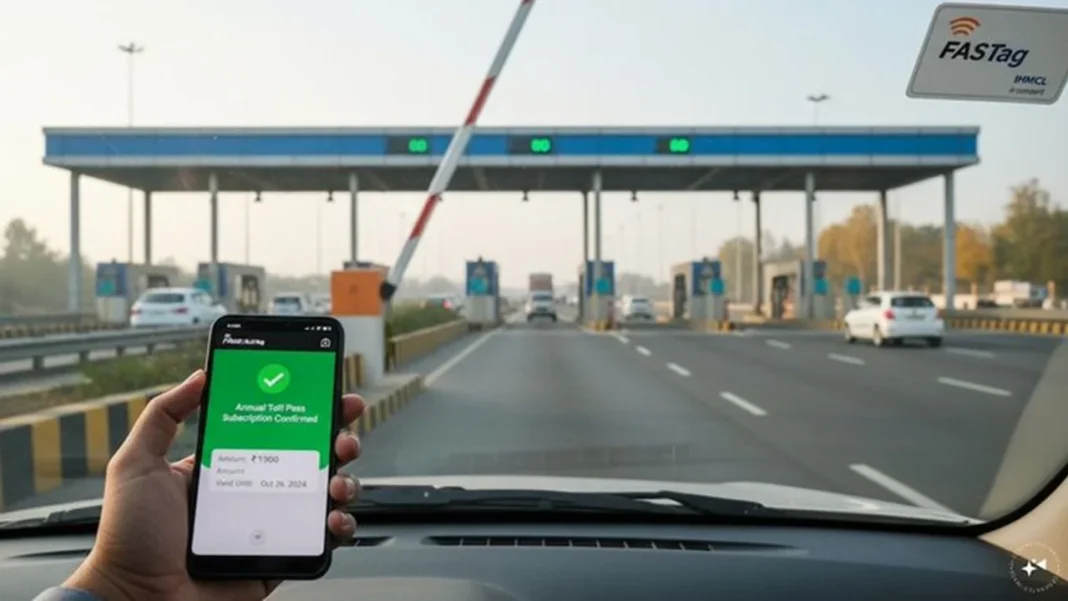

Living near a toll plaza could bring a lower annual bill from November 1, 2026. The Centre’s new FASTag local pass rules cover eligible non-commercial vehicle owners residing within 20 km of a National Highway fee plaza.
The ₹1,500 price comes with conditions, including the plaza’s location. This is a local concession for one specified plaza, so drivers planning highway journeys through several toll gates need to distinguish it from NHAI’s separate national annual pass.
Key Highlights
- The local scheme starts on November 1, 2026.
- Annual charges are ₹1,500 or ₹3,000.
- A valid, functional FASTag is compulsory.
- Plaza applications precede the December app rollout.
Who Qualifies Under The FASTag Local Pass Rules?
The vehicle owner must live within 20 km of the relevant National Highway fee plaza. The October 26 amendment also requires a vehicle registered for non-commercial purposes and a valid, functional FASTag.
The eligibility questions therefore concern both the owner and the vehicle:
- Does the owner’s residence fall within the specified distance?
- Does the vehicle’s registration show non-commercial use?
- Does its FASTag function correctly?
A family’s private vehicle and a commercially registered vehicle do not become interchangeable simply because both travel from the same neighbourhood. Registration status remains part of the eligibility test.
₹1,500 Or ₹3,000: Which Annual Charge Applies?
The toll plaza’s position relative to municipal or local town limits determines the local pass price. The owner’s urban or rural address does not set the tariff.
| Pass | Annual Price | Coverage |
| Local pass: plaza outside municipal or local town limits | ₹1,500 | The specified eligible plaza |
| Local pass: plaza within those limits | ₹3,000 | The specified eligible plaza |
| Separate national annual pass, FY 2026–27 | ₹3,075 | Eligible NH/expressway plazas; 200 crossings or one year, whichever comes first |
The local charges follow the amended rules. NHAI’s March 15 announcement confirms the ₹3,075 national pass fee from April 1, 2026. Its wider coverage explains why a price comparison alone can mislead.
For budgeting, ₹1,500 spread across 12 months equals ₹125 a month; ₹3,000 equals ₹250. Those figures are arithmetic averages, not monthly instalments or the official monthly-pass tariff.
Someone using one nearby plaza throughout the year should compare its local options. A driver crossing several plazas on occasional long journeys needs to compare route coverage as well as cost.
Where The Local Concession Does Not Apply
A nearby address does not settle the application. The rules exclude two situations:
- National Highways or expressways operating a closed user-fee collection system.
- Locations where a service road or alternative road is available for the commuter’s use.
Do not pay on the assumption that every National Highway toll gate participates. Ask the specific plaza to confirm its eligibility and explain any exclusion it applies.
The local pass also stays with the specified plaza. If your daily route crosses two toll gates, approval at the first does not establish coverage at the second; calculate the remaining toll expense before deciding what the pass saves.
How To Apply And What To Confirm Before Paying
The Ministry of Road Transport and Highways’ October 27 announcement gives two launch dates. Eligible toll plazas will offer the Annual Local Pass from November 1, while Rajmargyatra app availability starts on December 1, 2026.
For the first month, approach the eligible plaza. Ask staff to confirm the annual charge and the residence and vehicle records they require before making payment.
Keep the local scheme separate from the existing national-pass purchase screen. Seeing ₹3,075 online does not establish that the ₹1,500 local option has disappeared; the two products cover different travel needs.
Take your usual route, vehicle registration details, and current toll spending into that discussion. Confirm the named plaza and pass type before paying.
FAQs
Can I keep using the existing monthly pass?
Yes. The amended rule allows eligible owners to choose either the existing monthly pass or the concessional local pass. Compare the quoted monthly charge with your expected usage.
Can a taxi owner get this local pass?
The local concession requires registration for non-commercial purposes. A commercially registered taxi does not qualify merely because its owner lives nearby or uses the plaza for personal journeys.
Will the annual price stay the same permanently?
The rules allow the Central Government to revise these rates annually, with changes taking effect on April 1. The announced amount therefore does not guarantee future renewal prices.
Does the local pass have a 200-crossing limit?
The ministry’s local-pass announcement does not specify a 200-crossing cap. That limit applies to the separate national annual pass, so confirm the local operating terms before purchase.
Is Aadhaar compulsory for the application?
The October 27 ministry release does not publish a mandatory document checklist. Ask the eligible plaza which residence and ownership documents it accepts before submitting your application.
More Road Rules And Traffic Updates You Should Know!
1. Can Local Passes Cover Unlimited Trips?
Check out NHAI’s local pass rules for unlimited monthly toll crossings.
2. What Happens To Unpaid Traffic Challans?
Find out what happens when traffic fines remain unpaid in India.
3. Why Does Delhi Require Appeal Deposits?
See Delhi’s 50% deposit rule for challenging traffic challans in court.
4. What Happened On Karnataka’s NH52 Highway?
Uncover details of the chemical tanker explosion on NH52 in Karnataka.
5. How Can You Challenge Wrong Challans?
Check out how to file an online grievance against an incorrect traffic challan.