

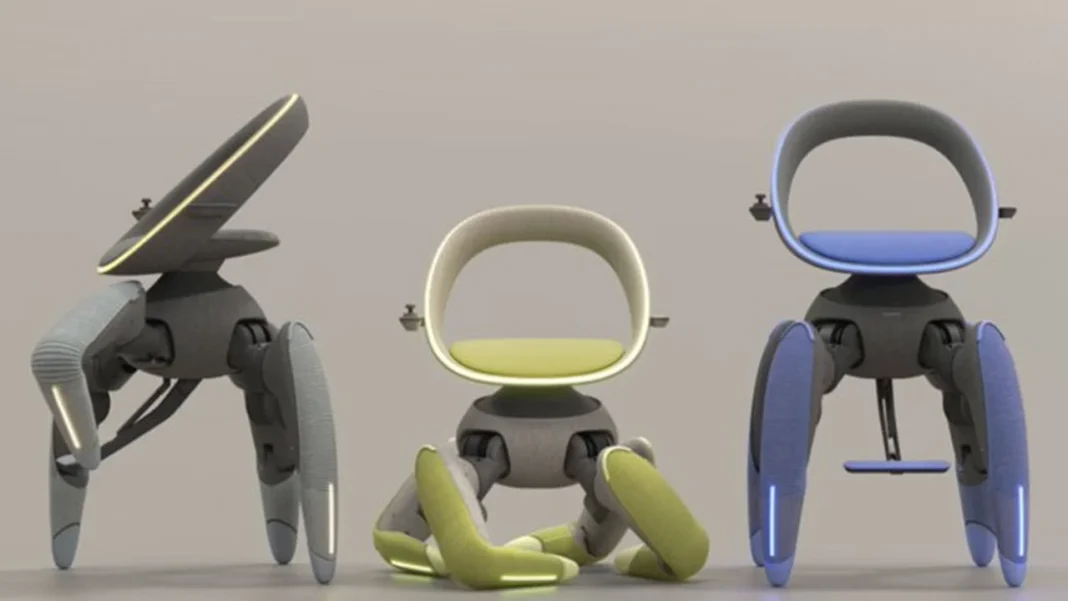

Toyota’s wheel-free mobility idea has earned one of design’s biggest honours. The Toyota Walk Me chair, a four-legged robotic mobility concept, has won the Red Dot: Luminary 2026, the highest distinction in the Red Dot Award: Design Concept. The award recognises its aim to help people with limited mobility deal with barriers such as stairs while making assistive technology feel more welcoming.
A chair that walks instead of rolling
Unlike a standard wheelchair, Walk Me uses four articulated legs rather than wheels. Toyota says the concept is designed to move indoors and outdoors without being stopped by steps or uneven ground. Its legs can adjust to obstacles and help it travel through tight spaces. The idea is to let a person remain seated while reaching areas that can be difficult to access with wheeled mobility aids.
Toyota presented Walk Me as a prototype at the Japan Mobility Show 2025 in Tokyo, held from October 30 to November 9. It is part of the company’s “me” mobility series, created around the goal of helping more people enjoy freedom of movement regardless of age or disability. Toyota’s own coverage says the system learned movement patterns through about 10,000 motion simulations.
Designed for dignity as well as movement
Walk Me has a rounded seat and soft, furniture-like surfaces, with bright green details on its legs. The design is meant to feel approachable rather than like hospital equipment. Red Dot described it as combining AI robotics with a soft, furniture-inspired form to support independence, comfort and interaction at eye level.
That focus is central to the award. The Red Dot: Luminary is chosen from the Red Dot: Best of the Best concepts and is the highest recognition in the Design Concept competition. Red Dot said Walk Me stood out because it looked beyond transportation and imagined a companion for everyday life. The trophy was presented to Toyota design lead Takashi Nishimura and designer Misako Kawata.
What happens next?
The award is a milestone, but it does not mean the chair is ready to buy. Toyota described Walk Me as a prototype when it was introduced in 2025, and the official material reviewed for this report gives no retail price or launch date. More development would be needed before it could become a product available to users.
Walk Me’s promise is simple: a staircase should not automatically end a journey. By replacing wheels with robotic legs and pairing them with a softer design, Toyota is offering another way to think about accessible mobility. The next test is whether this award-winning idea can move from concept displays into everyday use.
Discover Breakthroughs in AI, Electric Vehicles and Future Technology!
1. What Makes Toyota’s New eBella Different?
Check out Toyota’s Urban Cruiser eBella EV and its upcoming electric mobility features.
2. How Do Drishti Shruti Sparsh Work?
Discover how Drishti, Shruti and Sparsh are shaping developments in physical AI technology.
3. Which AI Career Has Better Prospects?
Find out how AI engineers and AI implementation specialists compare in India’s job market.
4. What Is Karnataka’s AI University Plan?
Explore Karnataka’s plans for an AI university in Bengaluru and its potential educational impact.
5. What’s New in Gemini 3.7 Flash?
Uncover the latest reported features of Google’s Gemini 3.7 Flash AI model.