


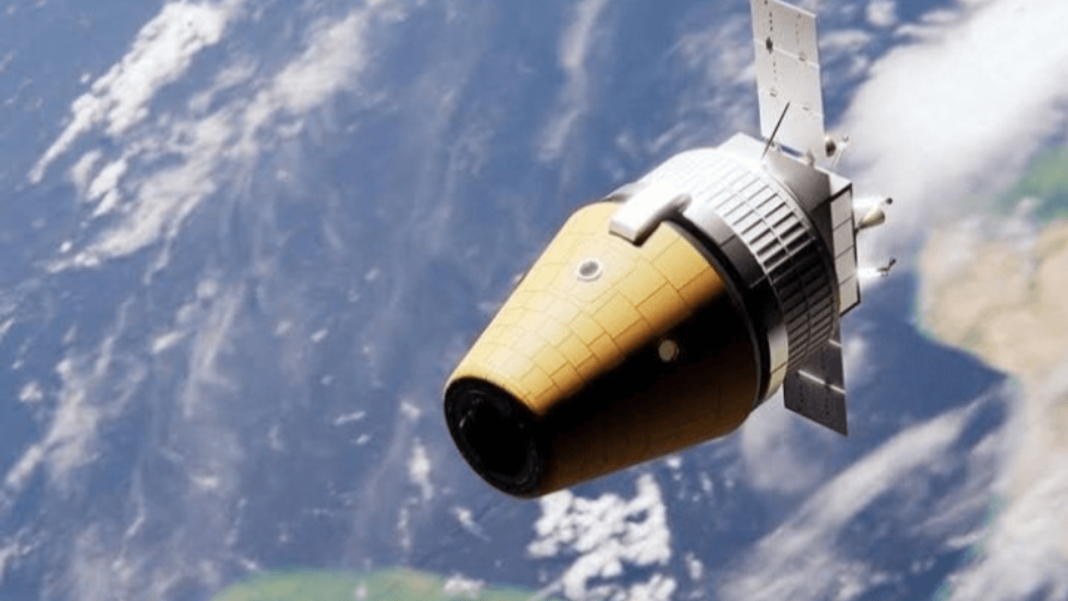

Human spaceflight gets judged on the boring parts. The parts that do not look heroic on a poster. A capsule must slow down, stay stable, open the right parachutes in the right order, and land without drama. That is the bar. This focus on meticulous planning is highlighted in the Latest News in India, showing how even small recovery-system updates carry critical importance.
So when ISRO reports another round of recovery-system work, it matters beyond a single test note. This is the layer that protects lives. And for India’s first crewed mission, reliability has to look almost routine before astronauts ever climb in.
A small side note that people forget: a safe landing does not begin at splashdown. It begins months earlier, on dusty runways and test ranges, with engineers checking every seam, every sensor line, every deployment timing.
ISRO’s Latest Breakthrough in the Gaganyaan Programme
Recent activity has centred on the parachute and descent system linked to the Gaganyaan crew module. The focus has been on sequences that start with smaller parachutes used to stabilise the module, followed by the main canopies that take over and slow the fall.
These tests are not “nice to have”. They deal with messy real-life conditions: changing wind, slight delays, uneven loads, and the plain truth that materials behave differently under stress. The aim is simple to say and tough to execute: the system must work the same way again and again.
Engineers involved in recovery work often talk like mechanics, not poets. That is a good sign. The language stays grounded: deployment timing, stability, load margins, separation events, and safe descent rate. That kind of talk usually means real data is flowing into design decisions.
How These Tests Strengthen India’s Human Spaceflight Safety
Safety in human spaceflight is a chain. A strong launch matters, but the last minutes also matter, sometimes more. Re-entry ends with heat, noise, shaking panels, and then a rapid shift to calm air and parachute drag. Any weak link shows up right there.
The recent test focus supports three safety goals.
First, stability. A capsule that tumbles can complicate parachute opening. Tiny rotations become big ones in seconds. Getting stability right keeps the sequence predictable.
Second, redundancy and order. Multiple parachutes exist for a reason. A well-tested sequence means one event leads cleanly to the next, even if one part takes a fraction longer than planned.
Third, recovery readiness. It sounds plain, but it is real. After landing, teams must reach the capsule quickly and safely. Training, equipment, and clear procedures keep the post-landing phase calm. Calm is the point.
It feels strange sometimes that the public loves launch clips, but not many people watch a parachute test video twice. Yet those videos are where trust gets built.
Current Progress of the Gaganyaan Human Spaceflight Mission
The Gaganyaan programme is running as a set of parallel tracks: vehicle readiness, crew module maturity, recovery systems, mission operations, and astronaut training. Progress shows up as integration work, test campaigns, and small upgrades that remove risk step by step.
A practical way to view status is to look at “what must be proven” rather than “what has been announced”. The major proof areas remain consistent: safe ascent, safe abort capability, stable re-entry, and safe landing.
Below is a simple snapshot of the visible work areas.
| Work Area | What Progress Looks Like |
| Gaganyaan crew module | Structure checks, avionics validation, environmental control readiness |
| Recovery systems | Gaganyaan parachute tests, deployment sequencing, landing procedures |
| Launch vehicle (HLVM3) | Human-rating checks, reliability upgrades, mission integration |
| ISRO human-rated systems | Fault handling, escape readiness, safety reviews, operational drills |
The headline numbers can change, and officials may phrase progress differently across briefings. Still, the direction is clear. Testing is shifting toward the “prove it under stress” phase, which is exactly where a human spaceflight programme should be.
Training and Preparation of India’s Astronaut Crew
ISRO astronaut training is not a single course. It is a long routine built around repetition and fatigue management. That may sound unglamorous, but it is how errors get reduced.
Training involves systems knowledge, emergency response, physical conditioning, and long sessions in simulators. The point is familiarity. In a real flight, small alarms can arrive fast and loud. Astronauts must react without panic and without guesswork.
There is also the human side that rarely gets said aloud. Training days can feel like long office days, just with more pressure. The same switch gets practiced a hundred times. And then practiced again. That repetition creates muscle memory. It also weeds out weak procedures early, while there is time to fix them.
Upcoming Tests and Expected Mission Timeline
The next stretch is likely to keep the same pattern: more integrated testing, more checks of abort and recovery sequences, and more mission simulations that include ground teams along with hardware.
Uncrewed test flights remain an expected step before a crewed mission. Those flights help validate behaviour in real flight conditions, not only in test rigs. Safety systems, especially abort systems, also need proof under realistic loads.
The HLVM3 track remains important here. Human-rating a launch vehicle is a tough standard, and it leans heavily on process discipline. It is paperwork, yes. It is also engineering truth recorded carefully. No shortcuts.
And a small complaint that many engineers quietly share: public pressure for dates can push attention toward calendars instead of test results. Better to keep attention on demonstrated readiness. That is how setbacks get avoided.
How Gaganyaan Shapes India’s Future in Space Exploration
Gaganyaan is more than a single mission badge. The programme builds capability that stays useful: human-rated design habits, reliable recovery systems, trained operations teams, and industry partnerships that learn to deliver to stricter standards.
It also changes how future projects get planned. Once a country runs a crewed programme, the tolerance for vague testing drops. The habit becomes “show the data, repeat the test, lock the process.” That habit has value across launch systems and satellites too.
Gaganyaan also strengthens India’s position in cooperative missions, where reliability and safety culture matter as much as ambition. Space work is unforgiving. Partners notice the details.
Frequently Asked Questions
1) What does “Gaganyaan human spaceflight” mean in practical terms for India’s space programme?
It refers to sending astronauts in a crew module to orbit and returning safely, with human-rated systems proven by tests.
2) What are Gaganyaan parachute tests checking during recent trials?
They check stability, deployment timing, canopy performance, and safe descent behaviour under stress conditions that mimic real re-entry.
3) Why is HLVM3 repeatedly mentioned in ISRO Gaganyaan progress updates?
HLVM3 is the launch vehicle planned for the mission, and human-rating demands extra checks on reliability and safety systems.
4) What does ISRO astronaut training typically include ahead of a crewed mission?
Training includes simulators, emergency procedures, physical conditioning, spacecraft systems practice, and long drills with mission control teams.
5) How do Gaganyaan test updates affect expected timelines for the ISRO human space mission?
Test results guide scheduling, since each phase depends on verified performance, not announcements, and readiness can shift after reviews