


Operation Jagriti Phase-5 arrives in a city that runs on movement, reflecting wider concerns highlighted in India Current News. Students change buses. Office-goers push through crossings. Markets stay noisy till late evening. In that daily rush, small risks grow. Catcalling, stalking, online threats, and quiet intimidation usually begin as “minor” incidents. People call them small, then regret it later. Phase-5 signals that the police want earlier intervention, not late paperwork, and that part matters.
What Is Operation Jagriti? A Quick Background
Operation Jagriti is positioned as a continuing public campaign, run in phases, with focus on women and girls. It leans on awareness sessions, visible policing, and direct contact with communities. The phrase heard often in these drives is simple: report early. Many families still hesitate, and that hesitation gives offenders room.
Jagriti tries to cut that gap by telling students, parents, shopkeepers, and commuters what counts as harassment, what evidence helps, and which numbers actually work during panic moments.
Key Objectives of Operation Jagriti Phase-5
Phase-5 sets a practical set of targets.
First, push safety information into everyday spaces like schools, coaching centres, colleges, markets, and transport points.
Second, explain women’s rights and complaint steps in plain language, not legal jargon.
Third, strengthen confidence around reporting, so victims do not carry the whole burden alone.
Fourth, bring cyber safety into the same conversation, because many cases now begin with a message request and end with blackmail threats.
That chain needs breaking early.
Major Activities Conducted Under Operation Jagriti Phase-5
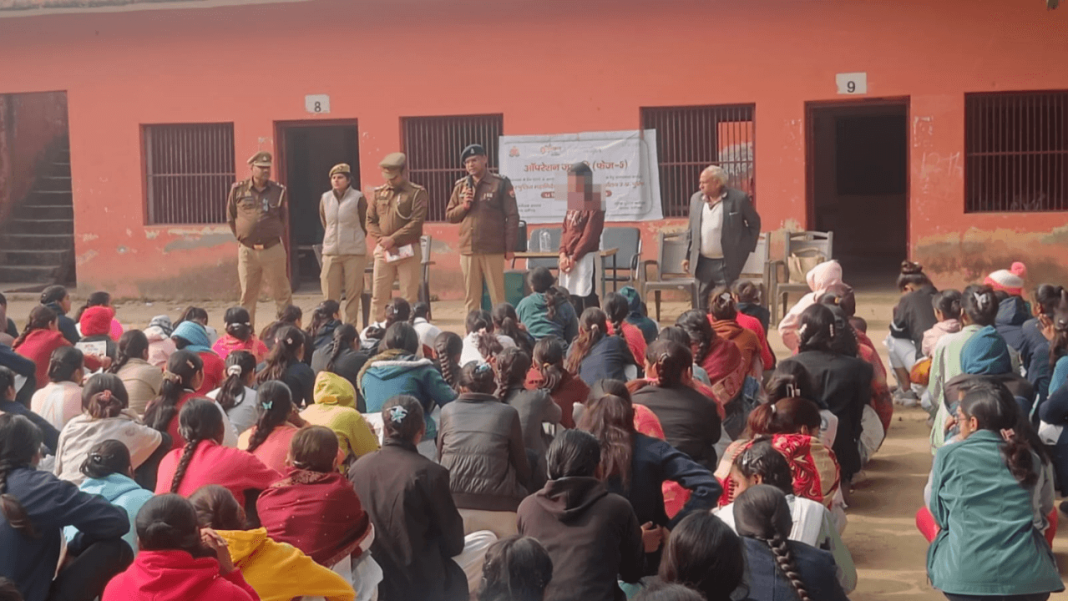
On ground, the campaign runs through short sessions and repeated visibility. Police teams visit institutions, speak to groups, and share helpline numbers. They also keep an eye on common trouble spots: busy crossings, roadside stalls near schools, and stretches where lighting drops. And yes, it can sound routine, but routine is the point. Repetition changes habits.
A common example seen during such drives is the coaching-centre crowd at closing time. Parents wait, scooters line up, vendors shout. It is easy for a stranger to linger there and “accidentally” brush past students. Officers addressing that crowd, even for ten minutes, changes the mood. People start noticing faces. Teachers start taking names. Small friction, but useful.
Role of Agra Police in Implementing Phase-5
Agra Police carry the main responsibility for turning announcements into action. The work involves planning routes, mapping sensitive points, assigning staff for outreach, and keeping response teams ready. Senior officers typically monitor coverage and ensure the drive does not stay stuck on paper. Local police stations are expected to support with quick response, verification, and follow-up, because awareness without follow-up turns into noise.
Feels strange sometimes, but citizens judge policing in seconds. A call picked up late, a complaint dismissed casually, an officer speaking sharply. That is enough to kill trust. Phase-5, if done right, also pushes internal discipline: quicker acknowledgement, better behaviour at desks, and clearer updates to complainants.
Focus on Cybercrime Awareness and Online Safety
Cybercrime messaging is a central part of Phase-5. Many girls in Agra use phones for classes, notes, and social contact. The same phone becomes a trap when someone starts screenshotting chats, sending fake profiles, or threatening to circulate photos. The campaign’s cyber angle needs to stay practical: privacy settings, avoiding unknown links, not sharing OTPs, and saving evidence before blocking.
A small, real-world situation explains it best. A student gets a “friend request” using a classmate’s photo. The chat turns friendly, then personal, then demanding. By the time adults hear, the student is scared and silent. In these cases, early reporting is the difference between a manageable complaint and a drawn-out mess.
Impact Expected From Phase-5
The expected outcomes are measurable in everyday terms. More reporting at earlier stages. Faster police attention at hot spots. Fewer repeated incidents in the same area because offenders feel watched. Also, stronger coordination between schools, families, and local police. Phase-5 also aims to reduce the social pressure that keeps families quiet. That silence is not dignity, it is just exhaustion.
No one should pretend a campaign “fixes” safety overnight. It doesn’t. But it can tighten the system, and tighten it fast, if complaint handling improves and outreach stays consistent.
How Operation Jagriti Supports Mission Shakti Goals
Mission Shakti has a wider state-level frame for women’s safety and support. Operation Jagriti Phase-5 sits within that direction by pushing two things: awareness and access. Awareness tells people what is wrong and what to do. Access makes sure help is reachable when panic hits. This alignment matters because local drives often fade without state-level continuity. With Mission Shakti as the umbrella, Phase-5 can keep common messaging across districts and keep resources connected.
Public Response and Community Participation
Public response often shows up in small comments, not big speeches. Parents ask, “Which number works at night?” Students ask, “Will the complaint reach home?” Shopkeepers ask, “What if the offender is local?” These questions are blunt, sometimes uncomfortable. Good. They are real.
Community participation also decides outcomes. Schools can set clear dispersal rules. Coaching centres can add basic guard support and CCTV checks. Residents can keep lights fixed outside gates, instead of waiting months. People complain about these “extra steps”, then quietly admit they help. That’s how it goes.
Key Helplines and Safety Resources Shared During the Campaign
The campaign typically circulates helplines that connect women and families to immediate support. Keeping numbers visible on phones and written near study tables is a simple hack. It saves time.
| Helpline | Purpose |
| 1090 | Women Power Line support and complaint assistance |
| 181 | Women Helpline for emergency support and guidance |
| 112 | Emergency response number |
| 1930 | Cybercrime financial fraud reporting support |
| 1098 | Childline support for children in distress |
Operation Jagriti Phase-5 in Agra is being pitched as steady, street-level work: awareness talks, visible patrolling, and sharper cyber safety messaging. The success will depend on daily follow-through, not posters. When a complaint gets recorded calmly, when a call is answered quickly, when a beat officer listens without judgement, the campaign starts feeling real. People notice these details. And for women who move through crowded lanes and late buses, those details decide comfort, timing, and basic freedom. That’s the real test, week after week.
FAQs
Q1. What is the main goal of Operation Jagriti Phase-5 in Agra?
The campaign targets women’s safety and women’s empowerment through awareness, reporting support, and local policing presence.
Q2. How does Operation Jagriti Phase-5 connect with Mission Shakti?
It supports Mission Shakti goals by spreading rights awareness, promoting helpline access, and improving response at community level.
Q3. What kind of cyber issues are discussed during Phase-5 outreach sessions?
Sessions typically cover impersonation, blackmail threats, risky links, OTP fraud, evidence saving, and quick reporting steps.
Q4. Which places usually get more attention during such women safety drives in Agra?
Areas near schools, coaching centres, markets, bus stops, and poorly lit lanes often get higher visibility and monitoring.
Q5. What should families or students do first if harassment or online threats begin?
Reporting early, saving proof, and contacting the relevant helpline helps faster action and reduces escalation risks.