
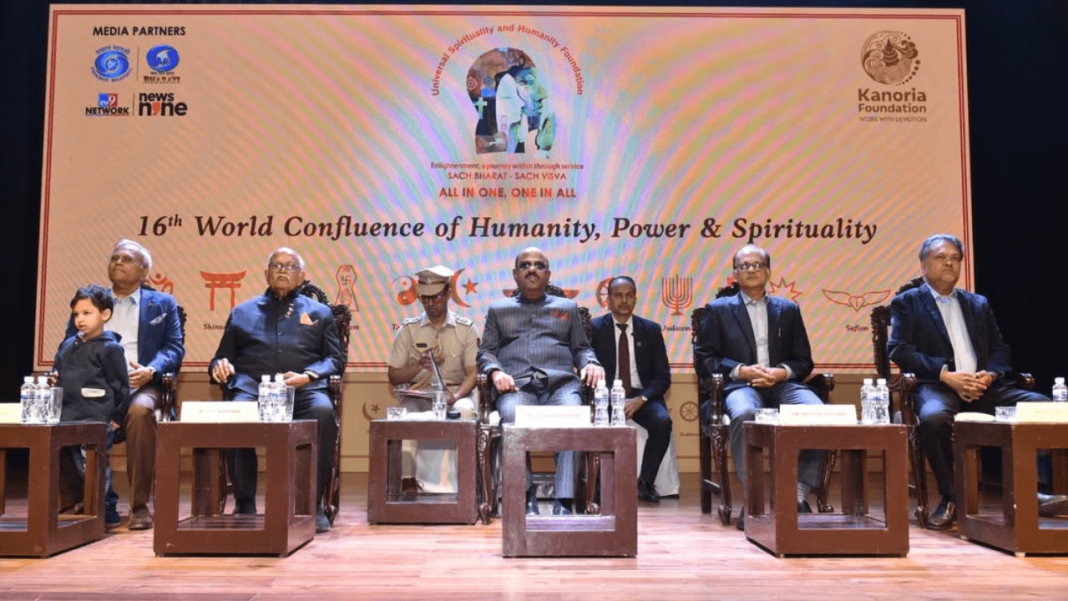

Kolkata hosted the opening day of the World Confluence on Spirituality with a steady turnout and a formal programme, a development noted under India Current News. Organisers described the gathering as a meeting point for spiritual thought and public life, with sessions meant for citizens as much as invited guests. The crowd had a familiar city mix. Seniors in shawls, young volunteers checking passes, and visitors pausing near the entry table to scan the day’s agenda. It felt like a serious event, yet not stiff.
Significance of the Governor’s Presence as Chief Guest
The presence of the Governor as chief guest gave the event stronger public visibility and also a certain discipline in tone. Security checks moved faster. Protocol teams stayed alert. A few delegates joked softly about the schedule staying “on the dot” once a Raj Bhavan team arrives. The Governor’s attendance also signalled that discussions on spirituality are being placed next to civic life, education, and social conduct, not locked inside private spaces.
Overview of the World Confluence on Spirituality
The World Confluence on Spirituality has been positioned as a recurring forum that invites voices across faiths and professions. It typically frames spirituality as a daily practice linked with behaviour, restraint, and responsibility. Not everyone arrives with the same idea of prayer or devotion, and that is part of its design.
The organisers keep the language broad, focusing on shared values, public ethics, service, and personal discipline. Some attendees call it an interfaith platform. Others call it a moral leadership meet. Both descriptions sit fine.
Key Highlights From the Opening Day in Kolkata
The opening day in Kolkata followed a familiar rhythm, welcome address, lamp-lighting, greetings, and then the first set of talks. The hall stayed quiet during speeches, broken only by short applause and the occasional phone vibration that ushers tried to control. Outside, the evening air turned sharper, and the smell of jasmine garlands mixed with strong coffee near the refreshment area.
A few moments stood out. A volunteer coordinator was heard reminding a late delegate, “Sir, please move quickly, the session has started,” and it worked. Another group, likely college students, sat in the back and kept notes like they were in a lecture. That part felt honest. Not a show, just attention.
Theme and Focus of This Year’s Confluence
This year’s focus leaned toward spiritual intelligence and practical ethics in public life. Speakers spoke about restraint in speech, patience in conflict, and the habit of listening, simple words, still hard to do. A recurring point was that technology keeps speeding up decisions, yet human judgement still depends on temperament and values. That line got nods across the room. People looked tired, too. Travel, long days, Kolkata traffic, it shows. And still they stayed seated, which says something.
Notable Speakers and Delegates Participating
The delegate list included spiritual leaders, educators, social workers, and representatives connected with community organisations. Some speakers carried a religious identity clearly. Others spoke as public figures who practise spirituality privately. A few names were announced as key participants during the opening session, and organisers indicated that interfaith representation remains a priority.
The audience, though, carried its own weight. Several attendees identified themselves as teachers, counsellors, and NGO workers during informal introductions. One delegate mentioned a practical concern: public events often talk about peace, but families struggle with daily stress, and young people need steady guidance, not lectures. That comment stayed in the air for a moment. Real life has a way of interrupting ideal talk.
Event Schedule, Venue, and Format
The programme in Kolkata is structured across sessions, addresses, and discussion segments, with time blocks set aside for interaction. Entry procedures, seating, and stage management followed a formal pattern, and the venue arrangements reflected a high-attendance event.
A quick snapshot of the format is noted below.
| Segment Type | What It Looked Like on Day One | What Attendees Did |
| Inaugural Session | Formal welcome, opening address, ceremonial start | Listened, took notes, short applause |
| Speaker Sessions | Short speeches and theme talks | Quiet attention, occasional questions |
| Delegate Interaction | Brief informal exchanges near the hall | Introductions, card sharing, quick chats |
The schedule moved at a steady pace. Some sessions ran slightly longer than planned, which happens. Volunteers managed it without fuss.
Social, Cultural, and Spiritual Impact of the Confluence
Kolkata has a long habit of hosting public discussions, politics, literature, faith, art. That background shapes how audiences respond. In this confluence, the impact is not about one dramatic moment. It sits in small shifts, the kind that appear later in classrooms, community meetings, or family conversations.
There is also a cultural effect. Interfaith gatherings in a crowded city can feel delicate, and organisers seem aware of it. The language stayed respectful, non-combative, and careful. Some attendees appreciated that. A few quietly wished speakers would be more direct about social problems. That tension exists. Keeping harmony can sometimes make talk sound soft. Still, the hall stayed engaged.
Key Messages and Takeaways From the Governor and Speakers
The Governor’s message, as presented during the opening, placed spirituality alongside civic responsibility and social conduct. Speakers echoed ideas around compassion, fairness, and self-control, without turning it into a sermon. And that helped. Several talks returned to one plain point: public life improves when private behaviour improves, in traffic, in workplaces, at home.
One practical takeaway surfaced again and again, small habits matter, even when nobody is watching. A school principal in attendance was heard telling a colleague, “These points are simple, but implementing them is the work.” That sounded right. Feels like real work sometimes.
FAQs
Q1. What is the World Confluence on Spirituality held in Kolkata meant to address?
It focuses on spirituality linked with public conduct, community harmony, and practical ethics in everyday life.
Q2. Why does the Governor attending as chief guest matter for this Kolkata event?
A Governor’s presence gives higher public attention, tighter protocol, and wider acceptance across formal institutions.
Q3. What kind of people attend the World Confluence on Spirituality in Kolkata?
Attendees usually include faith leaders, educators, community workers, professionals, students, and invited delegates.
Q4. What topics were heard on the opening day during the Kolkata sessions?
Speakers discussed spiritual intelligence, calm behaviour, ethical judgement, civic responsibility, and the habit of listening.
Q5. How can this confluence affect daily life beyond the event hall in Kolkata?
Ideas shared can travel into schools, workplaces, and families as small practice changes, not big speeches.