

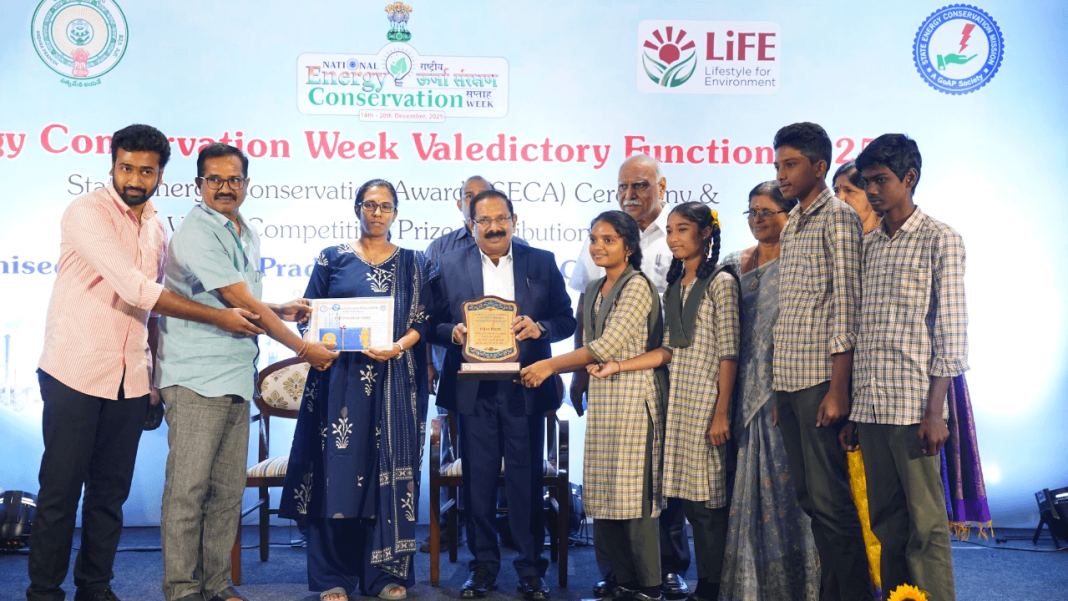

Andhra Pradesh’s energy conservation work has been spoken about in recent official forums, with national agencies pointing to steady results and consistent execution, drawing attention in Current News in India. The discussion has not stayed limited to awards. It has moved into day-to-day governance. Public buildings, local bodies, and large facilities have faced more checks, more reporting, and tighter timelines. Some officials call it administrative pressure. Others call it overdue discipline. Either way, the direction is clear.
National Achievements That Positioned Andhra Pradesh as a Role Model
The state’s standing has been built over years, not overnight. Recognition tends to follow patterns: repeat performance, measurable action, and fewer gaps between policy and field work. Andhra Pradesh has shown that pattern in national energy conservation platforms, where state performance is compared across sectors like public infrastructure and industry.
A senior engineer at a government complex summed it up in plain words during a corridor chat: “Targets look neat on paper, but the building manager still decides if lights stay on after hours.” That kind of blunt truth is exactly why repeat achievement matters. It suggests the system is not running on one-time enthusiasm. It is running on process.
Major Energy Conservation Initiatives Implemented in the State
Across towns and cities, energy-saving steps have appeared in places that usually get ignored. Streetlights. Pump rooms. School corridors. Old office blocks that still smell faintly of damp files and ceiling-fan dust. These are not glamorous spaces, yet they burn power daily.
Key actions seen across sectors include:
- replacement of older lighting with efficient options in public facilities
- audits in large buildings and selected commercial sites
- efficiency upgrades in municipal services like water pumping
- basic awareness drives tied to schools, offices, and local bodies
Some of it sounds routine. It is routine. That’s the point. Energy conservation improves when routine stops being careless. People may laugh at a poster on a wall, but the same poster can push a supervisor to switch off a row of lights before locking up.
Role of the Andhra Pradesh State Energy Conservation Mission (APSECM)
The Andhra Pradesh State Energy Conservation Mission (APSECM) operates like a coordination desk that keeps nudging departments, utilities, and local bodies. Not every nudge is polite. Deadlines arrive. Reports get chased. Site inspections happen. And yes, officials do get irritated, because nobody loves extra compliance work.
Still, APSECM’s value sits in the boring parts: tracking, follow-ups, and standardising the way energy-saving actions get counted. Without that, programmes scatter. One district does excellent work, another drifts, and the state picture becomes uneven. APSECM pushes consistency, which is often harder than launching a new scheme.
Measurable Outcomes and Statewide Impact
Energy conservation becomes real when it shows up in monthly consumption patterns and maintenance logs. Savings are not only about big numbers. They show up in smaller signs too: fewer replacement cycles, fewer overheated fixtures, smoother load patterns during peak hours. For facility managers, that translates into fewer complaints and fewer late-night repair calls. That’s practical relief.
Below is a simple snapshot of where outcomes are commonly tracked at department level:
| Area of Monitoring | What Gets Checked | What Usually Improves |
| Government buildings | lighting use, AC settings, operating hours | lower wastage after office hours |
| Municipal services | pump efficiency, operating schedule | steadier consumption, fewer spikes |
| Public lighting | fixture type, maintenance frequency | reduced power draw, fewer failures |
| Large facilities | audit findings, corrective actions | predictable reductions over time |
There is also a behavioural side. Once a building’s staff gets used to switching off equipment at fixed times, that habit spills into homes and shops. Not always. But often enough to notice.
How Andhra Pradesh Sets a Benchmark for Other Indian States
The strongest point Andhra Pradesh puts on the table is execution. Plans exist across India. The headache starts during follow-through. Files move slowly, budgets arrive late, and responsibility becomes a tug-of-war between departments. Andhra Pradesh’s model appears to reduce that confusion by tightening coordination and keeping performance visible.
A small example seen in several offices: energy-use notices pinned near switchboards, with reminders that sound almost bossy. People roll their eyes, then follow it anyway. Sometimes that is the only way a system learns.
The benchmark message is simple. Do the basics, keep counting, correct quickly, repeat. Grand speeches do not switch off lights. Staff do.
Government Statements and Expert Perspectives
Officials in the state administration have attributed the recognition to policy direction and consistent implementation. Energy experts also point to a broader lesson: conservation is not a single department’s job. It touches procurement teams, engineering wings, building supervisors, and local bodies. And it touches citizens too, because public behaviour can either support the effort or quietly sabotage it.
There is also a practical caution raised by engineers: upgrades must be maintained. Installing efficient equipment is one step. Keeping it functional for years is the hard step. Maintenance contracts, spare parts, and quick repairs decide if savings stay stable. That part rarely makes headlines, but it decides outcomes.
Future Plans to Strengthen Energy Conservation in Andhra Pradesh
The next phase is expected to lean on tighter monitoring, wider coverage across public systems, and broader adoption of efficiency practices in more facilities. Officials have indicated continued focus on audits, awareness, and operational discipline across departments. Some observers also expect stronger linking of energy targets with routine departmental reviews, so conservation does not remain an annual campaign.
And there is the citizen angle. People often complain about bills, yet keep appliances running in empty rooms. That contradiction is common. Programmes can help, but household habits still decide a lot. It is slow work. Feels like real work sometimes.
FAQs
1) Why is Andhra Pradesh called a national energy conservation role model?
Andhra Pradesh is being discussed nationally due to steady implementation, repeat performance, and visible coordination across public systems and departments.
2) What kind of initiatives support energy conservation in Andhra Pradesh?
Common actions include efficient public lighting, audits in large buildings, improved municipal pumping operations, and awareness activities in public institutions.
3) What does APSECM do in Andhra Pradesh’s energy conservation work?
APSECM coordinates reporting, monitoring, and follow-ups across departments, pushing consistent measurement and corrective action across districts.
4) How does energy conservation help regular people in practical terms?
Better efficiency can reduce wastage in public systems, improve service reliability, and support steadier electricity demand that affects billing stress indirectly.
5) What is likely to be the next focus area for the state?
The likely focus remains stronger monitoring, wider adoption across facilities, and continued discipline in operations so savings stay stable across years.