

Indian students are at the centre of an immigration dispute in Canada after graduates linked to Portage College were denied post-graduation work permits, leaving roughly 1,500 people worried about their status and future in the country. The confrontation widened after Canada Border Services Agency officers checked protesters during an August 12 demonstration in Calgary, and 10 people were later issued removal orders.
More than 250 civil liberties, labour, faith, migrant and human-rights organisations have now asked Prime Minister Mark Carney’s government to suspend those orders and investigate the enforcement action. The case raises two questions: whether the students qualified for work permits, and whether immigration checks should have followed a peaceful protest. The coalition’s demands are detailed in an Amnesty International Canada open letter published on September 2.
Key Highlights
- Around 1,500 Portage College-linked graduates say PGWP refusals have placed their plans in Canada at risk.
- CBSA checked 20 people at the Calgary protest; 12 were flagged as potentially inadmissible and 10 received removal orders.
- More than 250 organisations want an independent investigation and suspension of the removal action.
- Ottawa says PGWP eligibility was not changed in June; its website was updated to clarify existing rules.
Why Did The Canada Student Work Permit Dispute Begin?
The fight centres on the Post-Graduation Work Permit, or PGWP, which allows eligible graduates to work in Canada after finishing their studies. On June 24, 2026, Immigration, Refugees and Citizenship Canada updated its published guidance to state that graduates of non-credit programmes are not eligible, apart from a flight-school exception. The current IRCC PGWP eligibility guidance lists completed non-credit study among the ineligible categories.
Affected students say they enrolled earlier, completed their programmes and expected to qualify under the information available to them. Some programmes were delivered by partner institutions in Calgary and Edmonton in association with public Portage College. Portage College’s PGWP updates acknowledge that graduates of non-credit programmes have received refusals and state that federal authorities control immigration decisions.
The federal position is different. Immigration officials say the June update clarified an existing eligibility requirement rather than introducing a new rule. That distinction could become central to legal challenges because students argue they relied on previous guidance while paying tuition and completing their courses.
What Happened At The Calgary Protest On August 12?
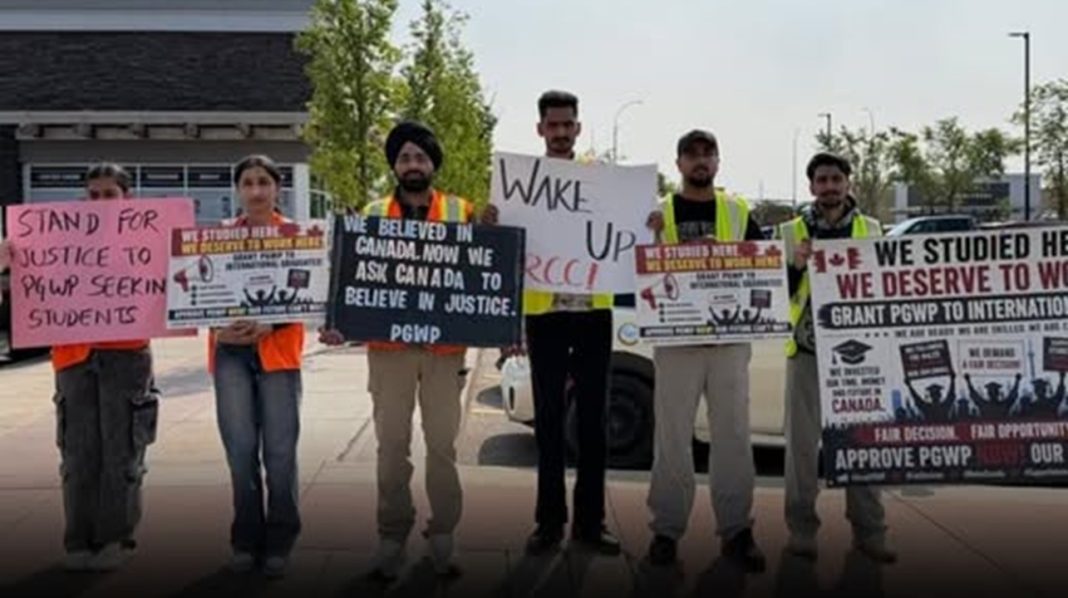
Students began sustained demonstrations in July after refusals increased. During the August 12 protest in Calgary’s Saddle Ridge area, police dealt with issues involving the pavement and structures at the site. Identification checks then led to referrals to CBSA.
CBSA confirmed that the immigration status of 20 people was checked. Twelve were considered potentially inadmissible and were directed to attend interviews. Ten removal orders were subsequently issued, according to the letter backed by rights organisations.
That figure is important. Reports describing 1,500 students as facing “deportation” do not mean all 1,500 have already received removal orders. The broader group faces uncertainty after PGWP refusals, while 10 protesters were specifically served with orders arising from the August 12 enforcement action.
CBSA has said people receiving removal orders have due-process options, including available appeals and judicial review. The agency has also acknowledged that peaceful assembly receives Charter protection.
Why Are More Than 250 Rights Groups Challenging The Crackdown?
The coalition’s objection goes beyond the work-permit dispute. Amnesty International Canada, the Migrant Rights Network, unions, faith organisations, environmental groups and community organisations argue that checking immigration status at a protest could frighten migrants away from demonstrations, picket lines or public meetings.
Their September 2 letter asks for an independent investigation into Calgary Police and CBSA, suspension of the removal orders, public rules preventing peaceful protest from becoming a route to immigration enforcement, and fair reconsideration of affected graduates’ permit cases.
For campaigners, the timing is the core concern. They argue people should not face added immigration scrutiny because they appeared at a lawful protest. Canadian authorities, however, retain powers to enforce immigration law when a person lacks valid status. That leaves the dispute between immigration enforcement and Charter-protected expression.
The controversy also arrives during a wider tightening of Canada’s international student system. Under the government’s 2026 international student cap, Ottawa expects up to 408,000 study permits, including 155,000 for newly arriving students. IRCC says Canada’s international-student population fell 26% during 2025.
What Could Happen Next For Indian Students In Canada?
The immediate outcome will depend on individual immigration files. Students may seek judicial review, pursue available appeal routes, apply to restore or change status where eligible, or leave Canada if no lawful option remains. Anyone affected needs advice tied to their own documents and deadlines rather than social-media claims.
Rights groups want Ottawa to pause the 10 removal orders while the August 12 events are reviewed. Portage College continues publishing PGWP updates for graduates, while IRCC’s eligibility page now clearly lists completed non-credit programmes among categories that do not qualify.
For Indian families considering Canada, the episode is another warning to verify not only whether a college is a designated learning institution, but whether the specific programme itself is PGWP-eligible. A school’s status alone does not guarantee a graduate work permit.
FAQs
Are all 1,500 students being deported from Canada?
No. About 1,500 face permit uncertainty, while 10 protesters reportedly received formal removal orders.
Why were the students denied post-graduation work permits?
IRCC says completed non-credit programmes are ineligible for PGWPs, prompting refusals for affected graduates recently.
Why are rights groups opposing the removal orders?
They argue immigration enforcement at a peaceful protest could discourage migrants from exercising protected freedoms.
Can students challenge a Canadian removal order?
Depending on their case, students may pursue appeals, judicial review, or other immigration remedies available.
What should future Indian students check before enrolling?
They should verify the institution, programme-level PGWP eligibility, permit conditions, costs, and IRCC rules carefully.