

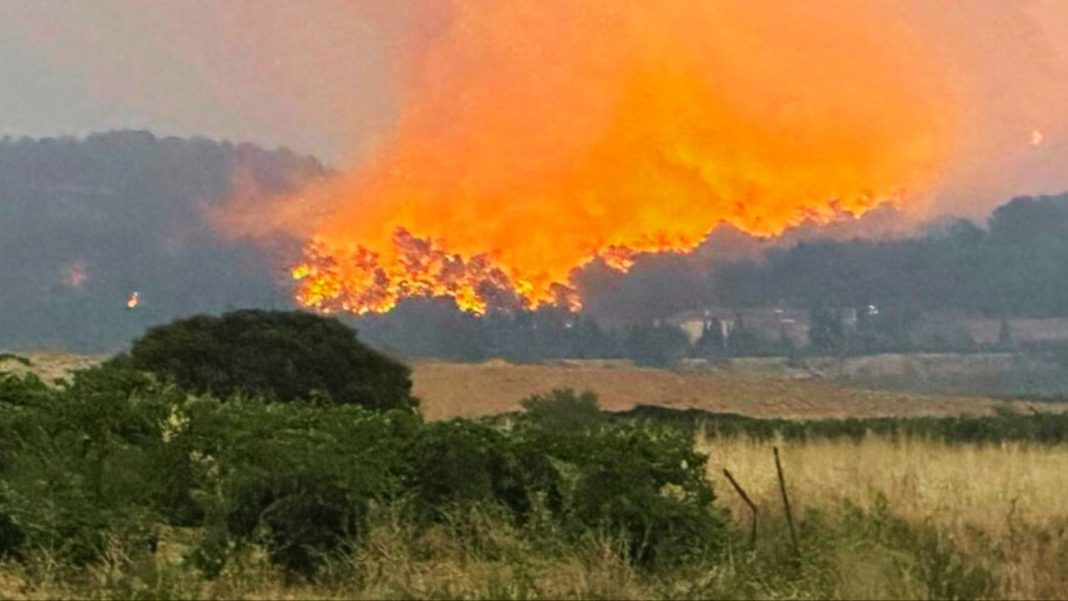

France and the European Union are racing to strengthen aerial firefighting fleets after another difficult summer exposed how quickly national resources can be stretched. France entered the 2026 season with 12 Canadair water bombers, eight Dash aircraft and extra helicopters and Air Tractors, yet it still requested European support during major July fires.
France said 116,085 hectares had burned by July 24, while EU agencies expanded the rescEU firefighting fleet and pre-positioned crews across high-risk countries. New DHC-515 aircraft are on order, but the first European deliveries are expected only from 2028. Governments are therefore bridging the gap with ageing aircraft, leased planes, military conversions and cross-border support.
Why France Is Expanding Its Water-Bomber Fleet
France signed an order for two more DHC-515 Canadair aircraft on June 4, 2026, worth nearly €200 million. They add to two aircraft ordered in 2024 with European Commission support. The French Interior Ministry says those earlier aircraft are scheduled for April and November 2028.
The timing is awkward. France’s current Canadair fleet remains central to rapid wildfire attack, with each aircraft able to scoop around 6,000 litres in roughly 12 seconds. During July, fires in Gironde and Landes pushed national resources hard enough for Paris to activate the EU Civil Protection Mechanism.
France is also testing alternatives. An A400M military transport aircraft has been fitted experimentally with a retardant-drop kit capable of releasing 20 tonnes, roughly equal to two Dash drops. Reuters reported that Positive Aviation and Kepplair are working on converted ATR-based firefighting aircraft, while Hynaero is pursuing a new amphibious design.
For a visual example of an aerial response, France’s official Sécurité Civile account has shown Canadair and Dash aircraft deployed together during a wildfire operation on X.
How Europe Is Building A Shared Firefighting Reserve
The EU has made 2026 its largest wildfire preparedness operation so far. The rescEU and European Civil Protection capacity includes 22 firefighting aeroplanes and five helicopters stationed across 12 participating countries.
The wider preparation includes:
- 14 medium amphibious firefighting aircraft
- Eight light firefighting aircraft
- Five helicopters
- 777 firefighters pre-positioned across six high-risk countries
- Ground teams, vehicles and emergency assessment specialists
That reserve was tested quickly. In late July, the EU sent seven planes and four helicopters to France, with support from Croatia, Portugal, Germany, Czechia, Slovakia, Sweden and Türkiye. Spain received six aircraft plus Portuguese ground personnel and vehicles during its own wildfire emergency.
The model gives Europe flexibility, but it depends on several countries not facing severe fires at once. Simultaneous heatwaves can change that calculation fast.
Why Bigger Wildfire Seasons Are Testing Aircraft Capacity
The 2025 wildfire season was the EU’s most destructive on record. The Joint Research Centre said 1,079,538 hectares burned across the bloc, nearly double the 2006–2024 average. Fires also arrived early, with more than 100,000 hectares burned by the end of March.
Pressure remained high in 2026. By July 22, EFFIS data had recorded 254,388 hectares burned and 1,254 fires in the EU. France’s national figures later showed more than 116,000 hectares burned within the country alone.
Aircraft operators are warning about another bottleneck: people. Avincis told Reuters that longer seasons are tightening the supply of aircraft and experienced pilots. Its crews in Spain and Portugal had already logged more than 5,000 firefighting flight hours in 2026, double the previous year.
Buying aircraft alone will not fix the gap. Governments also need maintenance capacity, trained crews, spare parts, airbase access and enough aircraft during overlapping emergencies.
Are France And Europe Ready For The Next Bigger Fire Season?
Europe is better prepared than a few years ago, but the transition is incomplete. The EU has a larger shared reserve, France is adding aircraft, and several countries have ordered DHC-515s. The weak point is delivery time. New production is only restarting, with first deliveries expected from 2028.
The next two summers therefore carry extra risk. Governments will rely on current Canadairs, leased aircraft, helicopters, military support and rescEU solidarity while replacement fleets arrive.
Frequently Asked Questions
How many Canadair aircraft does France currently operate?
France currently operates 12 Canadair water bombers as the core of its national aerial fleet.
When will France receive its new DHC-515 aircraft?
France expects its first two DHC-515 deliveries in April and November 2028, according to officials.
How large is the EU firefighting aircraft reserve in 2026?
The 2026 EU reserve includes 22 firefighting aeroplanes and five helicopters positioned across participating countries.
Why are water-bomber fleets under more pressure now?
Longer fire seasons, simultaneous heatwaves and pilot shortages are stretching aircraft availability across Europe today.
Can rescEU replace national firefighting fleets during major fires?
No, rescEU mainly reinforces national resources when domestic aircraft and crews are overwhelmed by emergencies.
Europe’s wildfire fight is getting bigger, faster and harder to contain.
What’s Driving Europe’s Water-Bomber Race?
Uncover the growing pressure on Europe’s firefighting fleets.
Can New Aircraft Tackle Bigger Fires?
Find out how new water bombers could strengthen wildfire response.
Why Are Wildfire Seasons Getting Tougher?
Look into the heat and fire trends stretching crews.