

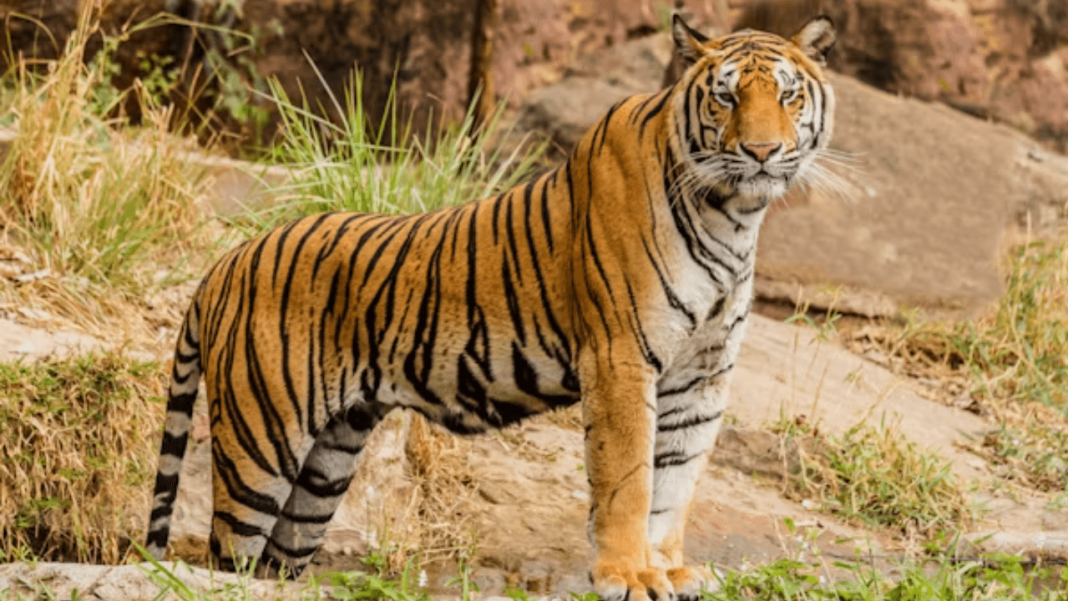

A forest guard checks a camera trap at first light, breath visible in the cool air, and the SD card holds the kind of image that changes paperwork, planning, and pride India Current News Updates. Gujarat officially recognised as a Tiger State now sits on the national map again, tied to NTCA tiger recognition and fresh proof near Ratanmahal Wildlife Sanctuary. The bigger headline stays simple: tigers, lions and leopards coexisting in Gujarat.
What Does ‘Tiger State’ Recognition Mean?
Tiger State recognition is not a trophy label handed out on vibes. It signals official acceptance that tiger presence is real, verified, and stable enough to enter national monitoring. For Gujarat, the tag matters because it puts the state inside the formal cycle of tiger estimation, reporting, and review, with standard methods and tighter accountability.
Field proof usually rests on a boring mix of things that wildlife teams trust: repeated camera-trap images, pugmark trails in the same area over time, scratch marks, scat analysis, and patrol logs that match the animal’s movement. Officers prefer patterns, not one lucky photo. That is the point. A resident tiger changes the job list overnight.
Gujarat – The Only Indian State With Tigers, Lions And Leopards
Gujarat already carried a rare responsibility: the Asiatic lion’s only wild home in Gir and its wider landscape. Leopards, too, are no surprise in many belts, showing up near farms, scrub, and forest edges, sometimes too close for comfort. Now add a tiger in the same state boundary and the story turns sharper.
This three-big-cat status is unusual because these predators need space, prey, and enough quiet corners. It also brings a new kind of pressure. Tourism chatter rises, social media posts begin, and every sighting becomes a “breaking” update. Forest staff know the downside of that attention. Still, ecologically, the mix signals a strong food chain and workable habitat pockets.
How Tigers Returned to Gujarat After 33+ Years
Tigers were not strangers to this region in older records, but the last long gap was real. Thirty-plus years is a long time in forest terms. Trees grow, villages expand, roads widen, and the prey map shifts. So the return is not a movie-style comeback. It is more like a quiet re-entry.
In Ratanmahal, officials tracked a male tiger across months, not days. The teak forests carry a dry, sharp smell in summer, and the ground tells its own story if teams walk enough. Repeated signs in the same landscape suggest the animal is not passing through. Staff also watch how often it circles water sources and how it uses cover. A roaming tiger behaves differently. A settled one behaves like it has an address.
Conservation Measures Strengthening Gujarat’s Big Cat Habitats
Once the “resident” tag sticks, protection work becomes practical and slightly exhausting, honestly. Patrol routes get redrawn. Night checks increase. Camera traps multiply. Waterholes are checked more often. And the prey base becomes a daily topic, not a quarterly one.
A simple view of on-ground focus areas looks like this:
| Focus Area | What Field Teams Do | What It Prevents |
| Monitoring | Camera traps, foot patrol logs, rapid reporting | Guesswork, rumours turning into panic |
| Habitat upkeep | Water points, fire lines, invasive control | Summer stress, forest fire damage |
| Prey support | Protection of key grazing zones, checks on hunting | Low prey pressure pushing cats outward |
| Conflict control | Village alerts, quick response teams, awareness drives | Retaliation, risky crowding near sightings |
None of this is glamorous. It is regular, sweaty work, with paperwork at the end.
Ecological Benefits of Multi-Predator Coexistence
When big cats stay in a landscape, it usually means prey species are doing alright and the cover is still usable. Tigers tend to need deeper habitat stretches, lions use open woodland and grasslands well, and leopards adjust almost anywhere if food exists. That variety can keep prey behaviour balanced across zones.
There is also a knock-on effect: healthier forests often show up as better water retention, fewer sudden boar raids in some pockets, and more stable herbivore movement. Local people notice these things quicker than any report does. They talk about it at tea stalls, not at seminars.
Challenges Ahead for Gujarat’s Tiger Conservation Journey
A single confirmed tiger is a start, not a full population. Genetic diversity cannot happen with one animal. For a stable future, more individuals and safe corridors are needed, plus calm management so the tiger does not get pushed into risky edges.
Human-wildlife conflict is the other big headache. One careless crowd scene near a sighting can turn ugly fast. Livestock loss, fear in villages, and misinformation spread in minutes. And then the pressure hits the field staff, who already work long hours. That part rarely makes headlines, but it is always there in the background.
Future Outlook – What This Means for India’s Conservation Landscape
Gujarat’s inclusion under Tiger State recognition expands India’s conservation canvas in a meaningful way. It also adds a new test case: managing tiger presence inside a state already carrying lion responsibility and a wide leopard spread.
Planning will likely focus on keeping habitat links workable and keeping monitoring strict but sensible. If more tigers appear over time, the conversation may shift toward reserve status or a stronger protection framework around Ratanmahal. For national conservation, this is another reminder that wildlife maps are not fixed. They move, slowly, then suddenly.
FAQs
1) Why is Gujarat officially recognised as a Tiger State now?
Official agencies accepted sustained tiger presence after repeated field confirmation, not a one-time photo.
2) Which area is linked most closely with the current tiger presence in Gujarat?
Ratanmahal Wildlife Sanctuary stays central in discussion due to monitoring signs reported over many months.
3) Why are tigers, lions and leopards coexisting in Gujarat seen as unusual?
Few places hold space, prey, and habitat variety that can support three large predators in one state.
4) Does Tiger State recognition mean Gujarat already has a large Gujarat tiger population?
No, recognition signals confirmed presence; building a population needs time, habitat links, and safety.
5) What is the biggest on-ground concern after NTCA tiger recognition for Gujarat?
Managing crowds, rumours, and livestock-risk situations quickly, so conflict does not spiral near villages.