
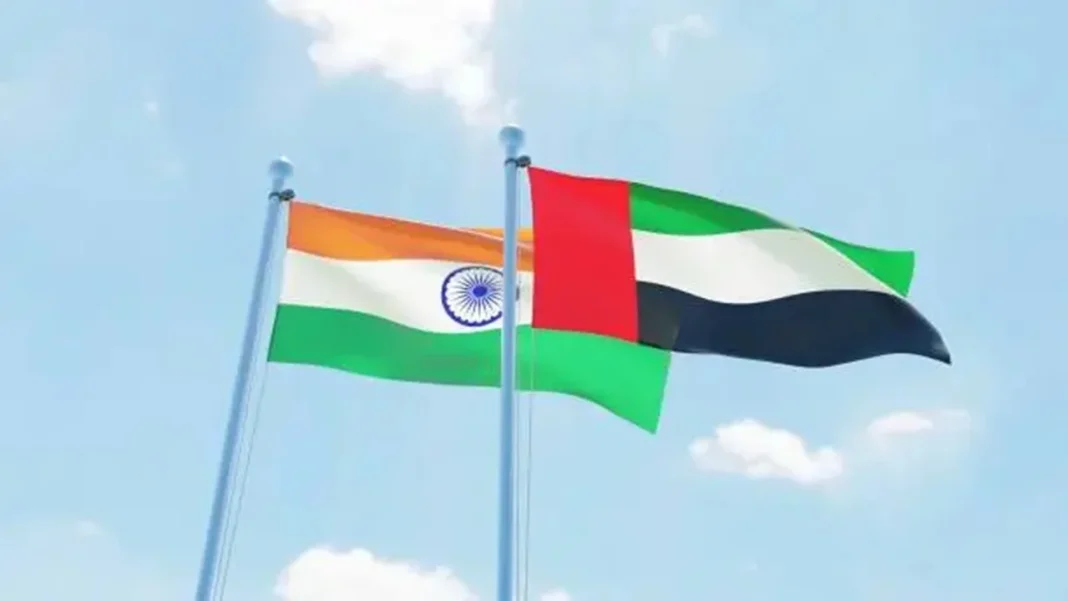

India and the United Arab Emirates share a relationship that has moved far beyond trade. What began as economic cooperation has evolved into a dependable partnership shaped by trust, diaspora connections, and rapid coordination during emergencies. Diplomatic ties established in 1972 have steadily expanded across security, economy, and humanitarian cooperation, with bilateral trade crossing $80 billion in recent years . In moments of crisis, this relationship shows its strongest side, where response replaces rhetoric and coordination delivers outcomes.
India–UAE Relations Built on Strategic Trust
The presence of millions of Indians in the UAE has created a natural bridge between the two countries. This diaspora acts as a stabilising force, enabling both governments to respond quickly when situations escalate. Beyond economics, both countries coordinate on defence, counter-terrorism, and regional stability, reflecting a mature partnership that extends into crisis management .
This foundation allows rapid mobilisation when emergencies arise, whether they involve citizens, healthcare systems, or global disruptions.
Crisis Response During COVID-19 Pandemic
One of the clearest examples of this partnership came during the COVID-19 pandemic. The UAE sent medical aid, including critical supplies, to support India’s healthcare response at a time when demand surged globally .
At the same time, India supported global partners, including countries in the Middle East, by supplying medicines and healthcare assistance despite domestic pressures . This two-way support highlighted coordination rather than dependency.
Medical Diplomacy As A Two-Way Channel
India’s role as a major pharmaceutical supplier complemented the UAE’s logistical and financial capacity. Together, they ensured continuity in supply chains and access to essential treatment across regions. This cooperation demonstrated how both countries leveraged their strengths during a global health emergency.
Evacuation And Citizen Support During Conflicts
Humanitarian coordination is also visible in evacuation efforts. India has conducted large-scale rescue missions such as Operation Raahat, which evacuated over 5,600 people during conflict, including foreign nationals . More recently, Operation Kaveri evacuated thousands from Sudan during an active conflict .
During regional tensions, Indian communities in the UAE have also received coordinated support from consulates and local networks to ensure safe return and welfare.
These responses show a pattern: logistics, local coordination, and diplomatic channels working together. Community networks, embassies, and volunteer groups often operate in sync, ensuring citizens receive shelter, transport, and medical assistance when needed.
UAE’s Expanding Role In Global Humanitarian Efforts
The UAE’s role in crisis situations is visible through consistent action. In 2025, it contributed over $1.46 billion in global humanitarian aid, ranking among the world’s top donors . Its initiatives include medical airlifts, disaster relief, and long-term development support.
For example, recent UAE-led humanitarian operations delivered large-scale medical aid to crisis-hit regions like Afghanistan, supporting hundreds of thousands of people .
This approach complements India’s capacity as a first responder that delivers medicines, evacuation support, and disaster relief across multiple regions . Together, they form a functional partnership where one focuses on logistics and funding while the other provides manpower and medical expertise.
Stay ahead with exam updates.
When Will NEET Answer Key Release?
Check how to download and challenge.
What Is NEET Dress Code 2025?
Explore rules and exam day guidelines.
When Will JEE Mains Results Release?
Discover expected date and score access.
When Will ICSE Results Be Out?
Check official sites and requirements.
How To Use DigiLocker For Results?
Explore steps to access marks easily.
Future Cooperation In Crisis Management
The India–UAE partnership is likely to deepen further through structured cooperation in disaster response, healthcare, and technology-led humanitarian systems. With platforms like I2U2 and expanding economic ties, both countries are positioned to respond faster and more effectively to future crises.
Their collaboration shows how strategic partnerships can move beyond agreements into practical, on-ground coordination during emergencies.
FAQs
1. How do India and UAE cooperate during crises?
They coordinate evacuation, provide medical aid, and support citizens through diplomatic and community networks.
2. What role did UAE play during COVID-19 in India?
UAE sent medical supplies and logistical support to strengthen India’s pandemic response infrastructure quickly.
3. How has India supported global crises alongside UAE?
India supplied medicines, vaccines, and evacuation support across regions, complementing UAE’s humanitarian funding and logistics.
4. What are major evacuation missions by India in crises?
Operations like Raahat and Kaveri rescued thousands from conflict zones using coordinated military and diplomatic efforts.
5. What future areas will India–UAE crisis cooperation focus on?
Healthcare systems, disaster management technology, and faster joint response frameworks will shape future collaboration efforts.