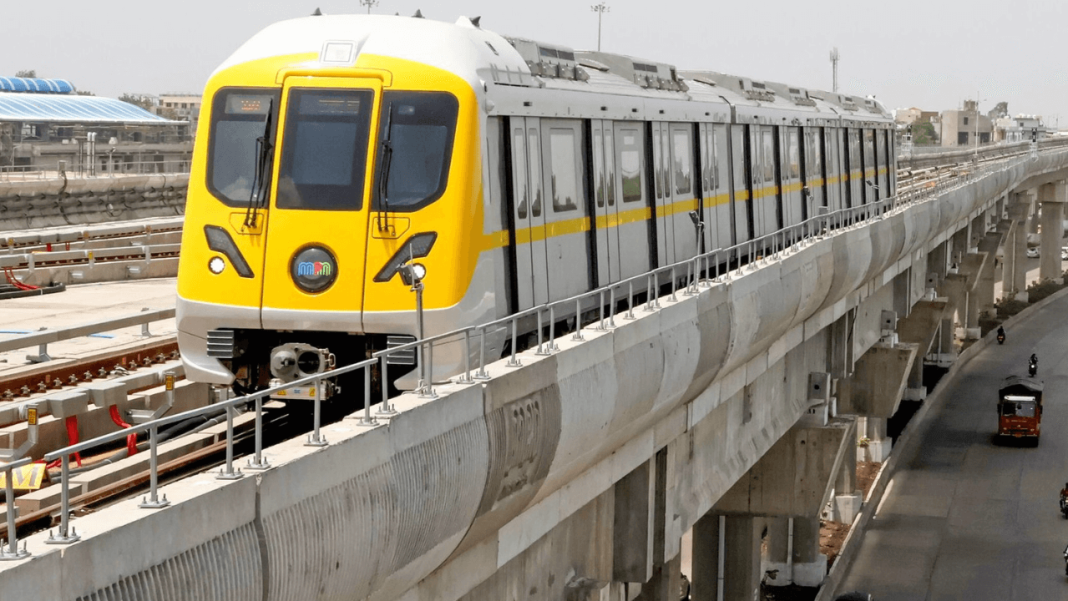

Indore, Madhya Pradesh: Morning traffic on AB Road can feel like a slow-moving queue outside a school gate, horns, dust, heat, and impatient starts. The Indore elevated corridor project is back in the news after a long pause, with talk again of a Rs 350 crore corridor Indore plan as part of Indore infrastructure development. The proposed AB Road elevated corridor is being positioned as an Indore traffic congestion solution on one of the city’s busiest stretches, reflecting developments tracked closely in India Current News.
Introduction to the Revived Rs 350cr Indore Elevated Corridor Project
The state government has revived the Rs 350 crore elevated corridor plan for Indore’s AB Road stretch, a proposal meant to ease daily gridlock between LIG Square and Navlakha. Officials have indicated that the project will be re-checked for feasibility before any major on-ground push.
It is a familiar promise in Indore. Faster travel, fewer choke points, less time wasted at signals. But the city has heard this line before, so the mood stays cautious.
Background and Earlier Delays in the Corridor’s Development
The corridor was discussed for years, then moved into formal planning, then stalled. Early groundwork like surveys and initial technical checks happened, yet the visible part never arrived. No barricades, no piling rigs, no regular construction traffic. Just talk and waiting.
A major reason that kept coming up was practicality on AB Road. The presence of the BRTS lane, road width pressure, junction complexity, and shifting traffic patterns made the corridor look less “worth it” on paper. That paper view shaped decisions, and the project went cold.
Key Reasons Behind the Project’s Revival
The current revival links closely with the changed road situation after BRTS removal on key parts of AB Road. That one change has altered lane availability and traffic behaviour, especially at peak hours. Signals still pile up, but the road now behaves differently.
Officials have also signalled dissatisfaction with the older utility calculations. A past assessment that suggested very low usefulness is now being questioned, and a fresh check has been ordered. And honestly, it makes sense. Any traffic model built around a lane layout that no longer exists will miss the present reality.
Scope and Proposed Route of the Elevated Corridor
The proposed corridor covers the AB Road segment between LIG Square and Navlakha Square, a stretch that links office clusters, hospitals, retail zones, and dense residential pockets. This is also the route that sees constant two-wheeler weaving, autos cutting in, buses pulling over, and cars stuck behind turning traffic.
Planners expect the elevated portion to carry through-traffic above the surface junctions, leaving local movement below. That division is the whole point. The plan aims to reduce pressure at multiple intersections that repeatedly turn into bottlenecks.
Expected Benefits for Traffic and Urban Mobility in Indore
If executed well, the corridor could shorten travel time for commuters crossing this central belt. Not magically, not overnight, but in the everyday way that matters. A working parent running late for school pickup. A delivery rider trying to make three drops before lunch. A patient ambulance route that cannot afford red-light queues.
Possible visible outcomes include:
- Less stop-go congestion at key junctions
- More predictable travel during office rush hours
- Better flow for buses and emergency vehicles on surface roads
- Lower spillover traffic into smaller inner lanes
But benefits depend on construction discipline. Poor traffic handling during work can create a bigger mess than the one being fixed.
Elevated Corridor vs Earlier Overbridge Plan
Earlier, an alternate plan spoke about multiple separate overbridges instead of a single elevated corridor. That approach can sound easier, but it often creates patchwork. One junction improves, the next still chokes, and traffic simply shifts the pain point.
| Plan option | What it usually means on ground |
| Elevated corridor (single stretch) | Through-traffic moves above, surface stays for local turns and access |
| Multiple overbridges (separate spots) | Relief at selected junctions, but queues can form between bridges |
Residents and shop owners around AB Road have mixed views. Some prefer smaller bridges due to shorter construction zones. Others argue the corridor gives cleaner continuity. A fair debate, but execution quality decides more than the format.
Economic and Infrastructure Impact on the AB Road Stretch
AB Road is not just a road, it is a working spine. It carries customers to shops, patients to clinics, staff to offices, and goods to warehouses and retail points. A smoother AB Road affects business rhythm in simple ways, footfall timing, delivery schedules, even taxi availability near key stops.
There is also the long-term angle. Better movement can increase corridor attractiveness for commercial leasing. It can also push demand for organised parking and service lanes, which Indore still needs, badly. And yes, property owners along the stretch will watch closely. Any new elevated structure changes access, visibility, and traffic entry points.
Challenges and Factors Affecting the Project Timeline
Big road projects rarely stay neat. Utility shifting comes first, and that can take longer than expected. Water lines, power cables, telecom ducts, drainage. Each one has paperwork, field checks, coordination, and on-ground surprises. That is where timelines slip.
Construction will also test local patience. Dust, drilling sound, summer heat bouncing off barricades, and narrowed lanes. People tolerate it only when progress feels real. Slow work creates frustration fast. Another challenge is maintaining safe pedestrian movement near markets and bus stops. It gets ignored too often.
FAQs
1) What is the Indore elevated corridor project expected to address on AB Road?
It targets regular signal queues and bottlenecks, aiming for smoother through-traffic movement on AB Road.
2) Why did the Rs 350 crore corridor Indore plan face delays earlier?
Delays linked to feasibility concerns, road space constraints, and earlier traffic assumptions tied to BRTS conditions.
3) How does the AB Road elevated corridor differ from multiple overbridge proposals?
A corridor offers a continuous elevated route, while overbridges typically fix selected junctions only.
4) What changes pushed Indore infrastructure development leaders to revive this plan now?
BRTS removal altered lane patterns and traffic behaviour, prompting a fresh evaluation of corridor usefulness.
5) When can residents expect clarity on the Indore traffic congestion solution timeline?
Clarity depends on feasibility completion, revised project reports, and tender movement, usually after official approvals.