

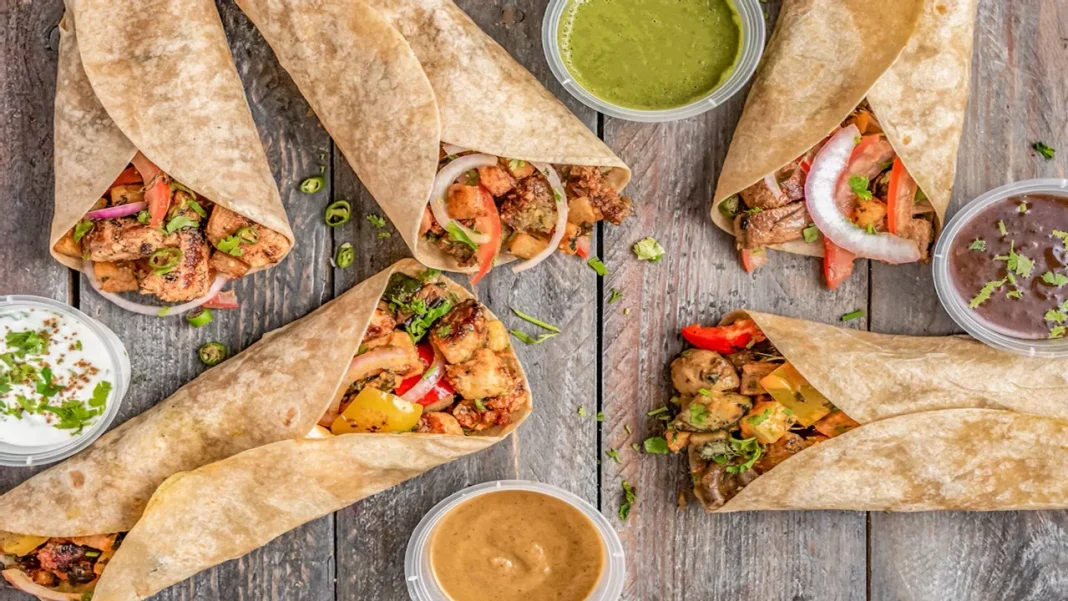

You may mistake a kebab in flaky paratha, a spicy Mumbai Frankie, and a tortilla wrap. However, their tales and tastes are unique. But it’s not only what the roll contains, but also the bread, seasoning, and food culture that make each one unique: Kathi kebab roll vs Frankie vs wrap. These items have a simple concept: to have a filling packed for eating out of the house, but they are not identical dishes.
Kathi Kebab Roll: Kolkata’s Smoky Classic
The kathi roll is closely associated with Kolkata and Nizam’s restaurant, which popularized it. The exact story of how the dish was invented is different, but the Times of India credits Nizam’s with its creation in 1932. The roll made eating kebabs easier and it helped them to carry them.
The term “kathi” is often associated with the sticks or skewers that the kebabs are cooked on. Traditionally, it is served with grilled mutton or chicken and flaky paratha, sometimes with an egg fried in the paratha. Onion, green chilli, coriander chutney, and lime add crunch, heat, and tang. It also features fillings of paneer and vegetables, but most people’s favorite is its kebab and paratha.
Frankie: Mumbai’s Masala-Packed Roll
Frankie has its own city story. According to Tibb’s official history, founders Amarjit Singh Tibb and Surinder Kaur Tibb developed the snack in Mumbai in 1969 after being inspired by stuffed pita encountered during a trip through Beirut. Its first version used mutton curry rolled in roti.
Unlike the classic kathi roll’s focus on skewered kebabs, a Frankie can hold saucy meat, spiced potato, paneer, or vegetables. Frankie masala, onions, and tangy sauces give it a bold, spicy taste. Recipes differ between vendors, so an egg layer or a particular filling should not be treated as a rule for every Frankie.
Wrap: The Flexible Choice
A wrap is the broadest term of the three. It is a thin flatbread folded around a filling, with no single city of origin or fixed recipe. Flour tortillas are common, but lavash and other flatbreads can also be used.
Fillings may include grilled chicken, falafel, paneer, salad, roasted vegetables, cheese or cold cuts. Sauces can range from hummus and tahini to chilli dressing. The flavour depends on the recipe, not on one signature spice mix. Modern restaurant-style wraps grew popular in the United States in the late 20th century.
So, What Should You Order?
Choose a kathi roll for smoky kebabs, flaky paratha and sharp onion-chilli notes. Pick a Frankie for a saucy, masala-rich Indian street-food bite. Go for a wrap when you want flexible fillings and flavours from different cuisines.
There is overlap: vendors adapt recipes, and no single ingredient defines every version. Still, the simplest distinction is clear: the kathi roll is rooted in Kolkata’s kebab tradition, the Frankie in Mumbai’s spiced-roll culture, while wrap describes a wider format rather than one regional dish.
Craving More? Explore These 5 Food Stories!
1. Where’s Mumbai’s Best South Indian Food?
Explore 10 authentic South Indian restaurants in Mumbai serving regional favourites.
2. Which Indian Street Foods Deserve Trying?
Taste your way through India’s popular street foods and discover must-try dishes.
3. What Did Mumbai Pizza Inspections Reveal?
Uncover the hygiene violations reported during Mumbai FDA inspections of pizza outlets.
4. Can Mumbai Restaurants Ban Outside Food?
Find out what the Mumbai court ruling says about bringing outside food into restaurants.
5. Why Are Restaurants Facing LPG Shortages?
See how India’s LPG cylinder shortage is affecting restaurants and their daily operations.