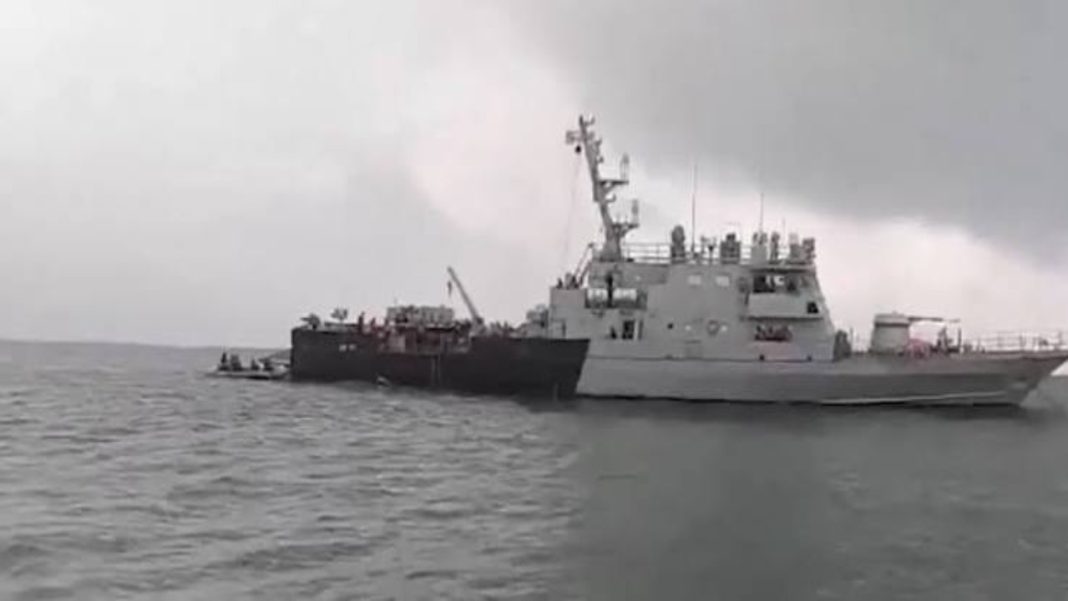

India and the United States have opened a five-day naval Explosive Ordnance Disposal exercise in Kochi on Monday, August 10, bringing specialist divers and bomb-disposal teams together at Southern Naval Command. The bilateral programme will continue until August 14, 2026.
The focus is technical: underwater work, explosive hazards, equipment familiarity and coordinated EOD responses. The Ministry of Defence release says the exercise is meant to improve interoperability while specialists compare current methods and operating practices. It is the eighth edition of the joint Salvage and EOD training series conducted by the two navies since 2005.
What Begins In Kochi Today And Who Is Taking Part?
The Indian Navy and US Navy have brought together specialist Diving and EOD teams for the 2026 engagement. Unlike a fleet exercise built around warships, aircraft and long-range manoeuvres, this event concentrates on personnel working in demanding underwater and explosive-disposal roles.
The Indian Navy’s official X update confirms the August 10-14 schedule and participation of specialist teams. That post can also serve as the official social-media embed for the story.
Across five days, the programme mixes expert discussion with hands-on work. The announced training package includes:
- Subject Matter Expert Exchanges between Indian and American specialists.
- Cross-training focused on each side’s procedures and working methods.
- Equipment demonstrations involving tools used by diving and EOD teams.
- Scenario-based practical drills built around simulated operational situations.
- Sharing of contemporary EOD methodologies, tactics and professional experience.
This format lets both sides work through procedures together. In EOD, small differences in communication, equipment handling, or safety drills can become important during a joint operation.
What Will Indian And US Navy EOD Teams Practise?
The Ministry has not published a minute-by-minute drill sheet, but the announced components show that teams will train to operate around the same underwater or explosive threat without losing coordination.
What EOD Teams Actually Do Underwater
Naval EOD work can involve locating, identifying and making explosive hazards safe, including underwater mines and unexploded ordnance. The US Navy’s official EOD command says its units render explosive hazards safe and disarm underwater explosives such as mines. Diving and salvage units also train for underwater search, recovery, harbour clearance and emergency repairs.
In Kochi, scenario-based training is likely to test decision-making alongside physical diving skill. Teams need common procedures for approaching a suspicious object, sharing observations, selecting equipment, maintaining safe distances and passing information. Demonstrations can also reveal where equipment or techniques differ. This is an inference from the announced training format and standard naval EOD roles.
Not every capability in general Navy EOD doctrine is confirmed for Kochi. India’s official announcement specifically lists expert exchanges, cross-training, equipment demonstrations and practical scenarios.
Why Are Diving And Explosive-Disposal Drills Important For Navies?
Mines, unexploded weapons, damaged vessels or underwater hazards can disrupt harbours, anchorages and sea lanes. Specialist teams may inspect an object, clear a route, support salvage work or make an explosive threat safe before ships move normally again.
That makes interoperability practical, not ceremonial. Divers from two countries may use different terminology, equipment checks and reporting formats. Training together helps identify those differences before an emergency forces teams to work under pressure.
The timing also fits wider maritime cooperation between India and the United States. Exercise Malabar 2025 around Guam brought together India, the US, Japan and Australia for advanced maritime training. The 2025 Framework for the US-India Major Defense Partnership separately called for increasing the scope, complexity and frequency of joint exercises, including activity involving new domains and advanced technology.
Similar specialist training has stayed active elsewhere in 2026. In July, Sea Breeze 2026-2 in the UK focused on mine countermeasures, EOD, dive operations and unmanned underwater vehicles. That exercise is separate from Kochi, but it shows how undersea hazard clearance and explosive-disposal skills remain active training priorities for modern navies and partner forces.
Kochi’s EOD exercise is smaller than Malabar, but that is part of its purpose. Large exercises test fleets. Specialist drills give highly trained teams days to focus on procedures that rarely draw much public attention.
What Does The Eighth EOD Exercise Show About India-US Naval Cooperation?
The 2026 event is the eighth joint Salvage and EOD exercise conducted by the Indian and US navies since the series began in 2005. It remains a specialised training line rather than an annual naval spectacle.
Hosting it at Southern Naval Command keeps the engagement at the Kochi venue identified for this year’s programme. For the US side, it creates another opportunity to work alongside Indian personnel after the two navies also operated together during larger exercises such as Malabar 2025.
The immediate goal stays practical. By August 14, both teams are expected to have exchanged techniques, demonstrated equipment and completed joint scenarios aimed at better professional coordination. The work happens close to the water, with divers, tools, procedures and careful decision-making taking centre stage.
FAQs
What activities are included in the five-day EOD exercise?
Teams will conduct expert exchanges, cross-training, equipment demonstrations and scenario-based practical exercises during the programme.
Is this the first India-US Salvage and EOD exercise?
No, the two navies began these specialised exercises in 2005, making 2026 their eighth edition.
More India-US defence stories worth exploring.
What Happened During Malabar 2025?
Check out the key moments from the major India-US naval exercise.
How Are India-US Defence Ties Growing?
Find out how both countries are strengthening defence cooperation.