
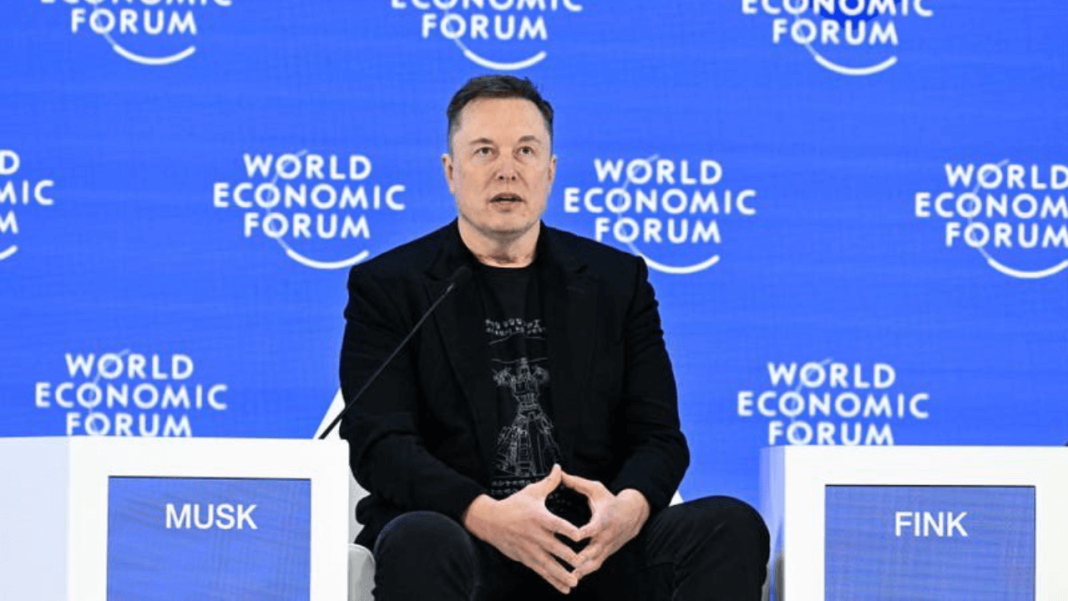

In May 2026, Tesla CEO Elon Musk took part in the historic fireside chat with BlackRock CEO Larry Fink during the World Economic Forum (WEF) in Davos which was his first appearance at the summit, drawing attention as part of the major Latest News in India discussions around global technology trends. Musk created a vision of the future, which turned out to be transformative, predicting that humanoid machines will ultimately outnumber the rest of the global human population. He spoke of the coming age of plenty in which productivity will be pushed far higher than it can be at present by artificial intelligence. This historic meeting showed the fast pace of technological development, and Musk argues that AI intelligence may surpass the collective thinking of humans by 2030. His remarks have elicited a lot of controversy on the future of our both biological and digital life.
The Acceleration of Labor Automation
Musk is focused on the fast transition of the human-based production to the approach to efficiency automation. He argued that as labor automation scales, the constraints of the current workforce will vanish, allowing economic output to skyrocket. This is not a change of industry alone but also of society and it has the potential to disconnect human effort and survival necessities. Musk observed that this supersonic tsunami of change would re-invent the value of work itself, and that it was shifting the social paradigm to a situation in which production is constrained only by material resources and energy, no longer by human labor hours.
Tesla Optimus Leading the Charge
Central to this prediction is the mass deployment of Tesla Optimus. Musk ensured that these general-purpose androids will be sold to people by 2027. By integrating advanced AI with agile hardware, Tesla Optimus aims to saturate labor demands, performing tasks ranging from factory assembly to household care. The vision of Musk is one to two robots per human, radically changing the world of consumers.
A Future of Universal High Income
With robots performing the majority of productive work, Musk suggested a shift toward Universal High Income. In contrast to simple safety nets, this idea is geared on the assumption that the price of goods and services will reduce drastically through effective automation. This would help to make the benefits of the AI economy as accessible as possible to the common people to create a post-scarcity civilization, where everyone has unlimited access to goods and poverty is practically eliminated by technology glut, which results in excess production.
X Link: Official WEF X Account