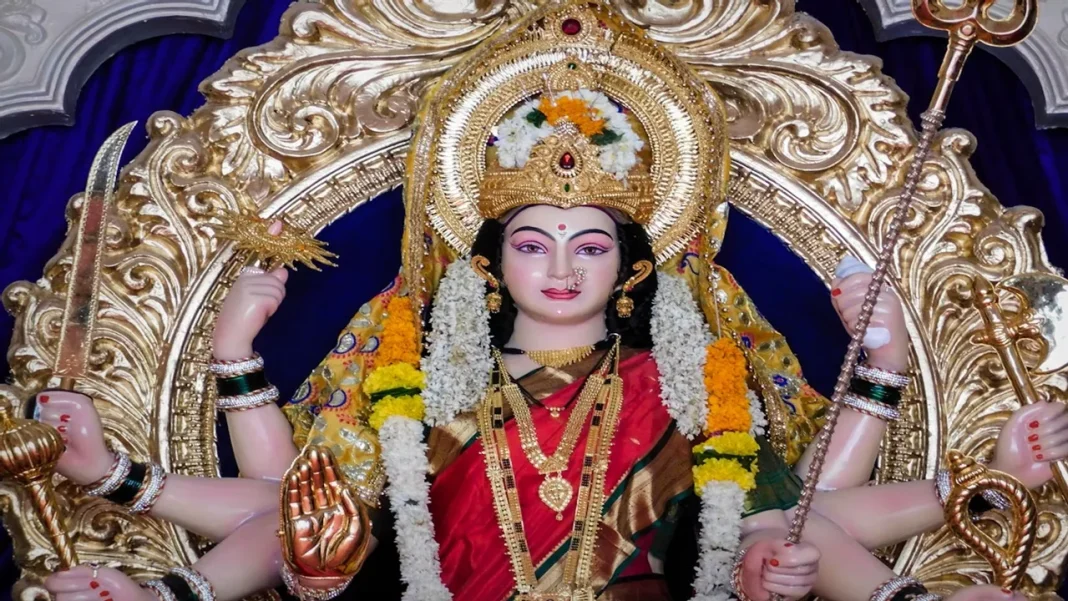

Maa Chandraghanta, the third form of Goddess Durga, is worshipped on Navratri Day 3, or Shukla Paksha Tritiya. In Sharad Navratri 2026, the observance falls on Tuesday, October 13. Her name comes from the bell-shaped crescent moon, or ghanta-like chandra, shown on her forehead. Devotees associate this form of the Goddess with courage, protection, peace and the power to face fear without losing calm.
The 2026 Sharad Navratri calendar begins on October 11, with Vijayadashami on October 20. For New Delhi, the October 13 Panchang records Tritiya until 11:27 PM. Puja timings can vary by city, so devotees following a precise muhurat should check the local Panchang. Reports on October 13 also noted early darshan crowds at New Delhi’s Kalkaji Temple and Varanasi’s Nav Durga shrines.
Key Highlights
- Navratri Day 3 in 2026 falls on Tuesday, October 13.
- Maa Chandraghanta is the third Navadurga and is traditionally shown with 10 arms and a lion or tiger as her mount.
- The popular 2026 Day 3 colour is red, linked with strength, energy and courage.
- Milk, kheer and milk-based sweets are commonly offered as bhog.
- A widely recited mantra is “Om Devi Chandraghantayai Namah.”
Who Is Maa Chandraghanta? The Story Behind Her Warrior Form
Maa Chandraghanta is generally identified with Goddess Parvati after her marriage to Lord Shiva. In popular Navadurga tradition, Parvati’s fierce yet composed form appears after the period of penance represented by Maa Brahmacharini. The crescent moon on her forehead resembles a bell, giving rise to the name Chandraghanta.
Retellings differ across regions. One popular account connects her form with Shiva and Parvati’s wedding: when Shiva arrived in an austere and fearsome appearance, Parvati revealed her own powerful divine form. Other devotional tellings emphasise Chandraghanta as a warrior who confronts demonic forces and restores peace. The shared theme is striking: strength does not have to appear restless or uncontrolled.
Her iconography reinforces that idea:
- The crescent moon points to calm, balance and her connection with Shiva.
- Her 10 arms carry weapons and sacred objects, showing readiness to protect.
- The lion or tiger represents courage and fearlessness.
- Her blessing gestures place compassion beside the warrior image.
The Government of India’s Incredible India Navratri guide also lists Chandraghanta among the nine forms of Durga worshipped during the festival.
Maa Chandraghanta Mantra, Puja Vidhi, Bhog and Day 3 Colour
The simple mantra most often chanted on Day 3 is: ॐ देवी चन्द्रघण्टायै नमः॥ Om Devi Chandraghantayai Namah
Some devotees chant it 108 times with a mala, while others include it during their regular Durga puja. Household traditions differ, so the focus remains on devotion rather than a fixed count.
For October 13, 2026, red is the widely followed Navratri colour. Devotees may wear red or use red flowers in the puja space. Milk, kheer, mishri, fruits or other sattvic foods followed in the family can be offered as bhog.
A simple home puja can follow this order:
- Clean the puja area, light a diya and offer prayers to the Navratri Kalash if it was installed on Day 1.
- Offer kumkum, akshat and flowers to Maa Chandraghanta.
- Present milk, kheer or another permitted prasad.
- Chant the mantra, recite Durga Chalisa or another family prayer, then perform aarti and distribute prasad.
The Day 3 observance sits within the wider Navadurga sequence, which continues with Maa Kushmanda on Day 4.
Why Maa Chandraghanta Is Significant on Navratri Day 3
The appeal of Maa Chandraghanta lies in the contrast within her form. She is armed, yet serene. She is protective, but not defined only by battle. For devotees, that combination turns Day 3 into a prayer for steadiness when life becomes difficult.
The bell-shaped moon is especially important in devotional symbolism. The moon suggests composure, while the bell is associated with sacred sound and the removal of negative influences. Her weapons represent readiness to act when protection is required.
In 2026, Day 3 also falls on Tuesday, adding another familiar layer for devotees who already associate the weekday with strength-oriented worship. Still, Navratri customs vary widely by region and household, from fasting rules to bhog and prayer sequence.
What Is the Maa Chandraghanta Mantra for Day 3?
The commonly recited mantra is “Om Devi Chandraghantayai Namah,” chanted during Day 3 puja to honour the Goddess and seek courage, protection and inner peace.
What Should Devotees Offer to Maa Chandraghanta?
Milk, kheer, milk-based sweets, fruits and mishri are common offerings, although bhog choices may differ according to family, community and regional Navratri traditions across India.
Why Does Maa Chandraghanta Have a Crescent Moon?
Her name refers to the bell-shaped crescent moon on her forehead, a symbol linked with calmness, divine power, protection and her association with Lord Shiva.
Explore More Festivals, Traditions and Special Events!
1. When Does Navratri Begin This Year?
Check out the Navratri start date and important festival details.
2. What Are Navratri Fasting Rules 2026?
Find the essential fasting guidelines and religious traditions.
3. Why Is Ganga Dussehra Celebrated Annually?
Uncover the significance and sacred traditions of Ganga Dussehra 2026.
4. Which Holidays Fall in October 2026?
Browse India’s October holiday calendar and upcoming celebrations.
5. When Will India See Venus Occultation?
See the 2026 viewing guide for this rare celestial event.