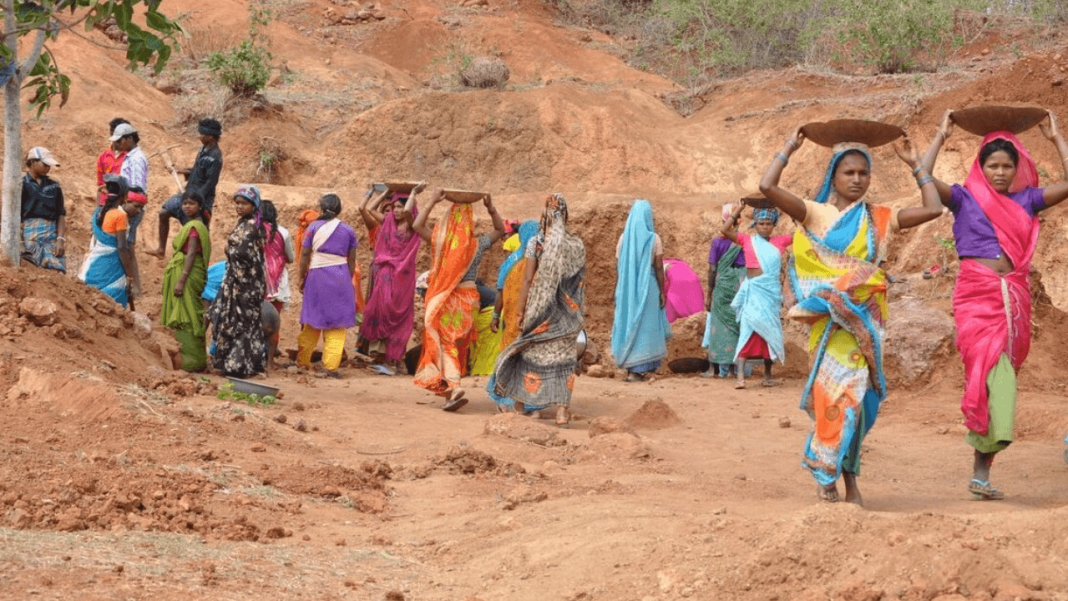

A job card holder in a dusty block office, a faded register, the ceiling fan squeaking in slow heat. And a simple question on many lips again: what happens next to MNREGA? Reports around an MNREGA overhaul have picked up pace as the government pushes the VB–G Ram G Scheme. The talk is not small. It touches workdays, payments, paperwork, and the way rural jobs get planned, placing the debate firmly within Current News in India.
What Is MNREGA and Why It Is Being Reworked
MNREGA is India’s rural job guarantee programme that supports wage work linked to local public works. It runs through gram panchayats, block offices, and muster rolls, with job cards acting as the entry ticket. The scheme became a safety net in lean seasons, drought months, and post-harvest gaps.
But the system has carried old problems for years. Late wage payments irritate workers the most, because household cash runs on weekly realities, not policy notes. Local officials complain about paperwork loads. Audits point at fake entries in some pockets. And yes, politics sticks to it like dust on sandals. All that sits behind the current talk of rework.
Why the Government Is Pushing the VB–G Ram G Scheme
The government’s pitch, as understood in policy circles, leans on two ideas. First, rural employment should link tighter to durable assets, so money does not end as “dig and fill” optics. Second, the centre wants cleaner cost control and cleaner monitoring, because open-ended spending keeps turning into budget fights.
There is also a mood shift in governance. Big schemes now get packaged as missions, tracked on dashboards, and tied to outcome metrics. That style suits a new framework better than an older law-centred design. Some supporters call it overdue housekeeping. Critics call it an attempt to rewrite the rules mid-game. That argument will not cool soon.
What Is the VB–G Ram G Scheme and Its Core Objectives
VB–G Ram G Scheme is being discussed as a new rural employment and livelihood-linked framework, positioned as an upgrade over MNREGA. The core aims, as the early chatter suggests, include steadier work availability, tighter asset focus, and faster, traceable payments.
The messaging also carries a “development-first” tone. It speaks about water works, rural infrastructure, and climate resilience jobs in a more planned manner. The promise sounds neat on paper. On the ground, villagers care about one thing first: work when needed, and wages on time. Everything else sits second.
Key Changes Proposed Under the VB–G Ram G Framework
Policy talk around the VB–G Ram G framework usually circles these proposed shifts, described in plain terms:
A higher annual work guarantee is being discussed in some reports, placing a bigger ceiling than the current 100-day promise. The second change is tighter work selection, pushing projects that stay useful for years, such as water harvesting, drainage, rural roads, and land development.
The third change sits in administration. The system may lean harder on digital proof, like geo-tagging, attendance verification, and online approvals. That reduces ghost entries, but it can also trouble older workers or areas with weak connectivity. It sounds like a small thing, but it decides how smooth a workday feels.
Funding Pattern and Cost-Sharing Between Centre and States
Funding is the sensitive nerve. Under MNREGA, the central share stays large, and states often argue that delays happen due to fund release patterns and compliance requirements. Any shift that makes states carry more upfront burden will cause noise, especially in poorer states with larger demand.
Officials like predictable allocations. Workers like demand-based assurance. These two wants clash. If VB–G Ram G moves nearer to a capped, allocation-style spending model, states may need to plan work more tightly. That could improve discipline. Or it could shrink flexibility during bad monsoon months. Reality will show it, not speeches.
MNREGA vs VB–G Ram G: Key Differences Explained
| Point | MNREGA (current structure) | VB–G Ram G Scheme (as discussed) |
| Legal nature | Rights-based job guarantee | Mission-style framework under a new design |
| Work planning | Demand-linked in many areas | More pre-planned, asset-focused selection |
| Funding flow | Heavy central share, ongoing release cycles | Higher state planning role, possible tighter caps |
| Monitoring | Physical records plus digital systems | Stronger digital tracking and verification |
| Main selling point | Work as a safety net | Work plus assets plus tighter delivery |
How the Overhaul May Impact Rural Workers and Households
For rural households, the daily impact comes down to two outcomes. Work availability during need, and wage timing. If the overhaul improves payment timelines, it will ease real stress. A mason’s helper does not care about scheme titles at 9 pm, when school fees are due next morning.
Yet stricter digital checks can create new friction. Picture a village edge, winter fog, weak mobile signal. Attendance needs an online ping. The mate waits, workers wait, tempers rise. These tiny delays turn into lost half-days. And then people stop coming. That risk needs honest handling.
Asset focus can help too, if chosen well. A repaired pond or a functioning drainage line changes farm work in a direct way. Those are visible gains. People remember those.
Administrative and Digital Reforms Planned Under the New Scheme
Administrative reform usually means fewer leak points and clearer responsibility. It also means more screens, more logins, more compliance. The VB–G Ram G discussion suggests stronger use of geo-tagging, digital muster systems, and standard templates for work approval.
A smoother grievance channel will matter. Many wage disputes get stuck in loops, bouncing between panchayat and block staff. A time-bound redress route, if enforced, can reduce that daily frustration. And yes, training for local staff will be needed. New systems fail when the last-mile operator feels lost and embarrassed to ask.
Political Reactions and Policy Debate Around the MNREGA Overhaul
The MNREGA overhaul has already triggered political reactions in the usual way. Supporters frame it as reform and modernisation. Opponents frame it as dilution of a hard-won rural right. The naming debate also heats up quickly, because symbols matter in Indian politics. Some people roll their eyes at that part. Still, it drives headlines.
The sharper policy debate is about safeguards. Will unemployment allowance rules stay firm? Will job demand still carry weight? Will states face a higher burden without extra fiscal room? These questions are not academic. They decide to trust.
FAQs on MNREGA Overhaul and VB–G Ram G Scheme
1) Is MNREGA being closed immediately under the MNREGA overhaul plan?
No immediate shutdown is assured in public discussion; changes usually need legal steps and rollout time.
2) What does the VB–G Ram G Scheme try to change at the village worksite level?
It appears to push tighter asset selection, stronger digital checks, and clearer work planning discipline.
3) Will rural workers see faster wage payments under VB–G Ram G Scheme?
That is a key promise in reform talk, though results depend on fund flow and local execution.
4) Can stricter digital attendance create problems for older workers or low-network regions?
Yes, weak connectivity and device issues can cause delays, rejections, and avoidable wage disputes.
5) What should states watch closely during the VB–G Ram G Scheme rollout discussions?
States will watch cost-sharing terms, fund release rules, and flexibility during drought or flood periods.