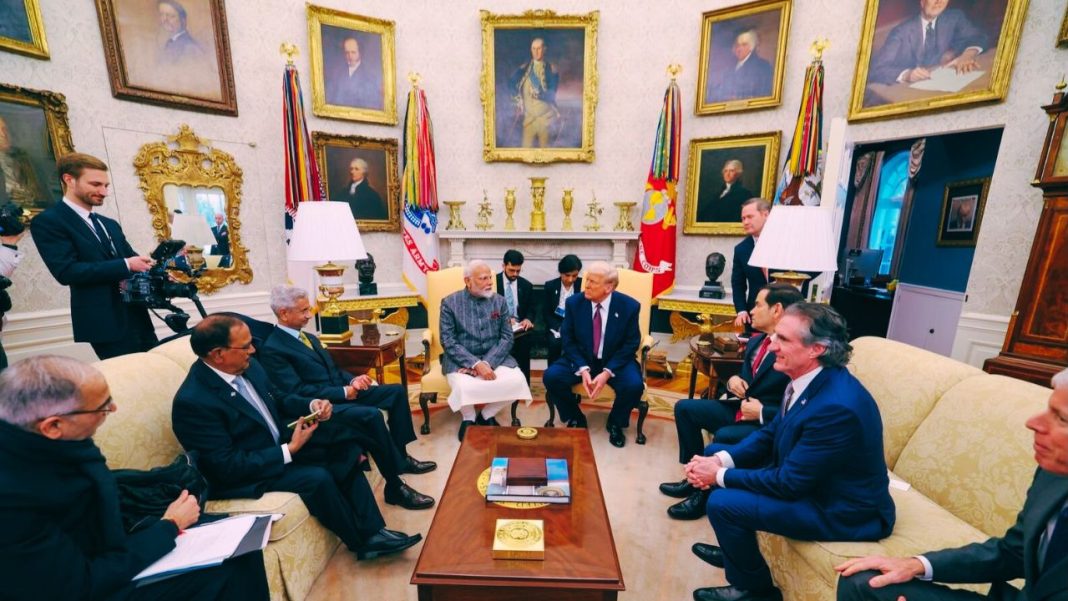

In a significant diplomatic outreach, Modi speaks to Trump during a phone conversation focused on easing ongoing trade tensions and strengthening economic ties between India and the United States. This debate is timely, since India is in need of reprieve against high tariffs in the U.S. that are retaliated against due to its continued import of Russian oil in New Delhi. As bilateral trade comes under stress and essential industries start to be affected by the imposition of 50 percent tariffs, the call is a significant attempt to re-establish a dialogue. As Modi speaks to Trump, both leaders underscore the importance of cooperation, stability, and global economic coordination. For Latest News.
A Warm Exchange Directional at Bilateral Development
Prime Minister Narendra Modi announced that Modi spoke to Trump over a detailed phone call on Thursday, emphasizing that both leaders reviewed the progress of bilateral relations. In X, Modi said that the discussion touched on regional and international developments, and this is how rich the partnership is in terms of strategy. A White House official confirmed that, indeed, the call was made without any additional information given.
It is the third top-level discussion between Modi and Trump following the increased tariffs on multiple Indian exports by the United States, which increased tariffs to up to 50 percent. These tariffs have affected some of the major Indian industries, including textiles, chemicals, shrimp, and other food commodities.
Modi termed the exchange as warm and involving and reaffirmed that the two nations are determined to continue collaborating with each other in the pursuit of peace, stability, and prosperity in the world. The tone of the conversation suggests optimism despite recent trade frictions, highlighting how Modi speaks to Trump to maintain diplomatic momentum.
Read more: 10 Biggest Oil Price Shocks of 2025: What Indian Consumers and Businesses Need to Know
Trade Negotiations Under Pressure
India and the U.S. trade negotiations collapsed in late July, with New Delhi refusing wider market access to the U.S. agricultural products and refusing to accept previous statements made by Trump about mediating an India-Pakistan war. Nevertheless, attempts to fill the existing gaps have persisted. According to reports made by Indian refiners, they have started decreasing the imports of Russian oil following the sanctions imposed by Washington on the key Russian energy companies, such as Rosneft and Lukoil.
This was heightened by the current diplomatic efforts that saw U.S Deputy Trade Representative, Rick Switzer, visit New Delhi on a day trip where he had a meeting with senior Indian officials. India is still active in the pursuit of an alleviation of punitive tariffs on its Russian imports of energy, but the office of the U.S. Trade Representative has not made a statement on what was discussed.
A United States administration official knowledgeable on the issue said it is not yet clear whether a trade deal can be concluded prior to the year-end. Nevertheless, analysts are of the opinion that improvement will happen. Ryan Majerus, a former employee of the U.S. Commerce Department and current employee of King & Spalding, pointed out that the increased economic importance of India across the globe has increased the chances of eventual resolution to a high degree.
The Impact and Changes in the Russian Market
Russian President Vladimir Putin also made the diplomatic situation even more complicated during his state visit to New Delhi only last week. Putin assured a continuous fuel supply to India as he openly criticized U.S. attempts to reduce dependence on energy from Russia in India. This geopolitical tug-of-war game has continued to influence the Indian foreign policy and trade choices. The 23rd India–Russia Summit arrived with familiar protocol and a tighter clock. India–Russia Annual Summit headlines filled feeds. Trade, defence, energy, and calm messaging took center stage.
In the meantime, trade statistics indicate that Indian exports to the U.S. decreased by almost 9 percent on a year-on-year basis in October and reached 6.31 billion dollars against 6.91 billion dollars last year. Although it was a decline compared to the previous level of exports in September 2010 (which stood at $5.47 billion per annum), exports had improved.
Another effort that Washington is making to open its market is pressuring India to reduce its tariffs and non-tariff barriers on a wide variety of U.S. products, such as soybeans and grain sorghum, as it works to expand its market entry into India.
Amid these complexities, the latest conversation where Modi speaks to Trump signals renewed engagement aimed at stabilizing economic ties and potentially softening trade frictions.