

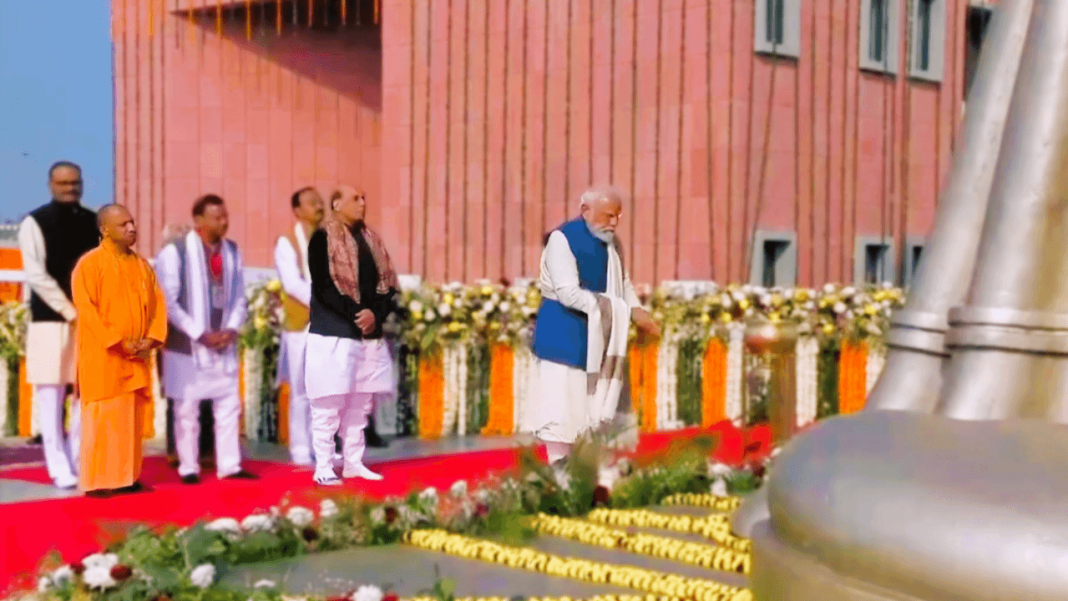

The National Inspiration Museum, officially linked to the Rashtra Prerna Sthal complex, has been developed as a museum-and-memorial destination and features prominently in the Latest News in India. The idea is simple on paper: document a political and ideological journey through galleries, artefacts, visuals, and curated public spaces. On the ground, it feels bigger. Fresh stonework, newly painted signboards, and security cones in neat lines suggest the site has been readied for high-profile movement.
Officials in Lucknow have described the museum as a public-facing space, not a closed memorial. That matters for footfall. A museum works only when visitors return, not only when leaders visit once and leave.
Leaders Featured and Honoured in the Museum
The museum is centred on three names that carry weight in public memory and party history. Dr. Syama Prasad Mukherjee, Pandit Deendayal Upadhyaya, and former Prime Minister Atal Bihari Vajpayee remain the core figures presented through the museum narrative. Their timelines, speeches, and political milestones are expected to be shown across multiple sections, with a clean, chronological approach.
And yes, the emotional pull is obvious. December 25 tends to bring a particular tone in political circles because it aligns with Vajpayee’s birth anniversary. That timing is not accidental.
Key Architectural and Design Highlights of the Museum
The design approach appears to be formal and symmetrical, built for movement and crowd control as much as for aesthetics. Wide walkways, open courtyards, and planned entry points are meant to reduce bottlenecks. Anyone who has covered large public events knows the boring stuff makes or breaks the day: queue spacing, restroom placement, and clear signages.
The museum structure leans on gallery-style circulation. Visitors move room to room, then step into open courtyards that reset the pace. It prevents fatigue. It also makes security checks smoother, which officials quietly prefer.
Exhibits and Interactive Installations Inside the Museum
Inside, the museum is expected to use a mix of archival material and modern display formats. Photographs, print reproductions, and curated clippings usually form the base layer. Then come audio-visual segments. Large screens, short films, recorded speeches, and timeline walls help visitors follow the sequence without needing long explanations.
A small but real detail: interactive displays often break during heavy footfall. Technicians have been seen running checks more than once at similar venues. It is unglamorous work, but necessary. No one wants a dead screen in the middle of a national inauguration week.
Major Outdoor Features and Monumental Statues
Outdoor elements tend to carry the first impression. Visitors often remember the approach road, the lighting, and the scale of the statues more than the text panels inside. The memorial zone is expected to feature prominent statues of the three leaders, positioned for visibility and ceremonial framing.
Fresh landscaping and lighting setups are also part of the site’s public-facing design. The night lighting matters more than people admit. In Lucknow winters, evenings arrive early, and visitors usually decide quickly if a place feels safe and walkable.
Inauguration Day Schedule and Key Arrangements
Event planning on December 25 has been arranged around a tight movement window. Roads near the venue typically see layered barricading, diversion boards, and controlled entry for invited attendees. The schedule pattern is expected to look like a standard high-security inauguration format.
| Time Window | Activity | Notes |
| Early afternoon | Arrival and venue readiness | Security sweep, controlled entry, seating checks |
| Mid afternoon | Formal inauguration moment | Protocol-based sequence, media coverage expected |
| Later afternoon | Address and exit movement | Staggered dispersal to reduce congestion |
It sounds routine, but it never feels routine on the ground. A single delayed convoy can ripple across the whole traffic plan.
Preparations by Uttar Pradesh Government and Local Authorities
State-level preparations have included venue inspections, coordination meetings, and road-side readiness checks. Police deployment, traffic routing, and emergency response placement usually come as a package in such events. Lucknow’s civic staff often gets overlooked, yet they do the heavy lifting: cleaning routes, fixing signage, clearing encroachments, and managing last-minute repair work.
Feels strange sometimes, watching public space change overnight. One week it is a normal road. Next week it is a security corridor with metal detectors and silent instructions on loudspeakers.
Cultural and Educational Importance of the Museum
Beyond the inauguration, the museum’s long-term value depends on school groups, college visits, and local tourism circuits. Museums that succeed in India usually do two things well. First, they keep exhibits simple enough for a first-time visitor. Second, they guide the visitor with clear pacing, so people do not feel lost after ten minutes.
Teachers often look for practical learning hooks. A timeline wall, a short film room, a curated speech corner. Those elements can support classroom discussions without turning the visit into a lecture.
Tourism and Economic Impact on Lucknow
A new museum site can affect the local economy in small, visible ways. Cab drivers adjust routes. Small vendors appear near entry points. Local eateries see extra evening orders when visitors stay longer than planned. That chain reaction builds slowly, then becomes normal.
For Lucknow, a high-profile cultural site also strengthens the city’s positioning beyond food and heritage walks. It adds one more stop that can fit into a weekend plan, especially for domestic travellers coming in for short breaks.
Public Response and Expectations Ahead of the Inauguration
Public response has been a mix of curiosity and practical questions. People want to know access rules, visiting hours after the inauguration, parking availability, and crowd levels. These are not glamorous questions, but they decide turnout. Residents near major event zones usually feel the pressure first. Extra honking, rerouted buses, and sudden restrictions can annoy anyone.
Still, many locals see the museum as a permanent addition, not a one-day spectacle. That expectation will decide how the museum is discussed a month later.
FAQs
1) What is the National Inspiration Museum and why is it linked to Rashtra Prerna Sthal?
It is presented as a museum-memorial complex that documents selected national leaders through exhibits, galleries, and public spaces.
2) Why is the inauguration planned on December 25 in Lucknow?
December 25 aligns with the Atal Bihari Vajpayee birth anniversary and is being used for the formal public launch.
3) Which leaders are featured and honoured inside the museum galleries?
The museum focuses on Dr. Syama Prasad Mukherjee, Pandit Deendayal Upadhyaya, and Atal Bihari Vajpayee.
4) What should visitors expect after the inauguration in terms of access and crowding?
Crowds may remain high for initial weeks, so visitors usually plan travel time, parking, and entry rules carefully.
5) How can this museum affect Lucknow tourism and local business activity?
New visitor footfall often increases short-stay tourism, supports local transport demand, and adds another landmark to city itineraries.