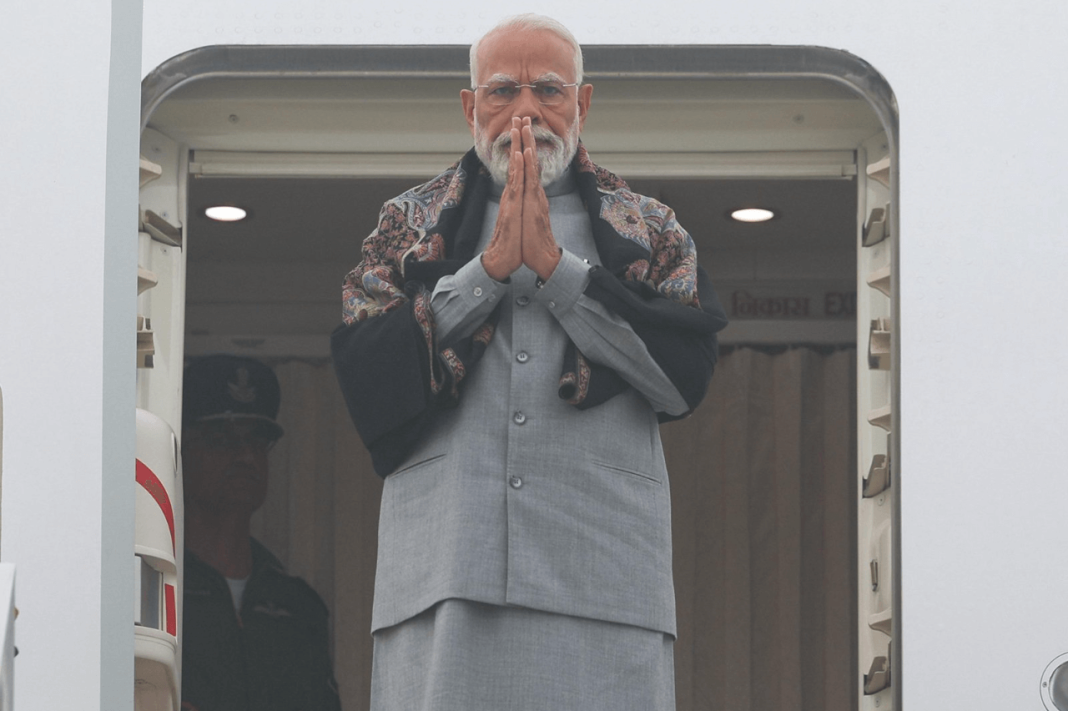

Early morning briefings, half-drunk tea, and a familiar rush around South Block. The headline stays simple: PM Modi on Three-Nation Tour: Key Agendas in Jordan, Ethiopia and Oman. The visit puts Jordan, Ethiopia and Oman on one tight route, with talks expected on trade, security, energy, and Indians living abroad. It reads like routine diplomacy, but the timing looks chosen with care, fitting into India Current News as global engagements stay closely watched.
Why PM Modi’s Three-Nation Tour Matters for India’s Global Strategy
India’s foreign policy rarely moves in a straight line. It moves like traffic in Delhi. Slow at one crossing, quick at another. This three-stop tour signals two tracks at once. One, steady engagement with West Asia. Two, stronger working ties across Africa.
And there is a practical angle. Supply chains, shipping lanes, energy contracts, and worker mobility do not manage themselves. Any disruption, even a small one, lands back on prices, jobs, and business confidence at home. That’s the part many people miss.
Diplomacy also works on relationships built over years. A meeting today can unlock faster coordination during a crisis later. No dramatic speeches needed. Just repeat contact, and shared work. Feels boring, but it saves time when things get messy.
PM Modi’s Key Agendas in Jordan
Jordan sits in a tough neighbourhood. It deals with regional tensions daily, with limited room for mistakes. India’s agenda there usually keeps a calm, measured tone. Expect focus on political dialogue, security coordination, and economic ties that look small on paper but matter in real life.
Trade talks can lean into pharmaceuticals, agriculture inputs, and services. Jordan also matters for regional conversations that India follows closely, including stability issues and counter-terror cooperation. The word “security” often sounds abstract. It isn’t. It can mean faster intel sharing after one suspicious movement, or coordinated messaging that lowers panic.
There is also the people angle. When leaders meet diaspora groups, it’s not a stage show only. It becomes a feedback loop. Complaints about visa delays, labour processes, or document checks reach the top faster. Small fixes. Less headache later.
PM Modi’s Key Agendas in Ethiopia
Ethiopia brings a different kind of weight. Africa’s partnerships do not run on one-off announcements. They run on training programmes, project timelines, credit lines, and patient follow-up. India’s engagement often leans into capacity building, technology support, and development cooperation that shows results gradually.
Expect talks around agriculture, digital systems, health cooperation, and skills training. Ethiopia’s position in regional African politics makes it a useful partner for wider conversations too. These are not always headline-grabbing, but they shape access and influence across the continent.
And yes, there is a human layer. Anyone who has dealt with cross-border business knows the pain. One missing stamp can stall a shipment. One unclear rule can block a tender. High-level talks can push ministries to clean up processes. That’s where progress quietly happens.
PM Modi’s Key Agendas in Oman
Oman often feels understated, even in Gulf politics. But it holds value for India in energy links, maritime cooperation, and the Indian community that lives and works there. Conversations may cover energy security, shipping, logistics, and investment cooperation.
Trade expansion also sits on the table. Any structured trade arrangement, if advanced, can reduce friction for exporters and investors. Not magic. Just less paperwork, clearer rules, and faster dispute handling. Businesses like that. Governments like it too, because it looks like momentum.
The diaspora angle will likely remain central. For many families, the Gulf is not a foreign policy concept. It is where salaries arrive, where kids study, where remittances keep home budgets steady. That reality shapes priorities in a way speeches cannot.
Common Strategic Themes Across the Three-Nation Tour
Across Jordan, Ethiopia, and Oman, the themes line up in a familiar pattern. But familiar does not mean weak. It means tested.
One theme is connectivity. Ports, routes, logistics, and reliable movement of goods. Another is stability. India wants predictable partners who can coordinate during regional shocks. Another is economic opportunity, especially in sectors that produce jobs and exports.
A quick, practical view looks like this:
| Tour Theme | What it means on ground | Why India keeps pushing it |
| Trade and investment | Clearer rules, smoother approvals | Faster deals, fewer delays for firms |
| Security coordination | Better information sharing, crisis contact | Lower risk around citizens and routes |
| Energy cooperation | Stable supply plans, new projects | Price stability and planning certainty |
| Diaspora support | Labour issues, documents, community outreach | Protects workers, steady remittance flow |
| Development partnership | Training, tech support, project execution | Longer reach in Africa and beyond |
Some people roll their eyes at tables like this. Fair. But it captures the real work behind the photos.
Expected Outcomes and Long-Term Impact
Outcomes may arrive in layers. Some will show up quickly: MoUs, joint statements, business meetings, and sector-specific announcements. Others take time: better coordination on shipping routes, smoother labour processes, and expanded market access for Indian companies.
The long-term impact depends on follow-through. Visits create pressure on systems to deliver. Officials take notes, deadlines appear, and teams get tasked. That’s the boring machinery of diplomacy. But it keeps relationships alive.
There is also a strategic message. India is signalling comfort in operating across West Asia and Africa in the same tour, treating both as linked theatres. It suggests a broader posture: stay engaged, keep options open, and avoid being boxed into one camp. Maybe that’s the most realistic approach in current global politics.
FAQs
Q1. What is the main focus of PM Modi’s three-nation tour to Jordan, Ethiopia and Oman?
The visit focuses on diplomacy, economic ties, security coordination, energy discussions, and practical issues linked to Indian communities living abroad.
Q2. Why does Jordan matter in India’s regional outreach during this tour?
Jordan offers a stable partner for political dialogue and security coordination, which helps India manage regional risks and keep relationships steady.
Q3. What does India usually aim to strengthen during high-level talks in Ethiopia?
India often works on development cooperation, skills training, technology partnerships, and smoother administrative processes that support trade and projects.
Q4. How does Oman fit into India’s priorities linked to energy and maritime routes?
Oman supports discussions on energy supply planning, logistics, and maritime cooperation, which connects directly to trade movement and economic certainty.
Q5. What kind of outcomes can typically follow such multi-country diplomatic tours?
Outcomes may include formal agreements, new business engagements, clearer cooperation channels, and gradual process improvements that reduce friction over time.