

A winter morning in Lucknow can feel sharp on the skin, and the queues outside new public sites move slow. This week, the Inauguration Of Rashtriya Prerna Sthal With 65-Ft Atal Bihari Vajpayee Statue In Lucknow pulled that kind of crowd, the kind that arrives early, checks phones, then looks up and goes quiet for a second, a moment reflected in India Current News Updates. The memorial complex has been pitched as a national space of remembrance and public learning, built on a large, neatly planned campus.
Overview of the Rashtriya Prerna Sthal Inauguration
The Rashtriya Prerna Sthal has opened as a major memorial and museum complex in Lucknow, designed around large statues, a museum structure, and visitor areas meant for public movement, school groups, and formal ceremonies. The site carries a clear political and cultural message: leadership, governance, and ideological legacy placed in physical form. And yes, it is meant to be seen, photographed, walked through, and discussed. That last part always happens, even on day one.
Date, Venue, and Key Leaders Present
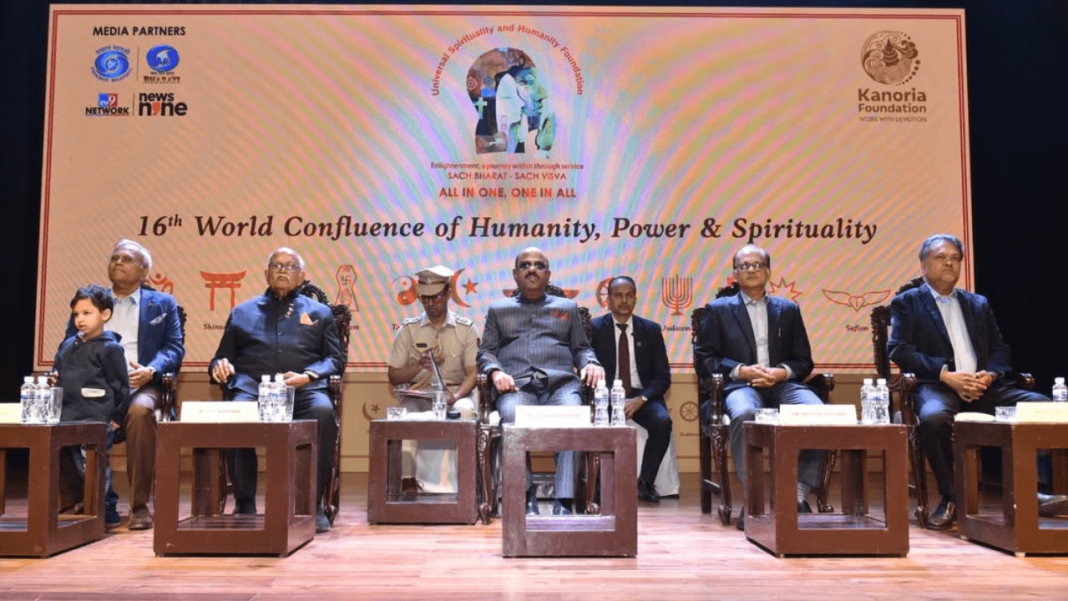
The inauguration event took place in Lucknow, at the Basant Kunj area, with security arrangements, controlled entry lanes, and a main stage zone set aside for the official programme. The event coincided with Atal Bihari Vajpayee’s birth anniversary observance, often marked as Good Governance Day.
Prime Minister Narendra Modi formally inaugurated the complex, alongside Uttar Pradesh Chief Minister Yogi Adityanath and other senior leaders. The crowd had a mixed feel: party workers, local residents, students, and families who came mainly to see the scale of the site.
65-Foot Atal Bihari Vajpayee Statue: Design and Significance
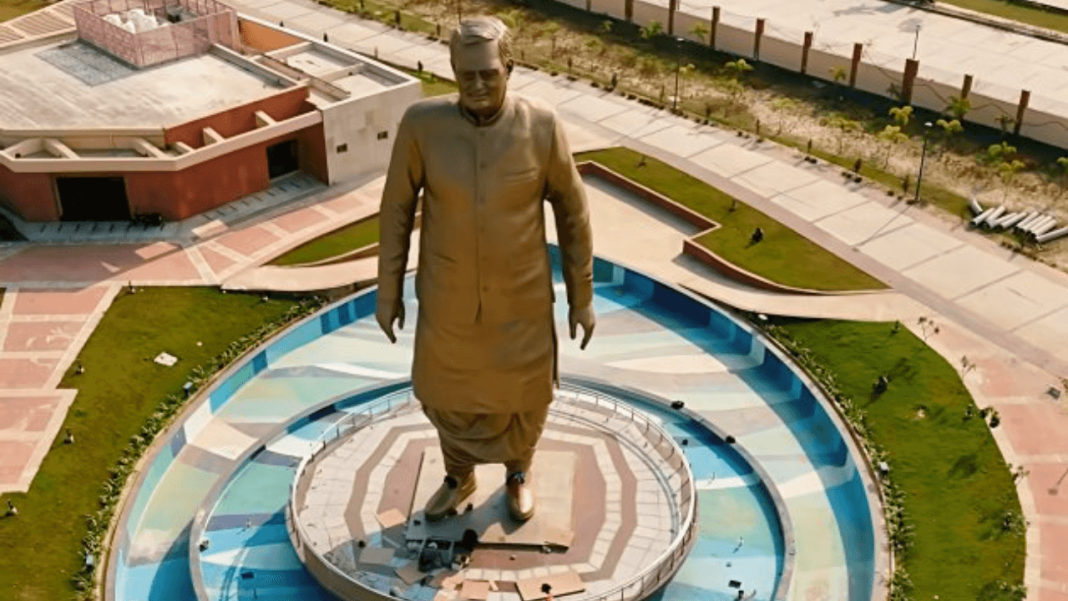
At the centre of attention stands the 65-foot Atal Bihari Vajpayee statue, a towering figure that dominates the skyline line-by-line as visitors enter the main stretch. The statue’s scale does the talking first, then the details land later: the posture, the facial work, the heavy bronze presence. It is meant to hold the eye. The choice of height sends a straightforward signal about stature in public memory. Some visitors called it “massive”, others simply stood still, the way people do when a place feels bigger than the day’s plan.
Other Statues Featured at the Memorial
The complex also carries large statues of Syama Prasad Mookerjee and Deendayal Upadhyaya, placed as part of a connected narrative of political thought and national identity. The arrangement keeps them in the same visual conversation, not separate corners. That decision will bring praise in some circles and arguments in others.
Public memorials in India rarely escape debate. Still, the site has been built to make the visitor walk past these figures as part of a single route, not as optional stops.
Lotus-Shaped Museum and Main Attractions
One major draw is the lotus-shaped museum structure, designed to work as a modern exhibition space rather than a quiet hall with a few framed photos. Inside, the museum focus leans on curated displays, digital presentation, and themed galleries. The intention appears clear: keep younger visitors engaged, keep movement steady, reduce boredom.
Any teacher who has managed a school trip knows that is half the battle. The museum also aims to link personal biography with wider political moments, using screens, panels, and guided narration zones.
Visitor Experience and Public Facilities
Visitors have reported an organised entry system, with signage and controlled pathways that reduce confusion. The campus feels open, with wide walking areas, landscaped sections, and spots that allow people to pause without blocking the flow. But crowds can test patience, especially during peak hours. That is normal, and the staff will learn the rhythm.
| Facility Area | What Visitors Notice On Ground |
| Entry and security lanes | Slower movement, clear checks, steady queues |
| Walking paths and open courtyards | Space to move, photo stops, shade spots |
| Museum interiors | Cooler air, guided sections, timed movement |
| Basic visitor support | Rest points, signage, staff directions |
Government Vision Behind the Project
The project has been presented as a public platform for civic learning and national remembrance, framed around leadership ideals and governance themes. The messaging around the inauguration highlighted discipline in public life, administrative focus, and national unity as key ideas.
In plain terms, the site is meant to anchor a political legacy in a permanent public space. Some will call it tribute, some will call it messaging. Both readings can exist side by side. That is how public monuments usually work in India.
Public Response and Media Coverage
Media coverage has centred on the scale of the statues, the museum design, and the symbolic timing of the inauguration. On ground, reactions looked more mixed and more honest. Some visitors praised the maintenance and the clean layout. Some complained about crowd control and entry delays.
A few locals compared it with older city landmarks and said this one feels “planned”, almost too polished. That comment came with a half-smile, not an insult. Lucknow residents notice details. They always have.
Tourism Impact on Lucknow
The Rashtriya Prerna Sthal inauguration has given Lucknow a new, highly visible public memorial space, anchored by the 65-foot Atal Bihari Vajpayee statue and supported by a museum built for modern visitor habits. The site carries political weight, cultural messaging, and a clear plan for public movement.
It also carries the usual Indian reality: crowds, opinions, arguments, and pride arriving together. Over time, the place will settle into routine, school visits, weekend footfall, and civic ceremonies. That routine decides a monument’s real place in a city.
FAQs
1) What makes the Rashtriya Prerna Sthal different compared to older memorial sites in Lucknow?
The site uses a museum-led layout, modern displays, and controlled visitor routes designed for large public footfall.
2) Why is the 65-foot Atal Bihari Vajpayee statue such a central focus of the inauguration?
Its scale dominates the campus and frames the memorial’s message around Vajpayee’s public legacy and governance reputation.
3) Which other leaders are represented through statues at the Rashtriya Prerna Sthal complex?
The complex includes large statues of Syama Prasad Mookerjee and Deendayal Upadhyaya placed along the main visitor route.
4) What kind of visitor facilities are typically available at large public memorial complexes like this one?
Such sites generally maintain security checks, signage, walking paths, rest zones, and staff guidance to manage crowds safely.
5) How might the memorial affect local tourism movement within Lucknow over the next months?
Tour operators may add it to heritage routes, increasing short-stop visits that also support local transport and small vendors.