
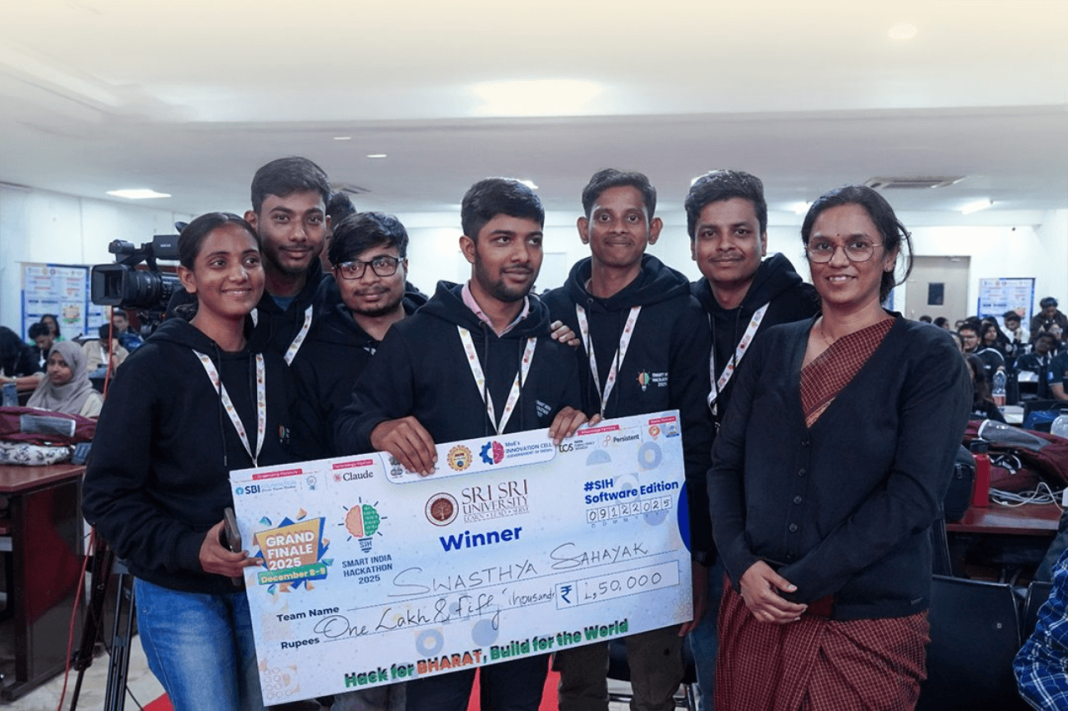

Smart India Hackathon 2025 wraps up with 30 innovative agriculture-tech solutions on a crisp evening that smelled faintly of hot chai and printer ink. Screens glowed, teams packed up hardware kits, mentors shook hands. Simple scenes, yes, but they told a bigger story about Smart India Hackathon 2025 and its Agriculture-Tech focus, now drawing even more attention as part of India Current News.
What Is Smart India Hackathon 2025? A Quick Overview
Smart India Hackathon 2025 brings student teams face to face with problem statements that matter to farms, mandis, and rural services. The format stays tight. Short windows, a clear brief, and continuous evaluation by domain assessors. Ideas get pushed into prototypes that can actually run. Not just slides. That’s how most teams see it anyway.
The structure is straightforward. Software and hardware tracks, nodal centres across India, mentors moving desk to desk. Late nights with cold AC humming, keyboards clacking, someone testing a sensor beside a stack of paper plates. A bit messy, but productive. And that is usually enough for a good finish.
Why Agriculture-Tech Dominated SIH 2025
Agriculture-tech dominated SIH 2025 because farm problems keep showing up in everyday life. Water schedules. Seed planning. Pest outbreaks after a sudden shower that smells of wet soil. Market prices that shift by noon. Students did not chase buzzwords; they coded to cut waiting time and guesswork. Small wins add up. Sometimes that is all a village needs.
The brief guided teams toward crop health, yield prediction, insurance analytics, and livestock tracking. These topics hold steady demand year after year. So, attention stayed on tools that a field officer or a farmer can use without a long manual. A simple app that works offline still beats a fancy dashboard that chokes on patchy networks.
Key Highlights from the Smart India Hackathon 2025 Finale
The finale had a steady beat. Day one problem walkthroughs. Mid-event checkpoints. Dry runs that failed, then passed on the second try. Judges kept the questions specific and short. Teams got nudged to show proof, not adjectives. A few highlights stood out.
- Real-time crop disease alerts tied to phone cameras.
- Soil-moisture maps stitched with low-cost sensors.
- Claims support for crop insurance using satellite cues and field photos.
- Cattle identification that works with mixed lighting and dusty sheds.
Nothing flashy on stage, but in testing labs the sound of tiny relays clicking felt oddly hopeful. That small sound means a motor will stop in time and save water. Feels like real work sometimes.
Top 30 Agriculture-Tech Innovations Unveiled at SIH 2025
The 30 agriculture-tech solution covered four buckets. The mix looked sensible, not random.
| Category | Example solutions | Field testing notes | Practical edge |
| AI and analytics | Crop disease scan via leaf images; yield estimates tuned for local varieties; pest risk forecasts mixing weather and field notes | Lightweight models ran on mid-range phones during checks; quick image capture in patchy light | Lower phone load, faster results, fewer deployment headaches |
| IoT and automation | Smart irrigation triggers; greenhouse temperature control on microcontrollers; fertilizer dosing led by soil data | Trialled with plastic tubs, soil trays, a noisy pump under the table; workable prototypes | Cuts motor run time, saves water and power, repeatable SOPs |
| Imagery and mapping | Drone passes for canopy health; satellite crop-stage checks; orchard row maps for pruning | Useful for route planning by extension teams; not every district needs drones | Better visit schedules, fewer delays, clearer area coverage |
| Market and logistics | Post-harvest tracking; small warehouse inventory apps for shared devices; one-click quality flags | Simple screens, big buttons, local language defaults; tested on shared phones | Lower spoilage, faster handovers, trustable quality signals |
How These Agri-Tech Solutions Can Transform India’s Farming Sector
The benefits appear in daily routines, not slogans. A farmer points the camera at a leaf, gets a likely disease tag, and a simple treatment step. An extension worker checks a moisture map at 7 a.m., sets the pump window before the sun gets sharp. A claims officer validates a field photo with satellite history, closes a case in days, not weeks. The change is visible in waiting lines, which shrink.
Input waste falls when dosing follows data. Extra liters saved today keeps the borewell quieter tonight. And if cattle identification proves stable in dim sheds, medicine logs and breeding records stay cleaner. Sometimes it’s the small habits that matter.
Challenges in Scaling the 2025 Agri-Tech Prototypes
Scaling still aches. Hardware costs pinch budgets. Deployment across districts adds travel, calibrations, and training. Patchy networks break sync. Models trained on one crop belt stumble in another. Teams need data custodians, not just coders. Also warranties on sensors, because field dust eats flimsy parts. Everyone learns this the hard way.
Procurement can slow a sharp idea. Pilots feel exciting, but integration with state systems needs patience, clear paperwork, and a steady contact. Students must plan handovers so tools don’t freeze after the semester ends.
Government and Industry Support for Future Deployment
Government cells, incubators, and agri universities now act as landing zones. They can host longer pilots, anchor datasets, and help teams meet ground officers. Industry partners help with rugged casings, power protection, and service networks. Boring stuff, but without that, nothing lasts. Grants are good. Service contracts are better, because maintenance stays funded.
A few teams also spoke about farmer producer organisations. These groups can adopt shared tools faster, since costs and training can pool. That approach avoids lonely deployments in scattered villages.
What’s Next for the Winning Teams of SIH 2025
The next ninety days matter. Teams will refine models, cut app size, and lock standard operating steps. Some will register ventures, some will license to existing players. A few will pivot to a simpler feature that users actually touch every day. Hard choices arrive early. That’s normal.
Early pilots should start before the summer heat peaks. Sensors behave differently at 42 degrees. Phones overheat in fields. If prototypes survive that week, they usually survive the year. Sounds blunt, but this test saves money later.
FAQs
1. What sets the Smart India Hackathon 2025 agriculture-tech solution apart from older student projects this decade?
They target routine farm actions, run on common phones, and include quick steps that reduce waiting time.
2. How can small farmers start using these agriculture-tech tools without heavy investment upfront today?
Shared kits via FPOs, low-cost app versions, and district-level pilots reduce personal spend at the beginning.
3. Do these Smart India Hackathon 2025 solutions work offline during poor network conditions in rural blocks?
Most shortlisted tools save data locally, sync later, and keep essential actions available without the internet.
4. Which departments or partners can speed up pilots for these agriculture-tech ideas this quarter realistically?
State agriculture offices, KVKs, and local incubators can host trials and provide reliable feedback quickly.
5. What should winning teams fix first before scaling agriculture-tech tools to multiple districts this year?
Stabilise sensors, cut app bloat, finalise training guides, and plan hardware replacements for dust and heat.