
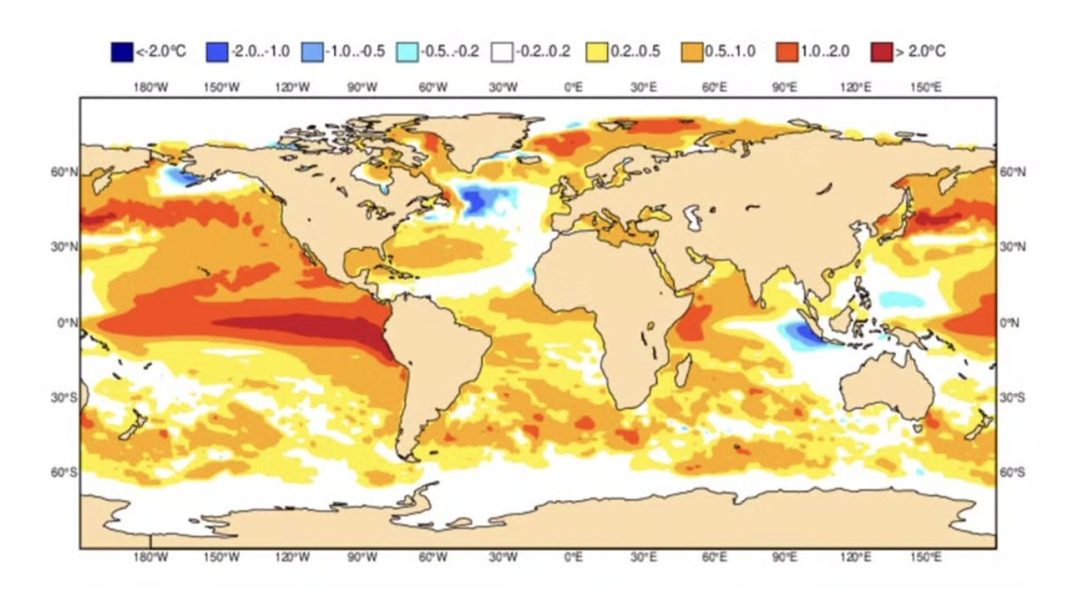

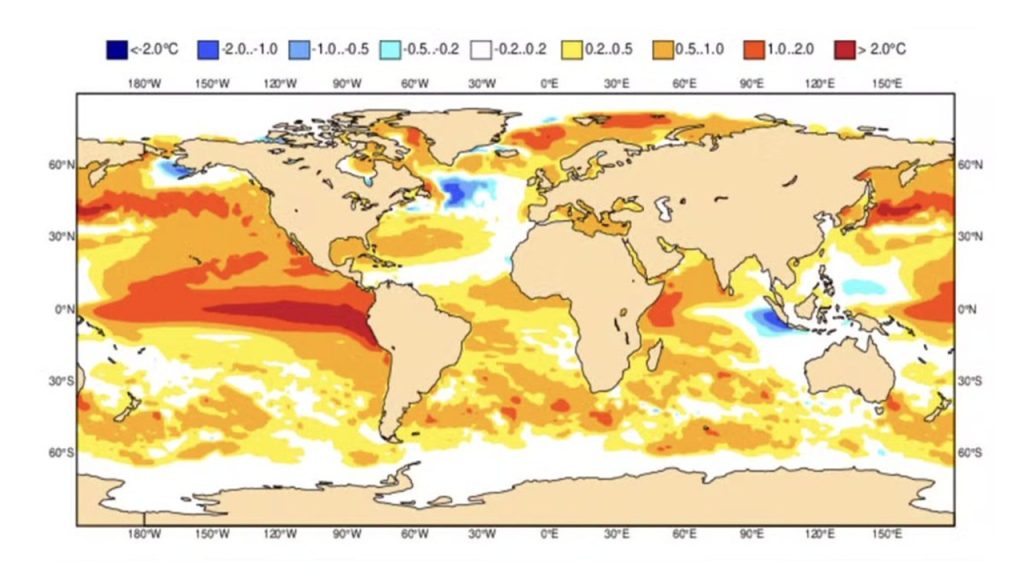
A Super El Niño is an unusually intense version of the natural climate pattern known as El Niño. It occurs when surface temperatures in the central and eastern Pacific Ocean become significantly warmer than normal. This warming disrupts atmospheric circulation and can trigger major weather changes around the world.
The super El Niño effects often include stronger storms, extreme rainfall in some regions, and drought in others. Because of its powerful influence on global climate systems, scientists closely monitor this El Niño climate phenomenon to predict potential weather impacts.
What Is El Niño?
El Niño is a natural climate cycle that occurs every few years in the Pacific Ocean. During this phase, ocean surface temperatures near the equator become warmer than average. This warming affects trade winds and atmospheric patterns, which can alter rainfall, temperature, and storm activity across different parts of the world.
The El Niño global weather impact can include heavier rainfall in some regions and unusually dry conditions in others.
What Makes a Super El Niño Different?
A super El Niño occurs when the warming of the Pacific Ocean is much stronger than typical El Niño events. Scientists classify an event as “super” when ocean temperatures rise significantly above the normal El Niño threshold.
These powerful events happen rarely but can produce more dramatic super El Niño effects, including severe floods, extreme droughts, and widespread climate disruptions.
How Super El Niño Affects Global Weather
The strong El Niño climate pattern can influence weather systems worldwide. For example:
- Heavy rainfall and flooding may occur in parts of South America and the United States.
- Australia and Southeast Asia can experience drought conditions.
- Warmer global temperatures may be recorded during strong El Niño years.
Because of these widespread effects, the El Niño global weather impact is carefully studied by meteorologists and climate scientists.
Super El Niño and Climate Change
Some scientists believe climate change could intensify certain ocean warming events, potentially increasing the chances of extreme El Niño episodes. While Pacific Ocean climate patterns have existed for centuries, rising global temperatures may amplify their effects.
Research continues to examine how warming oceans might interact with natural climate cycles such as El Niño and La Niña.
Why Scientists Closely Monitor El Niño Events
Understanding super El Niño events helps scientists and governments prepare for extreme weather risks. Early detection allows countries to plan for potential floods, droughts, and agricultural disruptions.
Monitoring ocean temperatures, wind patterns, and atmospheric conditions helps improve weather forecasting and climate predictions worldwide.
FAQs
1. What is a Super El Niño?
A super El Niño is an unusually strong El Niño event characterized by extreme warming of Pacific Ocean surface waters.
2. How does El Niño affect global weather?
The El Niño global weather impact can include heavy rainfall, droughts, and changes in temperature patterns across different regions.
3. How often does a Super El Niño occur?
Super El Niño events are rare and typically occur only a few times over several decades.
4. Is climate change linked to stronger El Niño events?
Scientists are studying whether warming oceans caused by climate change could intensify strong el niño climate patterns in the future.