
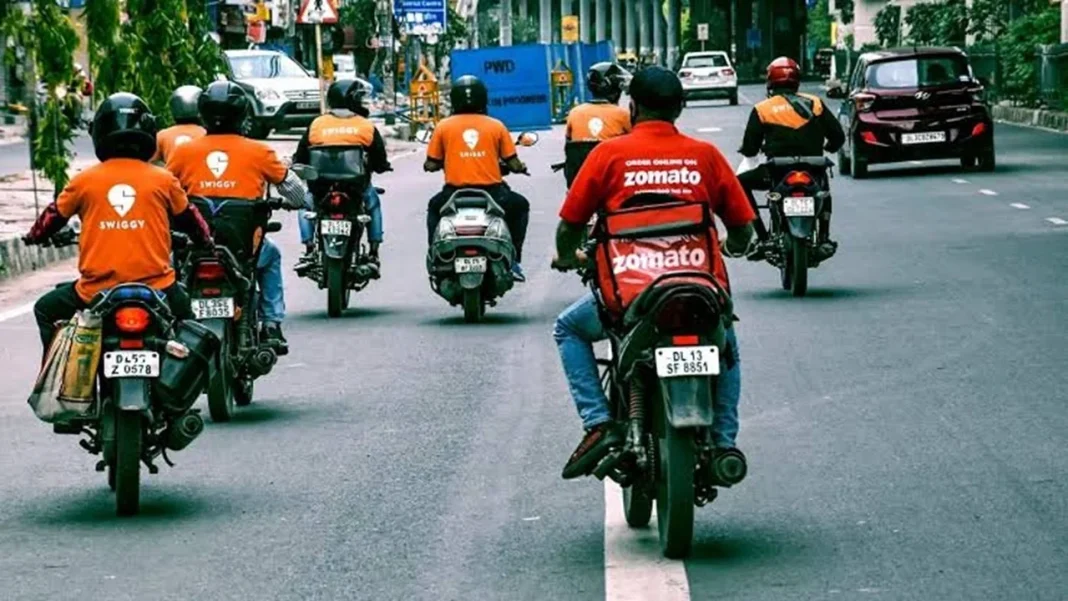

Telangana moved first in 2026 with a law that directly targets the insecurity faced by app-based delivery riders, cab drivers, and other platform workers. After months of consultations, the Assembly passed the Telangana Platform-Based Gig Workers (Registration, Social Security and Welfare) Bill on March 30, 2026. The move matters because gig work has grown fast in cities, while income volatility, accident risk, and opaque app deductions have remained largely on workers’ shoulders. For delivery workers especially, this Bill signals that the government is no longer treating them as invisible labour.
An official Telangana government draft had already been put in the public domain in 2025 for suggestions, showing that the state was building the law through consultation instead of rushing a headline measure. That also gave unions and workers room to push for stronger safeguards before the final version reached the Assembly earlier in the year.
Why Telangana’s New Bill Is Getting Attention
The Bill creates a formal welfare system for platform-based workers, a category that includes food delivery partners, parcel riders, and app drivers. According to reporting on the law, Telangana expects it to cover more than 4 lakh workers across the state. The law provides for worker registration, a welfare board, grievance handling, and a dedicated social security fund. It also pushes platforms to share information more regularly with the government.
That makes this more than a symbolic announcement. It sets up an administrative structure that can track workers, collect welfare contributions, and intervene when complaints pile up. ANI X post on the Bill
What Delivery Workers Could Actually Get
For many riders, the biggest shift is that welfare is being written into law instead of depending on company goodwill. The Bill provides for insurance, pension-linked support, maternity benefits, and other welfare measures through a state-backed fund. Each registered worker is expected to receive a unique ID, which could make access to schemes easier and reduce the usual paperwork burden.
The proposed system also addresses worker complaints over unexplained deductions and unfair app-led decisions. That point has become especially relevant as quick-commerce and hyperlocal delivery platforms keep pushing tighter timelines, higher order volumes, and stronger algorithmic control over workers’ daily earnings.
How The Government Plans To Fund And Enforce It
The state plans to build the welfare fund through a levy on platform transactions, reported at 1% to 2%. Companies would need to file transaction-related returns and comply with disclosure requirements. Penalties have also been written in for non-compliance, which is why the Bill is being seen as tougher than a routine welfare promise.
A welfare board with representation from multiple sides, including workers, is expected to monitor the system. Only a limited share of the fund can be used for administrative expenses, which is meant to keep the money focused on worker benefits rather than office costs.
Stay informed on India’s key shifts.
What Does Census Self Enumeration Mean?
Explore how digital counting will work.
What To Expect From Q4 Earnings?
Discover key signals investors are tracking.
Why Do UPI Issues Happen Daily?
Check common digital problems and fixes.
Why Are Women-Led Startups Rising?
Explore growth trends in India’s ecosystem.
Which Labour Rules Changed For Employees?
Discover key updates every worker must know.
Why This Could Shape The Bigger Gig Economy Debate
This Bill lands at a time when India’s delivery economy is under sharper scrutiny. Worker unions have repeatedly flagged low payouts, unsafe pressure, arbitrary suspensions, and weak social protection. Nationally, fast delivery promises have also come under criticism because they can raise road-risk pressure on riders. Telangana’s move will now be watched as a test case.
If registration works, welfare money is collected properly, and complaints are handled without delay, other states may face stronger pressure to move faster. For delivery workers, that would mean the conversation finally shifts from convenience for customers to dignity, safety, and minimum protection for the people behind every order.
FAQs
What does Bill do?
Telangana’s Bill registers gig workers and builds welfare support with social security and complaint access.
Who benefits the most?
Delivery riders, cab drivers, and other app-based workers in Telangana are the beneficiaries under it.
How will the welfare fund work?
The welfare fund is expected to come from a 1% to 2% levy on transactions.
Are companies required to comply?
Yes, the law includes penalties for platforms that fail disclosure, filing, or welfare contribution requirements.
Why is this important nationally?
It matters because gig workers gain legal protection, accountability, and access to basic welfare benefits.