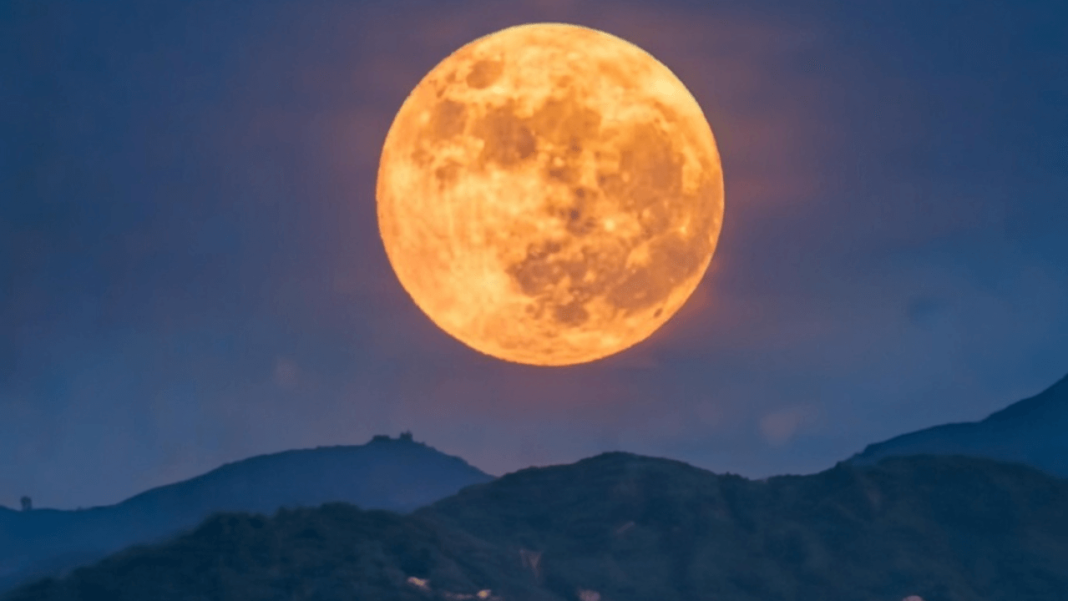

Wolf Supermoon lights up Indian skies tonight, and the timing suits a lot of people. A clear January night, a bright full Moon, and that extra “supermoon” punch that makes the disk look a bit larger than usual. The Wolf Supermoon also brings the old Wolf Moon name back into the news cycle, tied to mid-winter nights and long-running calendar traditions, a moment now featured in Latest News in India. Some clouds may spoil pockets of the view, but large parts of India still get a strong chance. That’s the mood, basically.
What Is the Wolf Supermoon?
The Wolf Supermoon is a January full Moon that happens close to the Moon’s nearest point to Earth in its orbit. That “near point” detail matters, because it makes the Moon look slightly bigger and brighter compared to an average full Moon. Not double, not dramatic like movie posters, still noticeable on a clean horizon. That’s how it reads in real life.
“Wolf Moon” is the traditional name linked to January’s full Moon in many Northern Hemisphere naming systems. The label sits in folk calendars and old seasonal talk, not in astrophysics textbooks. Still, it sticks. People remember it, and headlines keep it alive. Feels old-school, in a good way.
When and Where to See the Wolf Supermoon in India Tonight
Across India, the Wolf Supermoon becomes easiest to spot after sunset once the Moon lifts above the eastern horizon. Timing varies by city and local horizon, so minute-level moonrise times change place to place. Astronomy apps and standard weather apps usually show moonrise and moonset times without fuss. That’s the practical route.
Visibility tends to improve as the Moon climbs higher. Near the horizon it can look warmer in colour, sometimes yellowish or orange, thanks to extra atmosphere along the line of sight. Later in the night the colour often turns cleaner and whiter. Not a rule, but it happens a lot.
Good viewing needs three basics:
- Clear patch of sky toward the east after dusk
- Low light pollution, or at least a darker corner away from floodlights
- A stable place to stand, since neck strain becomes real fast
Small note: haze can make the Moon look soft. Some people like that look. Others call it annoying. Both reactions show up every year.
Why the Wolf Supermoon Appears Bigger and Brighter
The Moon does not circle Earth in a perfect circle. The orbit is slightly stretched, so the Moon swings closer at one part of the month and farther at another. When a full Moon happens near the closer swing, the term “supermoon” gets used.
What changes in the sky is the apparent size, meaning how large the Moon looks compared to background objects. The difference is modest, yet the human eye picks it up best near the horizon with buildings, trees, or hills as reference points. So the “wow” moment often comes at moonrise, not at midnight. That’s how it goes.
And brightness rises a bit too, because the Moon sits a little nearer. Still, the bigger effect for many viewers is psychological: a big bright circle in a dark winter sky just hits differently. Simple as that.
Best Viewing Spots Across India for the Wolf Supermoon
Big cities can still see the Wolf Supermoon, but the Moon competes with streetlights and haze. Cleaner views often come near open grounds, lakesides, beaches, and hill edges.
A quick guide, kept simple:
| Area type | Examples across India | What usually works well |
| Waterfront edges | Marine Drive stretches, river ghats, lakeside promenades | Open horizon, fewer tall blocks blocking moonrise |
| Open grounds | Maidans, large parks, stadium outer areas | Easier framing and steadier photos |
| Hill viewpoints | Local hilltops, fort viewpoints, ridge roads | Sharper air on many nights, wider sky |
| Smaller towns | Outskirts and low-traffic roads | Lower glare, darker sky pockets |
Cloud cover decides everything on the day. That’s the annoying part. Some nights look perfect in forecasts and still turn messy. It happens.
Tips to Photograph the Wolf Supermoon
Phone photos can look flat if the camera auto-exposes for the dark sky and blows out the Moon. A few basic adjustments help.
For smartphones:
- Tap on the Moon to lock focus and exposure
- Pull exposure down a little, so the Moon keeps detail
- Use a stable support: a wall, railing, or simple tripod
- Avoid digital zoom if possible, it turns grainy fast
For cameras:
- A longer lens helps more than any filter
- Use a faster shutter to keep detail on the bright surface
- Manual focus can beat auto-focus in low light
- A few test shots beat guessing settings
So yes, the “Moon looks tiny” problem stays common. Framing the Moon with a skyline, temple spire, or palm tree often makes the photo feel more real. That’s a neat trick.
Key Highlights of Tonight’s Astronomical Event
- Wolf Supermoon visible across India on a clear night
- Best visual impact often appears near moonrise on the eastern horizon
- Supermoon effect means a slightly larger and brighter Moon than average
- Naked-eye viewing works fine, no special gear needed
- Photography works best with steady support and controlled exposure
Short point: the Moon will look bright enough to wash out faint stars nearby. That is normal on full Moon nights.
Cultural Significance of the Wolf Moon
The Wolf Moon name is often explained through winter imagery and old seasonal notes about animals and night sounds. In India, the same night also aligns with local lunar calendars that many families already track for rituals, fasting days, and community gatherings. The labels differ, but the habit of noticing the full Moon stays strong.
In many homes, a full Moon night still means terrace time, quiet talk, and a quick look at the sky between daily tasks. Not everyone makes it poetic. Many people just look up, nod, and move on. That is also culture, honestly.
FAQs
1) Why is it called the Wolf Supermoon and not simply a January full Moon?
The “Wolf” name comes from old seasonal naming, and “supermoon” points to a nearer full Moon night.
2) What time does the Wolf Supermoon rise in India tonight?
Moonrise timing changes city to city, so local moonrise listings on weather or astronomy apps give accurate minutes.
3) Will the Wolf Supermoon look huge to the naked eye in India?
It looks a bit larger than usual, most noticeable near the horizon with buildings or trees nearby for comparison.
4) Can the Wolf Supermoon be photographed on a basic mobile phone camera?
Yes, focus lock and slightly reduced exposure help, plus a steady support like a railing or tripod.
5) Does cloud or air pollution ruin the Wolf Supermoon view completely?
Not always, because short clear gaps can still show the Moon well, though detail may look softer in haze.