

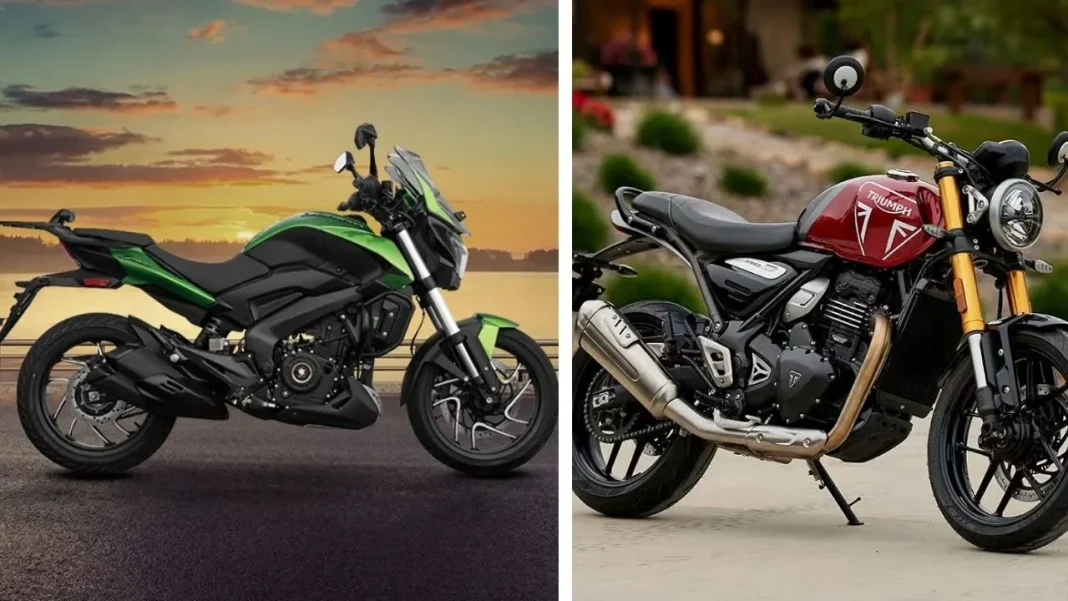

The headline needs one correction first. These are not 350 cc budget bikes in the usual sense. The Dominar 400 now lists a 349.13 cc motor, while the Speed 400 is still sold as a premium 400-class roadster and starts above the Rs 2 lakh mark in India. Still, this is a fair fight because buyers shopping near this band often end up choosing between these two for very different reasons.
Price Changes Have Made This Fight Much Tighter
Bajaj has made the Dominar 400 a sharper value play. Its official site lists an ex-showroom price of Rs 2,03,214 in Delhi, which is a big talking point for a motorcycle making 40.6 PS and 33.2 Nm. Triumph’s official India listing places the Speed 400 from Rs 2,31,891, while an official 2025 price-cut release had put it at Rs 2,33,754. That gap is still visible at the showroom.
If your budget is tight, the Dominar lands the first hit. If you can stretch a little, the Triumph keeps itself in play with stronger finish, lighter feel, and a cleaner city-bike image. Triumph India has also kept promoting the Speed 400 heavily through official social posts, while Bajaj continues to push the Dominar as a distance machine.
Engine, Weight, And Daily Use Tell Two Different Stories
On paper, the Dominar 400 makes 40.6 PS and 33.2 Nm from its 349.13 cc engine. It also gets 4 ride modes, traction control, USD forks, slipper clutch, and dual-channel ABS. The catch is weight. Bajaj lists kerb weight at 190 kg.
The Triumph Speed 400 makes 37 PS and 32 Nm, and its official specification page lists 179 kg wet weight. That difference changes the ride. In traffic, on short sprints, and during quick direction changes, the Triumph usually feels easier and less demanding.
Where The Numbers Start Showing On The Road
The Dominar feels planted and solid. The Speed feels lighter, shorter, and more eager. One is happier eating highway miles. The other feels more polished for mixed city use with weekend fun. That is the split.
Highway Touring Or City Riding: Pick Your Side
This is where the Dominar 400 makes its strongest case. Bajaj sells it as a sports-tourer, and the official page leans hard on touring accessories, luggage support, upright ergonomics, and long-distance comfort. If you ride with bags, a pillion, or highway plans every month, that pitch is not fluff.
The Speed 400 takes the opposite route. It is a modern classic roadster with cleaner proportions, easier weight management, and a more premium everyday feel. Triumph’s recent official post again pushed the Speed 400’s appeal to style-led urban buyers.
You May Also Like These Must-Read Stories
Is Nissan Changing SUV Strategy Soon?
Explore Nissan’s upcoming SUV shift.
Will European Cars Get Cheaper Soon?
Discover impact of tariff cuts.
Which Tata Cars Are Coming Next?
Check upcoming Tata models list.
Why Are 7 Seaters Dominating Roads?
Explore rising 7-seater demand.
Is India EV Market Growing Rapidly?
Discover latest EV market trends.
Which Bike Should You Buy In 2026?
Buy the Bajaj Dominar 400 if you want stronger value, touring hardware, more power on paper, and a machine that feels built for highways first. Buy the Triumph Speed 400 if you want lower effort in daily riding, better urban manners, lighter feel, and a more polished badge-image package.
So, which is the better motorcycle near this price zone? The Dominar wins on value. The Speed 400 wins on feel. For most commuters, Triumph stays easier to live with. For riders planning distance, Bajaj gives more motorcycles per rupee.
FAQs
1. Which bike is cheaper in 2026?
Bajaj Dominar 400 is cheaper, with official Delhi ex-showroom pricing noticeably below Triumph Speed 400.
2. Which motorcycle feels lighter in traffic?
Triumph Speed 400 feels lighter in traffic because its official wet weight is lower.
3. Is Dominar 400 better for touring?
Yes, Dominar 400 suits touring better thanks to comfort accessories, planted feel, and highway focus.
4. Does Speed 400 make less power?
Yes, Speed 400 makes less peak power than Dominar 400, but feels easier daily.
5. Which one offers better value?
Dominar 400 offers stronger value because performance and pricing look harder to ignore.