

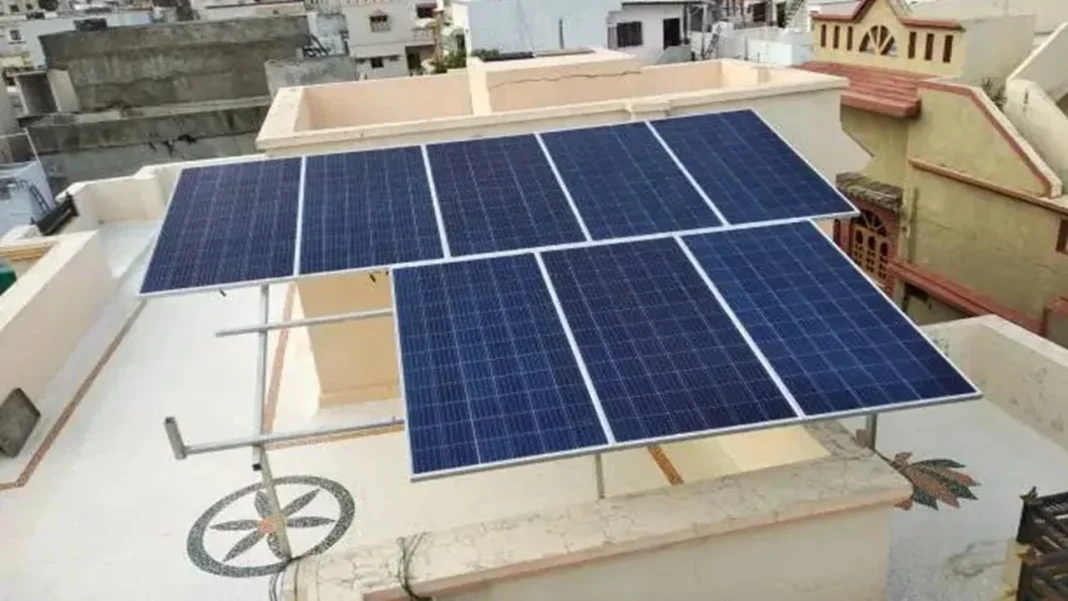

May and June bills can make every ceiling fan feel expensive. That is why rooftop solar is suddenly a middle-class money story, not just a green-energy story. Under PM Surya Ghar: Muft Bijli Yojana, Indian households can apply online for a government subsidy, install rooftop solar through approved vendors, and cut grid dependence before peak summer usage bites harder. For renters, this is usually not direct unless the connection and roof rights match clearly. Avoid shortcuts too.
Why This Solar Rooftop Subsidy Is Trending This Summer
The trend is simple: power use rises, bills rise, and households want a fix that lasts longer than one season. The scheme has already crossed 10 lakh solar-powered homes, with the government targeting 1 crore households by 2026-27. Many families are also treating solar like a home upgrade, similar to a water purifier or inverter, because savings appear monthly instead of only at resale. MNRE India’s X post on the PM Surya Ghar portal.
Subsidy Amount, Eligibility And Real Bill Savings
The central subsidy depends on electricity consumption and system size. Homes using 0-150 units may choose 1-2 kW and get ₹30,000 to ₹60,000. Homes using 150-300 units may choose 2-3 kW and get ₹60,000 to ₹78,000. For systems above 3 kW, the subsidy remains capped at ₹78,000.
You should be an Indian household with a valid electricity connection, a suitable rooftop, and no previous solar subsidy for the same connection. A 3 kW system can generate over 300 units a month on average, so the biggest benefit goes to homes where daytime consumption, net metering, and DISCOM rules work cleanly together.
How To Apply On The Official Portal Today
Apply only through the PM Surya Ghar National Portal. Register with your mobile number, choose your state and DISCOM, enter your consumer number, and submit the rooftop solar application. After feasibility approval, select a registered vendor, finalise the plant size, complete installation, and apply for net meter inspection.
Once the system is commissioned and bank details are updated, the subsidy is transferred directly to the consumer’s bank account. PIB says the average central financial assistance processing time is around 15 days after the redemption request, provided details are correct.
Big updates at a glance.
How Much Has PM-KISAN Paid?
Check total payout and impact.
Why UP Stopped Smart Meter Rollout?
Explore new rules and alerts.
Is Your Aadhaar Biometrics Really Safe?
Discover latest scam warnings.
What Will Vijay Announce April 16?
Check key manifesto highlights.
What Is Census 2027 Self Enumeration?
Explore digital census changes.
What To Check Before Choosing A Vendor
Do not choose only by the lowest quote. Check panel wattage, inverter brand, structure strength, warranty, after-sales service, earthing, shadow analysis, and whether the vendor explains net metering properly. A cheaper system can become costly if generation drops every afternoon because one water tank or neighbouring wall casts shade.
Also ask for a written cost breakup. It should show panels, inverter, mounting structure, wiring, protection devices, net meter support, GST, and maintenance terms. For apartments, confirm society permission first. For independent homes, confirm roof ownership and clear access for technicians.
FAQs
Who Can Apply For The Solar Rooftop Subsidy?
Indian residential electricity consumers with suitable rooftops and no previous solar subsidy can apply online.
How Much Subsidy Is Available For Rooftop Solar?
The central subsidy ranges from ₹30,000 to ₹78,000, depending on approved system capacity.
Where Should I Apply For The Scheme?
Apply through the official PM Surya Ghar portal, not agents, WhatsApp links, or unofficial sites.
How Long Does Subsidy Transfer Usually Take?
PIB mentions around 15 days after redemption request, when all submitted details are correct.
Can Solar Really Reduce My Summer Electricity Bill?
Yes, if your roof gets sunlight and your DISCOM completes net metering without delay.