
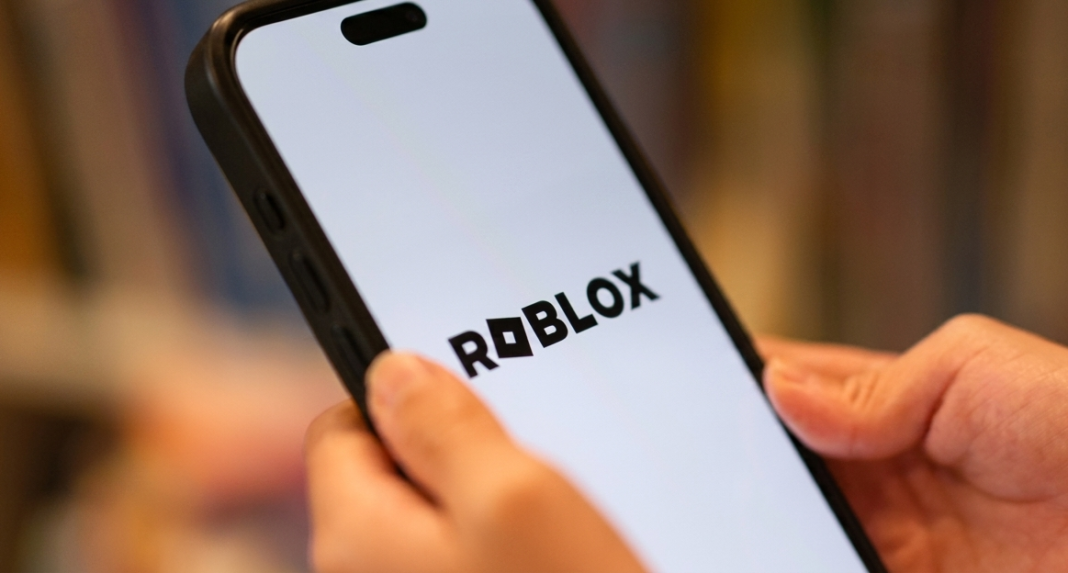

Roblox has entered an Indian courtroom just as gaming platforms are being judged less like toys and more like social networks. On 8 July 2026, the Lucknow Bench of the Allahabad High Court issued notices in a public interest litigation seeking restrictions on minors’ access to Roblox and similar platforms. The court has not banned Roblox. It has asked government authorities, child-rights bodies and platform representatives to address concerns raised in the plea, according to an Indian Express report.
The dispute asks whether age checks, chat filters, content ratings and parental tools are strong enough for spaces where children play, spend money and communicate with unknown users. Roblox is the central example, but the challenge reaches other games carrying social features, virtual currencies and user-created content.
What Triggered the Roblox PIL in India?
Practising lawyer Rani Singh filed the case, registered as PIL No. 608 of 2026. A division bench of Justices Rajan Roy and Manjive Shukla heard it. The court order dated 8 July records that notices were issued to several respondents and made returnable at an early date.
As reported, the petition alleges risks involving sexual grooming, unsuitable content, cyberbullying, excessive screen time, virtual-currency spending, data collection and weak age verification. These are claims awaiting examination. The notice is not a finding that Roblox violated Indian law or that every young player faces harm.
Roblox draws attention because it is not one fixed game. It hosts user-made experiences where players customise avatars, enter multiplayer spaces, chat and buy Robux. That combination can be harder for a parent to supervise than a conventional game with preset content.
What Is the PIL Asking the Court to Examine?
The petition seeks action extending beyond a warning label:
- Restricting minors’ access to Roblox and comparable platforms
- Forming a committee of child psychologists, cyber experts, AI moderators and law-enforcement officials
- Running periodic safety programmes for students, teachers and parents
- Reviewing age checks, chatrooms, content controls, digital spending and compliance with Indian child-protection laws
These requests appear in the petition and the court’s order, although the judges have not yet accepted or rejected them.
The case names 15 respondents, including central and Uttar Pradesh departments, child-protection commissions and Roblox’s Indian corporate representative. MeitY and the ministries responsible for home affairs, education, and women and child development are among them. LiveLaw also shared an official Instagram update on the Roblox PIL.
The plea reportedly treats Roblox as an example of a wider issue. It also refers to PUBG, Free Fire MAX, Fortnite, Battlefield, Grand Theft Auto, and Manhunt. The court may therefore examine how India should regulate games that combine play with open communication, social discovery, user-made spaces, and digital purchases.
Why Are Roblox’s New Safety Features Still Being Questioned?
Roblox has recently tightened its systems. On 16 June 2026, it made Roblox Kids and Roblox Select accounts globally available. Kids’ accounts cover ages 5 to 8, while Select accounts cover ages 9 to 15. Chat is disabled by default for younger children, age checks are required for communication, and parents can manage game access.
Scale, however, leaves little room for error. Roblox reported about 132 million average daily active users during the first quarter of 2026. Its US regulatory filing says users can evade age checks and that the technology may misclassify ages. A system that usually works may still expose a child when it assigns the wrong group.
Outside pressure is rising. A May 2026 research preprint analysing roughly 2 million Roblox chat messages found that grooming-related, sexual, bullying, violent, and self-harm messages sometimes escaped moderation. Child-safety campaigners also requested a US Federal Trade Commission investigation into Roblox’s safety and monetisation practices. Roblox disputes broad allegations that its service is unsafe and points to filtered chat, reporting tools, age checks and parental controls.
What Could the Court’s Review Change?
The next stage is responses, not prohibition. The court could examine whether current laws already address the alleged risks, whether enforcement is weak, or whether an expert committee is needed. Possible areas include stronger age assurance, spending controls, local-language moderation, faster complaints and school guidance.
India’s Digital Personal Data Protection framework is relevant because its phased rollout includes child-focused consent and data safeguards. The case may test how privacy, gaming rules, platform duties and child welfare should operate together.
Roblox remains available in India unless a later court order or government decision changes that position. Yet the PIL raises a lasting question: when a youth-heavy game also works as a social platform and marketplace, who carries the final duty to stop harm?
FAQs
Has the Allahabad High Court banned Roblox in India?
No. The court has issued notices and sought responses; it has not ordered any ban.
What relief does the Roblox PIL seek?
The petition asks for restricted minor access, expert review, school awareness programmes, and stronger safeguards.
Why is Roblox different from a traditional video game?
Roblox combines user-created games, social chat, avatars, virtual spending, and interactions with potential strangers online.
What protections does Roblox say it provides?
Roblox says age checks, filtered chat, parental controls, and age-based accounts reduce risks for children.
What can parents do while the case continues?
Parents can link accounts, limit chat and spending, review games, and report suspicious behaviour promptly.