

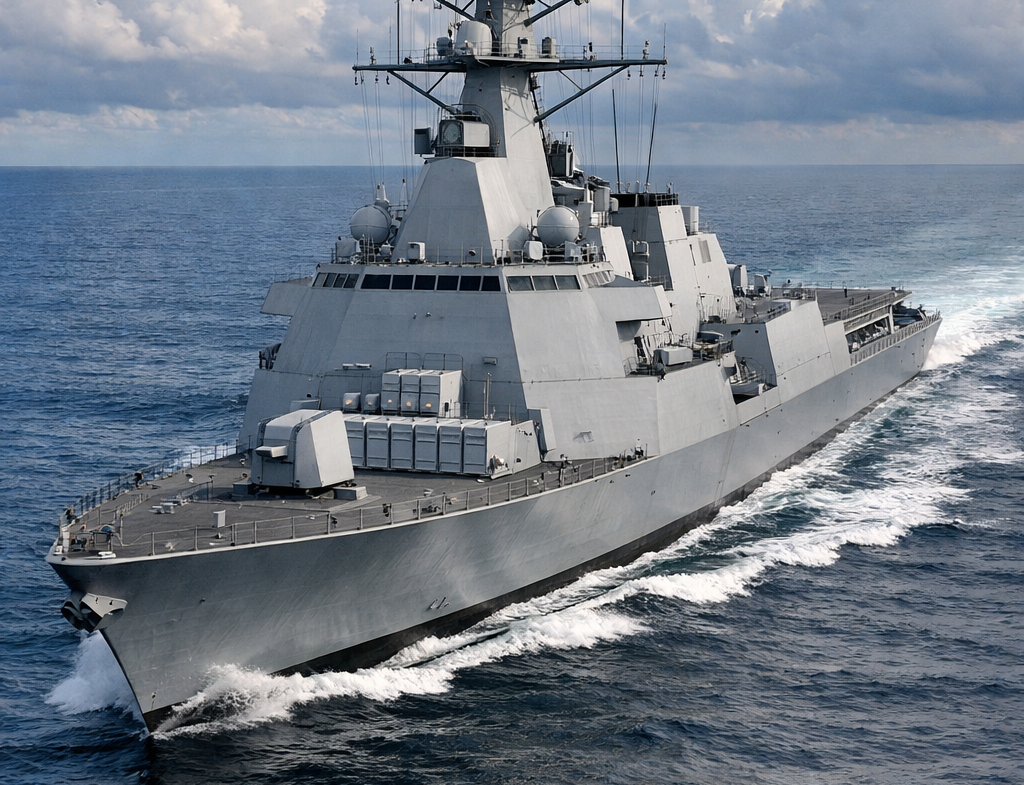

India may be preparing one of its largest indigenous naval shipbuilding drives, centred on Project 15C destroyers, Project 17B stealth frigates, and Project 18A large surface combatants. Reports published in July 2026 place the three proposals at different planning stages, with as many as 16 frontline warships being discussed. The combined push has been valued at up to ₹1 lakh crore, although a separate cost for Project 18A has not been publicly detailed.
These are not yet confirmed construction contracts. An NDTV report said internal consultations must be completed before the proposals enter the formal defence acquisition process. That distinction is important because ship numbers, costs, weapons, and schedules can still change.
What Has Been Reported About India’s New Warship Plan?
The proposed fleet package appears designed to extend three successful Indian warship families. Project 15C would follow the Kolkata-class and Visakhapatnam-class destroyers. Project 17B would succeed the Nilgiri-class frigates. Project 18A would move into a much heavier category, closer to a large air-defence and command warship than a conventional frigate.
The reported outline is:
- Project 15C: four guided-missile destroyers estimated at around ₹50,000 crore.
- Project 17B: six advanced stealth frigates estimated at around ₹40,000 crore.
- Project 18A: six large surface combatants displacing roughly 14,000 to 15,000 tonnes.
- Status: internal planning and consultation, with no publicly announced final procurement clearance.
The story was also shared by NDTV’s official X account, allowing readers to follow the original newsroom update directly.
Project 15C Could Extend India’s Destroyer Line
Project 15C is reported as a four-ship class of next-generation guided-missile destroyers. It would draw from Project 15A Kolkata-class ships and Project 15B Visakhapatnam-class ships, while introducing newer sensors, electronic warfare equipment, weapons, and stronger air-defence systems.
The Project 15B line already produced INS Visakhapatnam, INS Mormugao, INS Imphal, and INS Surat. A government review of indigenous naval shipbuilding lists INS Surat as the fourth ship, commissioned in January 2025. Project 15C may therefore represent an evolutionary jump rather than a completely unrelated design.
Reports suggest a request for proposal could emerge within a year, followed by construction roughly three years later, subject to design approval and procurement clearance. At an estimated ₹50,000 crore, it would be the costliest of the two projects for which figures have surfaced.
Project 17B May Produce Six Stealth Frigates
Project 17B is expected to build on the Nilgiri-class Project 17A programme. The proposed class reportedly includes six stealth frigates, with three ships each planned for Mazagon Dock Shipbuilders Limited and Garden Reach Shipbuilders and Engineers.
That division would keep two major public shipyards active and preserve parallel production capacity. It may also reduce the risk of placing an entire frontline programme at one yard.
The timing is notable. India commissioned INS Mahendragiri, the sixth Project 17A frigate, on 11 July 2026. The Ministry of Defence release said the ship carries more than 75% indigenous content and combines stealth features, automation, missiles, electronic warfare equipment, and anti-submarine systems.
Project 17B could carry that design experience into a larger sensor and weapons package. However, detailed displacement, missile-cell count, radar fit, and propulsion choices remain unconfirmed. Reports place a possible RFP about 18 months away, with construction beginning around four years after its issue.
Project 18A Would Be The Biggest Leap
Project 18A is the most ambitious and least mature proposal. Six ships of approximately 14,000 to 15,000 tonnes are reportedly being considered. That would put them well above India’s current destroyers by displacement and among the largest surface combatants built domestically.
The ships are expected to prioritise long-range strike, layered air and missile defence, command-and-control functions and endurance for distant deployments. Their size could provide space for larger radar arrays, additional missiles, unmanned systems and future power-hungry equipment. Those possibilities remain informed projections, not approved specifications. It would also place heavier demands on shipyard infrastructure, financing and skilled naval engineering.
An RFP may take around three years, while construction could begin about eight years later because the design is more complex. If cleared, Project 18A could operate as a fleet air-defence hub, escort major task groups and coordinate operations across wider stretches of the Indian Ocean and Indo-Pacific.
Together, the three classes would give India a layered surface fleet: frigates for flexible multi-mission work, destroyers for high-end escort and air defence, and large combatants for command, missile defence and sustained reach. The immediate story, though, is planning rather than steel cutting.
Frequently Asked Questions
What is Project 15C?
Project 15C is a reported programme for four advanced guided-missile destroyers following the Visakhapatnam class.
How many Project 17B frigates may be built?
Reports indicate six stealth frigates, likely divided equally for construction between MDL and GRSE shipyards.
How large could Project 18A warships be?
Each ship may reach fifteen thousand tonnes, becoming India’s largest domestically built surface combatant class.
Have all three naval projects been approved?
No. Available reports say they remain under internal planning before entering formal defence acquisition procedures.
Why could India need these new warships?
They would strengthen long-range air defence, maritime strike, escort operations and sustained Indo-Pacific deployments considerably.