
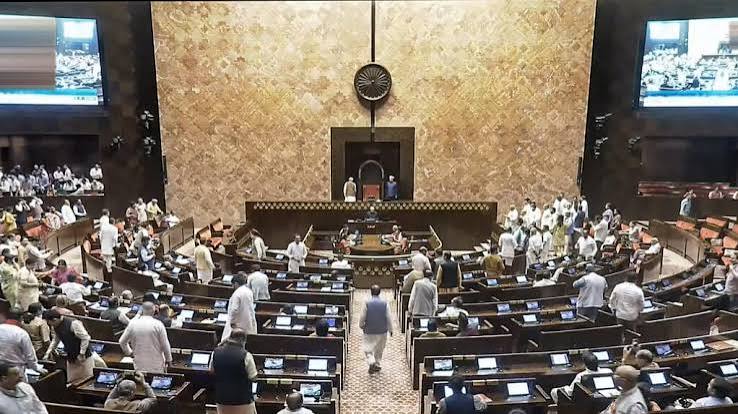

Parliament appears ready to speak after spending six days shouting past itself. On Tuesday, July 28, the Lok Sabha is scheduled to debate the Public Examinations (Prevention of Unfair Means) Amendment Bill, 2026, after Speaker Om Birla’s talks with floor leaders persuaded the Opposition to participate. At least six hours have been allotted. That is progress, not resolution.
The latest Parliament Monsoon Session 2026 live coverage shows Congress preparing to question alleged corruption in NEET and other examinations. NDA MPs, meanwhile, protested over an alleged paper leak in Punjab. Every side wants ownership of student anger. The harder task is accepting responsibility for repairing the system.
Six Days Lost, One Debate To Recover Them
The deadlock began with Opposition demands for discussion on the NEET controversy and alleged police action during the July 20 student march towards Parliament. The row deepened after former Education Minister Dharmendra Pradhan resigned amid the controversy. The government offered debate time but wanted listed business to proceed. Repeated adjournments followed, and the amendment was introduced on Monday amid uproar without substantive discussion.
Parliament’s conduct became difficult to defend. Protest inside the House can force attention onto an ignored grievance. Six straight days of disruption, however, denied students the scrutiny they were demanding. MPs cannot condemn an examination system for wasting young people’s time while wasting the national forum meant to question ministers and test legislation.
Speaker Birla’s outreach has created an exit. Congress MP Kodikkunnil Suresh says the INDIA bloc will participate actively. Yet the logjam ends only when members challenge clauses, hear replies and place amendments on record. Televised speeches followed by another walkout would merely change the form of the deadlock.
What The Anti-Paper Leak Bill Actually Changes
The full text of the 2026 amendment bill is tougher than the 2024 law. It raises punishment for individuals using unfair means to five to 10 years and increases the maximum fine to ₹50 lakh. Organised crime could attract at least seven years in prison and a minimum ₹10 crore fine. Service providers may face fines up to ₹5 crore and an eight-year debarment.
The main proposals include:
- completing investigations within two months;
- creating Special Task Forces for selected cases;
- designating Special Fast Track Courts across states and Union Territories;
- finishing trials within three months of the chargesheet;
- hearing appeals through two-judge High Court benches, preferably within three months.
These timelines deserve support. Candidates suffer again when investigations crawl, and trials vanish into ordinary court backlogs. The PRS Legislative Research summary notes that pending cases would move to designated fast-track courts. The proposal therefore addresses future offences and unresolved cases already testing public patience.
Earlier, Prime Minister Narendra Modi announced fast-track courts in an official X post regarding paper leak cases. Parliament must now ask whether deadlines are backed by judges, prosecutors, forensic capacity and trained investigators. A statutory timeline means little when institutions lack people to meet it.
Tougher Punishment Alone Will Not Secure Examinations
The amendment attacks the punishment gap, not the entire prevention gap. Leaks can begin before candidates reach an examination hall: printing contracts, digital access, question-bank handling, transport routes, outsourced staff, compromised centres and insider networks. Parliament should ask who audits each stage, how access logs are preserved and when authorities must disclose a breach.
It should also ask what happens to candidates after cancellation. A leaked test can cost months of preparation, travel expenses, coaching fees and another age-limit attempt. The Bill focuses on offenders but says little about automatic refunds, free re-examinations, compensation standards or whistleblower protection. Those omissions decide whether students are treated as citizens harmed by institutional failure or merely applicants awaiting another date.
The Opposition is right to seek answers about alleged force against protesters. The government is right that legislation affecting millions of aspirants deserves structured debate. Both positions can coexist. Parliament fails when either side treats the other question as a distraction.
Parliament Must Produce More Than A Truce
Tuesday’s debate may end the six-day parliamentary deadlock. The examination crisis will continue unless the House produces measurable safeguards: independent security audits, public breach protocols, protected reporting channels, fixed compensation rules and annual disclosure of investigations, chargesheets and convictions.
The government should accept amendments that improve oversight. The Opposition should question the Bill clause by clause instead of relying on slogans. The final vote may be predictable, but scrutiny need not be. Students are not asking which party won the afternoon. They are asking whether the next admit card will lead to a fair examination.
FAQs
Why was Parliament disrupted for six days?
Opposition parties demanded debate on NEET irregularities and alleged police action against protesting students nationwide.
What punishment does the amendment propose for individuals?
It proposes five to 10 years’ imprisonment and fines reaching ₹50 lakh for offenders convicted.
How quickly must paper leak investigations finish?
Investigations must finish within two months under the proposed amendment, subject to effective institutional staffing.
Will fast-track courts decide cases within three months?
The Bill requires three-month trials after chargesheets, though actual delivery depends on court capacity nationwide.
Can the debate permanently settle the exam crisis?
No. Parliament must also strengthen prevention, audits, compensation, whistleblower protection and examination authority accountability mechanisms.