
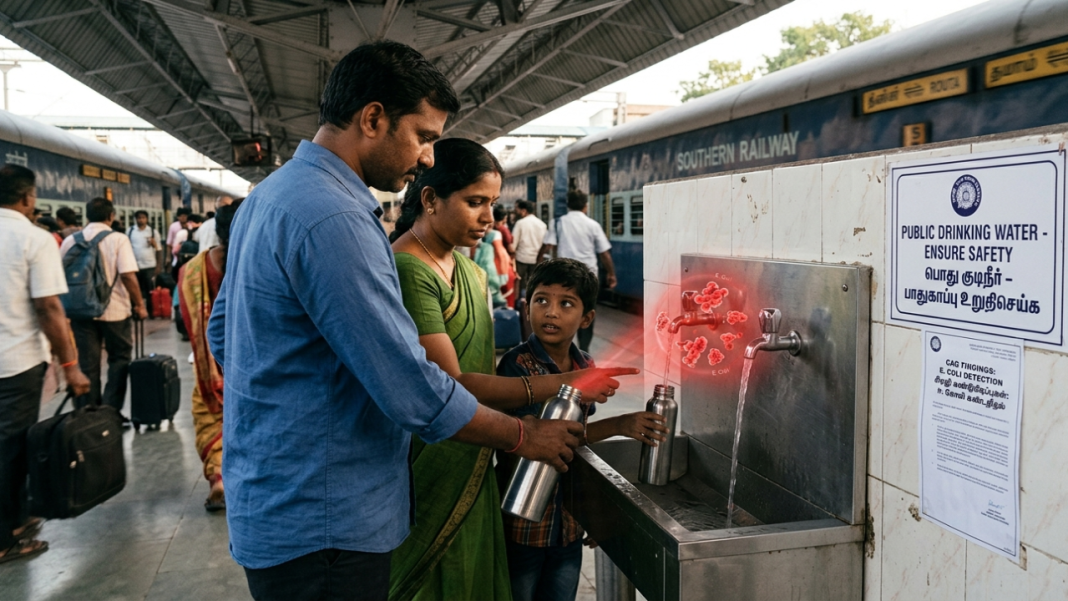

A railway platform water cooler is supposed to be the easy choice when a passenger is thirsty. A fresh CAG audit has made that choice harder. The Comptroller and Auditor General found E. coli in water-cooler samples at eight stations and wider bacteriological problems in platform tap water across several railway zones. The report, tabled in Parliament on August 12, 2026, covered 512 non-suburban stations and examined findings mainly from 2019-20 to 2023-24.
The headline is worrying, but it does not mean every railway cooler is contaminated today. It does show that water testing, chlorine checks, and inspection routines were not consistently followed. That is a serious gap for a network used by millions of passengers.
What Did The CAG Find In Railway Drinking Water?
According to the CAG audit report, water-cooler samples tested positive for E. coli at Coimbatore, Palakkad Junction, Hyderabad, Chhatrapati Shivaji Maharaj Terminus, Bhiwandi Road, Kalyan, Lonavala and Madhupur. The eight stations fall across Southern Railway, South Central Railway, Central Railway and Eastern Railway.
The problem was not limited to those eight coolers. Tests of platform tap water at 49 stations across eight zones in 2022-23 and 56 stations across nine zones in 2023-24 indicated total coliform bacteria, including E. coli. Bacteriological analysis was not carried out at 59 stations across six zones, according to the audit.
The wider station audit was also uncomfortable reading. Of 512 stations inspected, 458, or more than 89%, were deficient in at least one Minimum Essential Amenity. The CAG press brief also flagged shortfalls in residual chlorine testing, bacteriological analysis, chemical analysis and periodic inspection of water-supply systems.
How Risky Is E. Coli In Water From A Station Cooler?
E. coli is commonly used as an indicator of faecal contamination in water. The World Health Organization says microbiologically contaminated drinking water can spread diarrhoea, cholera, dysentery, typhoid and polio. Some disease-causing E. coli strains can produce abdominal cramps, diarrhoea and vomiting, while severe infections can become dangerous for young children and older people.
So, should passengers stop using every station cooler? The audit does not support that conclusion. Its findings come from selected stations and different audit years, not a live test of every cooler operating on August 17, 2026. What passengers can reasonably take from the report is simpler: a cooler looking clean or dispensing cold water does not prove that the water has passed microbiological testing.
The presence of E. coli at the named locations also deserves follow-up testing after cleaning, tank maintenance and disinfection. Fresh quality reports are more useful for judging present safety than assuming an older positive sample still reflects today’s outlet.
What Is Indian Railways Doing After The CAG Report?
The response came quickly. On August 16, Railway Minister Ashwini Vaishnaw reviewed drinking-water quality and directed immediate corrective action. Indian Railways now plans a “Tank-to-Tap” filtration and monitoring system at around 20,000 locations, including water coolers. The plan also includes replacing water tanks, testing water at source and outlet points, centralised monitoring and scheduled cleaning of storage tanks. News On AIR reported the Railway Ministry’s action, while the ministry said progress and water-quality reports would be published periodically.
The finding also moved quickly across social media. PTI’s official X account posted the CAG finding, highlighting E. coli and Railway Board norm violations.
The important test now is execution. Twenty thousand filtration points sound substantial, but passengers need working systems, documented cleaning schedules and repeat laboratory results, not only new equipment.
What Should Passengers Do Before Drinking From A Station Cooler?
There is no practical way for a passenger to test a cooler on the platform. A few checks can still reduce avoidable exposure:
- Prefer a clearly maintained outlet, avoid visibly dirty taps or leaking units, do not touch bottle mouths to nozzles, carry sealed water when travelling with young children or vulnerable family members, and report unhygienic water points through RailMadad or helpline 139.
The CAG report should not be read as proof that all station drinking water is unsafe. It is evidence that the safeguards meant to prove water is safe were unevenly applied. Until Indian Railways publishes regular outlet-level quality results under its new monitoring plan, passengers are likely to keep asking the same basic question before filling a bottle: when was this water last tested?
FAQs
Which Eight Railway Stations Had E. Coli In Cooler Water?
Coimbatore, Palakkad, Hyderabad, CSMT, Bhiwandi Road, Kalyan, Lonavala and Madhupur were named by CAG auditors.
Does E. Coli Mean Every Railway Station Cooler Is Unsafe?
No, the audit covered selected stations and periods, not every cooler operating across Indian Railways.
What Health Problems Can Contaminated Drinking Water Cause?
Contaminated water can spread diarrhoeal disease, while harmful E. coli strains may cause serious illness.
What Is The New Tank-To-Tap Railway Water Plan?
Railways plans filtration and monitoring at 20,000 points, alongside tank replacement and regular nationwide testing.
Where Can Passengers Report Dirty Or Doubtful Drinking-Water Facilities?
Passengers can use RailMadad online, through the app, by SMS, or dial 139 for complaints.
Explore more stories on railway safety, passenger amenities, drinking-water quality, and the latest Indian Railways updates.
Puri Rath Yatra Special Trains 2026: How To Check 300 Extra Railway Services Before Booking