
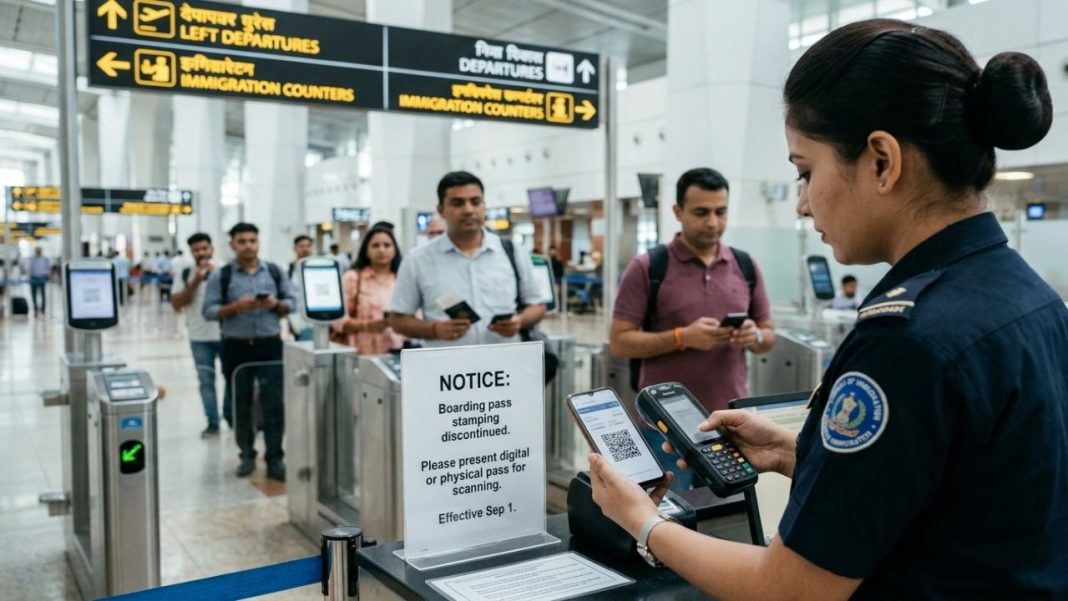

International passengers flying out of India will see one familiar airport ritual disappear from September 1, 2026. The Bureau of Immigration has decided to end mandatory stamping of physical boarding passes at immigration counters across international airports, according to officials cited in Business Standard’s August 24 report. Travellers will be able to show an electronic boarding pass on a smartphone instead, while printed passes will still be accepted without a stamp.
The change does not remove immigration clearance, passport checks or visa requirements. It simply drops a paper-based step that had become awkward as airlines moved check-in and boarding documents onto mobile phones. For passengers already travelling with digital tickets, the departure process should now involve less paper and one fewer mark to keep track of.
What Exactly Changes At Indian Airports From September 1?
Until now, many passengers departing India on international flights produced a physical boarding pass at the immigration counter, where it was stamped after clearance. From September 1, that stamping requirement will end at international airports across the country. Reports citing the Bureau of Immigration communication say e-boarding passes displayed on phones will be accepted for immigration processing.
Key points for travellers:
- A physical boarding pass will no longer be mandatory at immigration.
- An e-boarding pass on a smartphone can be shown at the immigration counter.
- Printed boarding passes remain acceptable, but immigration officers will not stamp them.
- Passports, visas and normal immigration checks continue as before.
- The change concerns international departures from India, not a waiver of immigration formalities.
The distinction is important. A traveller should not arrive expecting to bypass immigration simply because the boarding pass is digital. The officer still completes the required checks before the passenger proceeds towards the security and departure area.
Why Is India Removing Boarding-Pass Stamping Now?
Officials said the old process created inconvenience and could cause problems when stamps were improper, unclear, or placed incorrectly on boarding passes. Removing the stamping step fits a broader push to reduce repetitive manual checks at airports while retaining identity and immigration verification.
That direction is already visible in the government’s Fast Track Immigration – Trusted Traveller Programme. The official FTI-TTP portal says automated e-gates are currently available at 13 airports for eligible Indian nationals and OCI cardholders. Registered travellers scan their airline-issued boarding pass and passport, after which biometric authentication is completed at the e-gate. The service is free.
The Centre has also continued investing in digital immigration infrastructure. Under the March 2026 Cabinet approval, ₹1,800 crore was approved for the Immigration, Visa, Foreigners Registration and Tracking scheme for the five years ending March 2031. The government said average immigration-post clearance time had fallen from the earlier 5-6 minutes to around 2.5-3 minutes, while FTI-TTP can reduce clearance for registered users to about 30 seconds.
What Should International Travellers Carry After The New Rule Begins?
The safest packing habit does not change much. Travellers should carry a valid passport, the visa or travel authorisation required for their destination, and their airline boarding pass. The difference is that the boarding pass can now remain on the phone for immigration instead of being printed solely to receive a physical stamp.
A charged phone becomes more useful, so passengers relying on a digital pass may want an offline screenshot or wallet copy in case airport connectivity is weak. A printed backup can still be sensible for travellers who prefer paper or whose airline, transit airport or destination asks for one during another stage of the journey.
Passengers should also separate the new boarding-pass rule from passport stamping. Some registered FTI-TTP passengers already receive no immigration stamp when using e-gates; their travel details remain available through the programme. Media reports also say a separate pilot is examining wider removal of passport entry and exit stamps for Indian passport holders. That pilot is not the September 1 boarding-pass change.
Is This The Start Of A More Digital Immigration Process?
The September decision arrives while the Home Ministry is pressing airports to speed passenger movement. In a July 8 review of airport passenger facilities and immigration systems, the Home and Civil Aviation ministers discussed passenger facilities, airport security and immigration systems, while asking airlines to encourage registrations for FTI-TTP.
For regular international flyers, the immediate effect is modest but useful: fewer paper dependencies and no need to preserve a stamped boarding pass simply because immigration requires it. The bigger story is the direction of travel. Digital boarding credentials, biometric e-gates and centrally recorded travel data are steadily replacing small manual steps that once defined an international departure from India.
FAQs
Can I Use A Mobile Boarding Pass At Immigration From September 1?
Yes. Departing international passengers can show an electronic boarding pass on smartphones from September 1.
Will Printed Boarding Passes Still Be Accepted?
Yes. Printed boarding passes remain valid at immigration counters, but officers will stop stamping them.
Does The New Rule Remove Passport Or Visa Checks?
No. Passport, visa and immigration checks continue; only the boarding-pass stamping requirement is being removed.
When Does The Boarding-Pass Stamping Change Take Effect?
The change takes effect on September 1, 2026, at international airports across India for departures.
Should Travellers Still Keep A Backup Boarding Pass?
Yes. Keeping a charged phone or printed backup remains useful if airline procedures require one.