

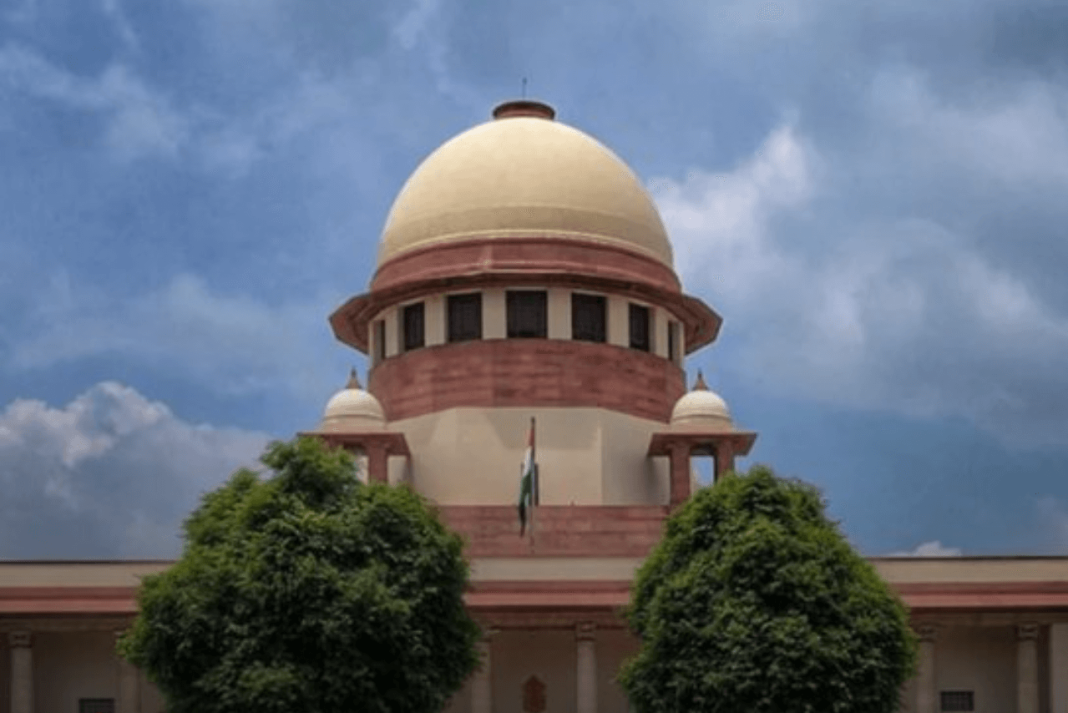

The Supreme Court is taking up a plea today, August 21, over CBSE’s On-Screen Marking (OSM) system for Class 12 answer sheets. The petition asks the Centre and the board to frame clear rules for digital evaluation, create stronger oversight and protect students whose marks may have affected college admissions. The case was earlier listed before a bench led by Chief Justice of India Surya Kant with Justices Joymalya Bagchi and V. Mohana.
Students have reported blurred scans, missing pages and mismatched answer books, while the government has reviewed portal and payment failures. At the previous hearing, the court asked CBSE to examine how affected students’ interests could be protected. No final order from today’s hearing was publicly available in the sources reviewed at the time of writing.
Why Has CBSE’s On-Screen Marking System Reached The Supreme Court?
CBSE introduced OSM for the 2026 Class 12 board examinations. Students wrote answers on paper, but answer books were scanned and uploaded for evaluators to mark on computers. CBSE’s official OSM explainer says the examiner, not artificial intelligence, awards marks and the software automatically totals scores.
The petition, filed by Rakesh Binjola through advocate Laxmikant Matadan Shukla, alleges that scanning and evaluation problems led to unreadable pages, missed answers and, in some cases, non-evaluation. It argues that students who cleared entrance tests could lose admissions because their CBSE scores fell below eligibility thresholds.
At the August 14 hearing, the Supreme Court told CBSE to find a way to protect affected students. The plea also seeks relaxation of the 75% or other Class 12 minimum-mark conditions for students who have cleared entrance examinations or secured provisional admission.
The proceedings were also covered through Bar & Bench’s official court update on X, which highlighted allegations involving scanning errors, portal glitches and problems with digital assessment.
What Went Wrong During CBSE’s First Full Digital Evaluation Rollout?
A Ministry of Education review of CBSE’s post-result process said nearly 18 lakh Class 12 students generated around 98 lakh answer sheets and almost 40 crore scanned pages. About four lakh students had accessed roughly 11 lakh scanned answer sheets through the portal by May 28.
CBSE says OSM was designed to remove totalling, posting and uploading errors, reduce physical handling and make checking more transparent. Its official FAQ also says evaluators could reject blurred scans and send those scripts for rescanning.
Yet complaints followed. Government and media reports said 68,018 answer books were rescanned because of poor image quality, while 13,583 had to be evaluated manually after scanning problems persisted. Reports also documented cases where students received the wrong scanned answer book.
The post-result system then faced login, heavy server load, and payment issues. The Education Ministry brought in experts from IIT Madras and IIT Kanpur to examine portal stability, server capacity, authentication and payment integration.
What New Rules Could The Supreme Court Push CBSE To Consider?
The court has not announced a final regulatory framework. Still, the reliefs sought in the petition and documented problems point to safeguards that could come under discussion:
- Mandatory scan-quality checks before scripts reach evaluators.
- Automatic warnings when pages are blurred, incomplete, or unreadable.
- Digital audit trails showing when and by whom each script was reviewed.
- Fixed deadlines for rescanning, verification and re-evaluation.
- Manual checking and admission protection while verified disputes remain unresolved.
The petition also seeks a high-powered committee to supervise reforms. CBSE already uses review layers inside OSM, allowing scripts marked by evaluators to be randomly checked by Additional Head Examiners or Head Examiners.
Speed is another issue. A correction arriving after a university closes admissions may be useless to a student. That is why the court’s earlier focus on protecting admissions could become as important as changes to the marking software itself.
What Should Students And Parents Watch After Today’s Hearing?
The first point is whether the court issues an interim direction for students facing immediate admission deadlines. The second is whether CBSE is asked to publish formal OSM rules covering scanning standards, evaluator review, grievance handling and correction deadlines.
Students should keep copies of scanned answer books, payment receipts, re-evaluation applications, revised marksheets and admission communications. CBSE’s examination circular page remains the main official source for notices on post-result facilities, verification and re-evaluation.
The wider debate is unlikely to end with OSM. Digital checking can reduce clerical errors, but only when scanning, software, evaluator workflow and grievance systems work together. The Supreme Court case could shape how CBSE uses technology in future board evaluations, especially where a digital fault can turn into a lost college seat.
FAQs
What is CBSE On-Screen Marking?
Teachers evaluate scanned answer sheets on computers, while students continue writing examinations on paper normally.
Why is the Supreme Court hearing the CBSE OSM plea?
The petition alleges digital evaluation errors affected marks, rechecking access and students’ college admissions directly.
Did CBSE use AI to check Class 12 answers?
No. CBSE says human examiners awarded marks; computers displayed scanned scripts and calculated totals automatically.
How many answer sheets were processed through OSM in 2026?
The government said around 98 lakh Class 12 answer sheets were handled during the exercise.
Could students get relief on the 75% admission rule?
The petition seeks relaxation for affected students, but any court-approved relief depends on judicial directions.