

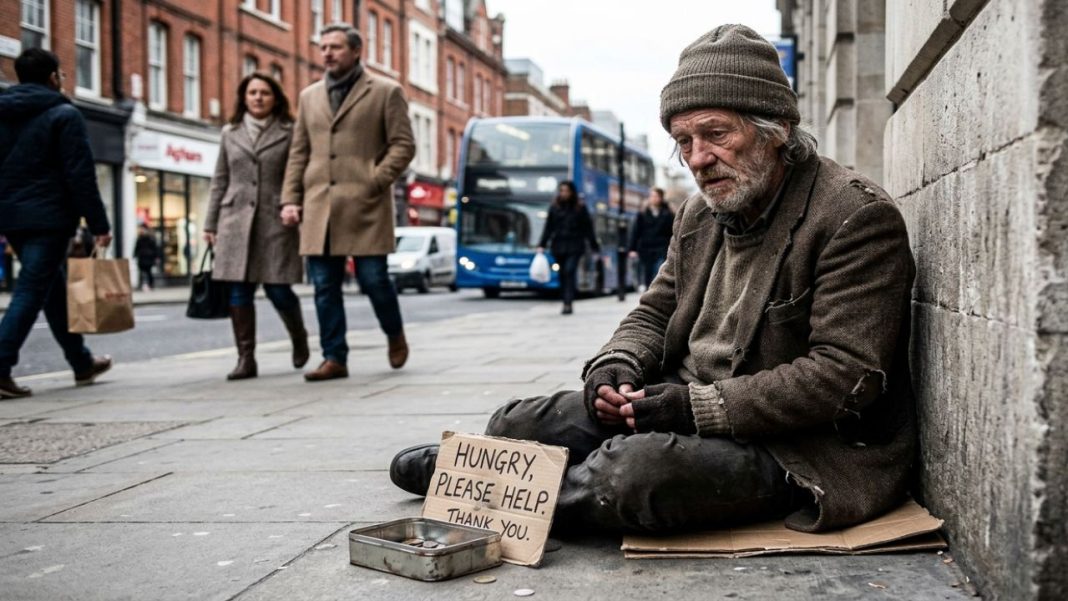

India’s Census 2027 is changing a question that appeared in earlier population counts. For the first time, “beggars and vagrants etc.” will not be recorded as a separate category under non-economic activity. People who might earlier have fallen under that label will instead be included within “others”.
The change arrives as India prepares its first fully digital Census and its first comprehensive caste enumeration since Independence. The official Population Enumeration questionnaire, notified on August 14, contains 40 questions covering caste, religion, education, employment, migration, parents’ particulars and identity-related details. The old beggar category is absent.
What Exactly Has Changed In The Census 2027 Questionnaire?
In Census 2011 and earlier exercises, “beggars and vagrants etc.” appeared among categories used for marginal workers and non-workers engaged in non-economic activity. Census 2027 keeps a question on non-economic activity, but the separate begging option has been removed.
A Times of India report on the Census 2027 change, citing official sources, says people in this group will now be placed under “others”. Census tables will therefore no longer provide a distinct nationwide beggar count broken down by age, religion, education, State or Union Territory through this classification.
The change is significant because older Census data became a standard reference for government replies, welfare discussions, and research on begging.
Key Census 2027 Changes To Watch
- Population Enumeration has 40 notified questions.
- Comprehensive caste data will be collected for all communities.
- “Natural calamities” has been added as a reason for migration.
- Father’s and mother’s particulars form part of the schedule.
- Beggars and vagrants lose their separate non-economic-activity classification.
- Snow-bound areas begin Population Enumeration from September 1, 2026.
Why Is India Dropping The Separate Beggar Category?
The main reason reported is data quality. Official sources told the Times of India that the category produced a very small return and was not considered reliable. Around 3.8 lakh non-workers and marginal workers identified themselves as beggars or vagrants in Census 2011, compared with roughly 6.3 lakh in 2001 and 5.4 lakh in 1991.
There is another problem: self-identification. Census enumerators record occupation or non-economic activity based on what respondents declare. Officials reportedly believe social stigma discouraged many people from describing themselves as beggars. If respondents avoided the label, the final number could not capture the actual population engaged in begging.
There is also a difference between Census tables. A Ministry of Social Justice and Empowerment reply based on Census 2011 recorded 4,13,670 “beggars, vagrants etc.” nationally, including 2,21,673 males and 1,91,997 females. That broader official total is often quoted in Parliament and welfare policy.
What Does India Lose When Beggars Are Counted Under ‘Others’?
Removing a weak category may prevent misleading precision, but it also creates a policy gap. Once the separate classification disappears, researchers and governments will not get a comparable 2027 national dataset showing where people engaged in begging live or how their age, education and other demographic characteristics have changed since 2011.
That gap is notable because targeted rehabilitation continues. According to the government’s August 2026 SMILE-Beggary update, the programme is operating across 216 cities and towns. By July 31, 2026, 10,446 people, including 2,824 children, had been rehabilitated, while ₹45.59 crore had been released since the scheme began.
The Census is therefore dropping a separate label while administrative surveys continue identifying people engaged in begging for rehabilitation. Future estimates may depend more on programme surveys, local bodies and specialised studies.
What Else Is New In Census 2027 And Why Is It Trending?
An official DD News report on the 40-question schedule says Population Enumeration will cover digital literacy, caste, migration, workplace travel, disability, bank accounts, Aadhaar, voter ID, passport details and COVID-19 vaccination location. “Natural calamities” has also been introduced as a migration reason, a timely addition after repeated floods, landslides, cyclones and weather-related displacement.
Census 2027 is also India’s first digital Census, with mobile-based enumeration and a self-enumeration option. Population Enumeration will ordinarily take place in February 2027, while Ladakh and designated snow-bound areas of Jammu and Kashmir, Himachal Pradesh and Uttarakhand will be covered from September 1 to September 30, 2026.
The bigger debate is whether removing “beggars and vagrants” improves statistical quality or makes a vulnerable population less visible in India’s largest official dataset. The label may disappear, but governments will still need credible numbers for rehabilitation, housing, child protection and social-security planning.
FAQS
Will Census 2027 Count Beggars Separately?
No. People previously classified as beggars or vagrants will be included under the “others” category.
Why Was The Beggar Category Removed?
Officials reportedly found earlier returns too low and unreliable because respondents avoided self-identifying as beggars.
How Many Beggars Did Census 2011 Record?
Census 2011 recorded 413670 beggars and vagrants across India, according to official government data available.
Will The Government Stop Rehabilitation Programmes For Beggars?
No. SMILE-Beggary continues surveys, rescue, rehabilitation, education, healthcare and livelihood support across participating cities nationwide.
When Will Census 2027 Population Enumeration Happen?
Most of India will be enumerated in February 2027; snow-bound regions begin during September 2026.