

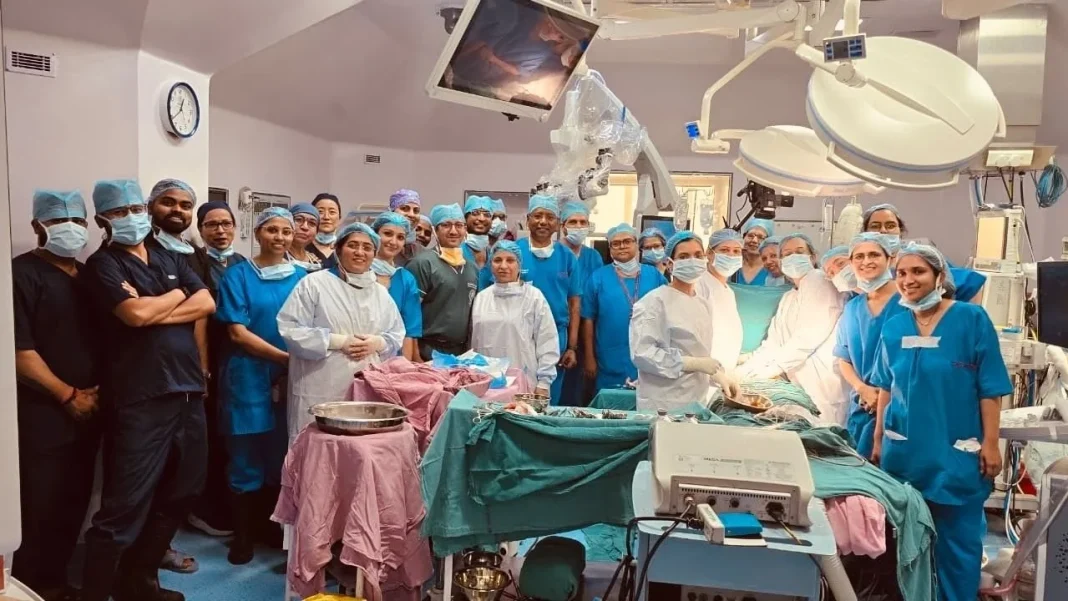

Doctors at AIIMS Delhi repaired a severe spinal defect in an unborn baby at 25 weeks of pregnancy on November 12, 2026. The institute announced the six-hour operation on November 14, describing it as India’s first open fetal surgery for the condition.
The AIIMS Delhi open fetal surgery treated lumbosacral myelomeningocele, a severe form of spina bifida affecting the lower spine. Operating before birth aims to protect exposed nerve tissue from further injury. It does not guarantee that the child will avoid disability or further treatment.
Key Highlights
- More than 30 clinicians and nurses participated after over five weeks of preparation.
- The procedure took place at AIIMS Delhi’s Neurosciences Centre.
- The family received the surgery free under Janani Shishu Suraksha Karyakram.
- Monitoring will continue through pregnancy, delivery and the newborn period.
What Doctors Repaired During The AIIMS Operation
In myelomeningocele, the spinal cord and its coverings protrude through an opening in the spine. The exposed tissue is vulnerable to damage, with possible consequences including leg paralysis and bladder or bowel problems. Hydrocephalus, a build-up of fluid in the brain, may also develop.
For open fetal repair, surgeons open the mother’s abdomen and uterus to reach the defect. They close the opening over the baby’s spinal tissue, then close the uterus so pregnancy can continue. The procedure is not a delivery: the fetus remains connected to the placenta through the umbilical cord. UCSF’s fetal treatment guidance explains this distinction.
At AIIMS, Dr Deepak Gupta led the neurosurgical work, while Dr Neena Malhotra and Dr K Aparna Sharma led the maternal-fetal medicine and obstetric teams. Microscopy and continuous ultrasound supported the operation.
The Times of India reported that mother and fetus were stable and recovering well, citing Dr Sharma. That describes their early postoperative condition; longer-term neurological outcomes remain to be assessed.
Why Repair The Spinal Defect Before Birth?
Closing the defect after delivery remains an established treatment. Prenatal surgery brings that protection forward, reducing the period during which nerve tissue remains exposed inside the womb.
The strongest comparison comes from the Management of Myelomeningocele Study, published in 2011. This randomised trial compared prenatal repair with surgery after birth in carefully selected pregnancies.
| Trial Outcome | Prenatal Repair | Repair After Birth |
| Actual shunt placement by 12 months | 40% | 82% |
| No hindbrain herniation at 12 months | 36% | 4% |
A shunt drains excess cerebrospinal fluid. Hindbrain herniation describes downward displacement of part of the brain, a complication associated with this condition.
The shunt figures represent a 42-percentage-point difference between the trial groups. They are not an AIIMS success rate or a prediction for this baby.
Two limits are essential when reading those results:
- Some children still needed shunts: Prenatal repair reduced the frequency of this treatment; it did not eliminate it.
- The findings concern selected pregnancies: They should not be applied automatically to every fetus diagnosed with spina bifida.
The NICHD’s explanation of the trial reports improved outcomes alongside significant risks to mother and baby. Both belong in discussions about treatment.
Risks, Eligibility And Care After Surgery
The mother undergoes major surgery for a possible benefit to her unborn child. Premature delivery and complications involving the uterine scar are among the concerns. The scar also affects planning for future pregnancies.
Being 25 weeks pregnant does not establish eligibility. Specialist teams assess fetal imaging alongside the mother’s health and pregnancy history. For example, Children’s Hospital of Philadelphia’s criteria require surgery no later than 25 weeks and six days, together with other conditions. Those are that centre’s criteria, not a published AIIMS booking rule.
For families seeking assessment, two questions need clear answers:
- What is the likely benefit for this particular defect? The lesion’s characteristics and associated findings influence the discussion.
- What care follows the operation? Pregnancy surveillance, delivery arrangements and long-term treatment must form part of the plan.
What The Announcement Establishes
Akashvani’s report confirms that this family received the procedure free under JSSK. It does not establish automatic access for every referred pregnancy. Clinical selection remains necessary.
AIIMS doctors also stressed prevention. Neural tube defects develop very early in pregnancy; folic acid before conception and during early pregnancy helps reduce their occurrence. Surgery does not replace that preventive care.
Frequently Asked Questions
Was the baby delivered during the surgery?
No. Open fetal repair allows surgeons to reach the spinal defect while the fetus remains connected to the placenta. The uterus is closed and pregnancy continues.
Will the child still need treatment after birth?
Further care may include treatment for hydrocephalus, bladder problems or mobility difficulties. Prenatal repair does not remove the need for specialist assessment and follow-up after birth.
Is this the world’s first open fetal surgery?
No. Specialised centres abroad already perform prenatal myelomeningocele repair. The AIIMS announcement concerns an Indian first, bringing an internationally established procedure into this public hospital setting.
Does open fetal surgery affect the delivery plan?
A uterine incision changes obstetric planning. Specialist programmes generally arrange caesarean delivery after open fetal surgery, with timing determined by recovery, pregnancy progress and any complications.
Can folic acid repair an existing spinal defect?
Folic acid helps prevent neural tube defects when taken before conception and during early pregnancy. It does not close an existing defect or replace specialist treatment.
More Health Stories You Shouldn’t Miss!
1. Can You Consult Government Doctors Online?
Check out how eSanjeevani offers free online doctor consultations across India.
2. Is Honey Safe for Newborn Babies?
Find why doctors advise against giving honey to newborns and infants under one year.
3. What Is WHO’s Traditional Medicine Plan?
Uncover WHO’s 10-year traditional medicine initiative and its connection to cancer care in India.
4. Who Qualifies for Free Pregnancy Checkups?
Explore how the PMSMA scheme provides free pregnancy checkups and antenatal healthcare services.
5. Why Is Swine Flu Dominating Delhi?
See the latest influenza developments in Delhi and the symptoms of H1N1 infection.