
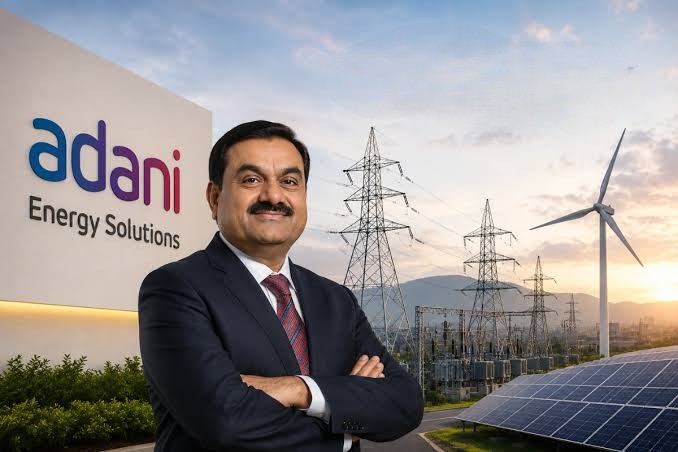

Adani Energy Solutions Ltd has secured an approximately ₹8,500 crore inter-state transmission project in Andhra Pradesh, putting fresh attention on Visakhapatnam’s clean-energy plans. Announced on July 24, 2026, the win is not a hydrogen-production contract. It is the high-voltage power backbone intended to feed proposed green hydrogen and green ammonia projects around Vizag, as also reported by Reuters.
The project is formally called “Transmission System for Proposed Green Hydrogen / Green Ammonia Projects in Vizag Area, Andhra Pradesh (Phase-I).” AESL emerged as the most competitive bidder under the Centre’s tariff-based competitive bidding route. The asset will sit inside the special purpose vehicle Vizag Power Transmission Ltd, and AESL has 30 months to deliver it.
What Exactly Has Adani Energy Solutions Won?
The new network is planned around an estimated 4,500 MW of demand. According to Adani Energy Solutions’ July 24 announcement, the scope includes a 4×1500 MVA, 765/400 kV GIS substation at Pendurthi and a 3×1500 MVA, 765/400 kV substation at Khammam-II.
It will add 1,582 circuit kilometres of lines and 10,500 MVA of transformation capacity. REC Power Development and Consultancy Limited’s tender page confirms the project was bid as an inter-state transmission system under tariff-based competitive bidding.
Key Highlights:
- Project value: about ₹8,500 crore
- Target power demand: around 4,500 MW
- Execution period: 30 months
- Added transmission lines: 1,582 circuit km
- Added transformation capacity: 10,500 MVA
- AESL transmission order book: above ₹80,000 crore
The scale is important because electrolysers used for hydrogen production consume large amounts of electricity. A high-capacity transmission system can move power from generation zones to industrial users instead of leaving major projects dependent on limited local connections. For projects expected to run for long hours, grid strength and dependable supply can directly influence plant utilisation.
How Will The Project Help Green Hydrogen And Green Ammonia Production?
Green hydrogen is produced by using renewable electricity to split water through electrolysis. Green ammonia then uses that hydrogen as a feedstock, combining it with nitrogen. The electricity source therefore plays a major role in how low-carbon the final product can be.
AESL’s project will not manufacture either product. Its job is to bring large volumes of power into the Vizag industrial belt, where planned hydrogen and ammonia facilities will need steady supply at industrial scale.
That becomes more relevant because NTPC Green Energy’s Pudimadaka green hydrogen hub is moving forward near Visakhapatnam. A government project note on the Pudimadaka hub puts investment at roughly ₹1.85 lakh crore, including 20 GW of renewable-energy capacity, with plans for 1,500 tonnes per day of green hydrogen and 7,500 tonnes per day of derivatives. NTPC also issued fresh enabling-infrastructure tenders in May 2026 at Pudimadaka.
Why Is Vizag Drawing Green Energy And Data Centre Investment?
There is another layer to this transmission story. AESL said the system will also support rising electricity demand across the Pendurthi-Vizag belt as data centres and digital infrastructure expand.
Google broke ground on its Visakhapatnam AI hub in April 2026 with AdaniConneX and Nxtra by Airtel. The development forms part of Google’s roughly $15 billion India AI-hub investment planned over 2026-2030 and includes gigawatt-scale data-centre operations, subsea connectivity and supporting energy infrastructure.
Vizag is therefore preparing for two electricity-intensive growth tracks at once: green molecules and AI computing. That puts substations, transmission lines and reliable power supply at the centre of the region’s industrial expansion.
What Does The Win Mean For AESL And India’s Hydrogen Push?
For AESL, the Andhra Pradesh project takes its transmission order book beyond ₹80,000 crore. The company said its network would reach 29,531 circuit km and transformation capacity would rise to 133,675 MVA after the addition.
The timing also fits India’s National Green Hydrogen Mission. It targets at least five million metric tonnes of annual green hydrogen production by 2030, backed by about 125 GW of associated renewable capacity. In February 2026, the government said incentives had been awarded for 862,000 tonnes per year of green hydrogen production and 3,000 MW per year of electrolyser manufacturing capacity.
Execution will now decide the impact. Right-of-way approvals, equipment delivery, renewable-power availability and coordination between generation, transmission and hydrogen projects can all affect timelines. The 30-month schedule therefore becomes an important marker for developers planning capacity around Vizag.
The ₹8,500 crore project is, in effect, an electricity highway. Its success will be measured by whether Vizag’s upcoming industrial projects receive enough reliable power to operate at scale.
FAQs
Is Adani Energy building a green hydrogen plant in Andhra Pradesh?
No. AESL is building transmission infrastructure to supply electricity to proposed green hydrogen projects nearby.
How much power demand will the Vizag transmission project support?
The system will support around 4,500 MW of demand from planned industrial and digital projects.
When is the Adani Energy Andhra Pradesh project expected to be completed?
Adani Energy Solutions has a 30-month contracted timeline to complete the new inter-state transmission system.
Why does green ammonia need large amounts of renewable electricity?
Green ammonia depends on renewable-powered hydrogen, making steady electricity supply essential for industrial-scale production operations.
What is India’s green hydrogen production target for 2030?
India targets five million metric tonnes of green hydrogen production annually by the year 2030.