

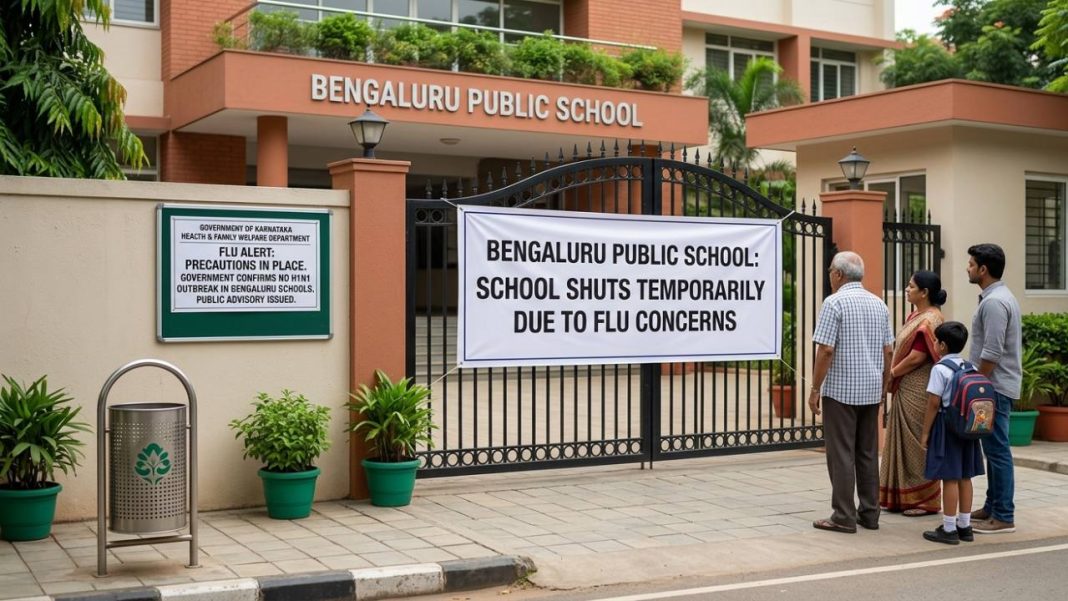

A Bengaluru school’s temporary closure has put seasonal flu back on parents’ radar. Clarence High School in Richards Town suspended offline classes after many students and staff reported fever, cough, cold, and body aches. The school said more than 500 students were absent on August 13 and that two H1N1 cases had been confirmed. Karnataka health officials later clarified that the confirmed cases involved two teachers, not students, and rejected reports of a large H1N1 outbreak.
Crucially, the 500-plus figure refers to absences, not confirmed H1N1 infections. The school said some families kept children home as a precaution. Karnataka Health Commissioner Gurudutt Hegde said no student had tested positive as of August 18.
What Happened At Clarence High School?
Clarence High School first closed on August 12 for deep cleaning after several students and employees developed flu-like symptoms. It reopened on August 13, but more than 500 students were absent. The school has about 2,500 students, so the number quickly drew attention. Twenty-one staff members were also absent.
The timing has added to concern because Bengaluru doctors had already reported a seasonal rise in respiratory infections during the monsoon. In July, hospitals were seeing more influenza A, including H1N1 and H3N2, alongside mild Covid-19 cases. Doctors linked the increase to weather changes, school reopening and close contact among children. The New Indian Express covered that wider city trend.
H1N1 is also part of India’s seasonal influenza surveillance. The NCDC continues to publish public guidance, laboratory information and annual vaccine composition updates, including material for the 2026 season.
Offline classes were then suspended from August 14 to August 18. Classes 6 to 12 moved online, while younger pupils stayed home. The school told The Indian Express that the absences had several causes and were not all confirmed illnesses.
Why Is The Government Saying There Is No H1N1 Outbreak?
The confusion comes from two descriptions of the same episode. The school said two H1N1 cases had been confirmed. Karnataka’s Health Commissioner later said the positive cases were two teachers receiving treatment and that no student had tested positive. He also called claims that around 500 students had tested positive “false”.
Officials are therefore disputing the idea of hundreds of confirmed student H1N1 cases, not the wider flu-like illness.
The New Indian Express also posted the development on its official X account. Parents should rely on updated school and health department information rather than assuming that every fever, absence or viral post represents a confirmed H1N1 infection.
The school also complained about waste and vendors near its gates. Civic authorities sanitised the area, but reports do not link vendors to the flu cluster. Influenza spreads mainly through respiratory droplets and close contact.
What Should Parents Do If Children Develop Flu Symptoms?
The National Centre for Disease Control’s seasonal influenza guidance lists fever, cough, sore throat, body aches and breathlessness among common warning symptoms. It also advises handwashing, covering coughs and sneezes, staying away from crowds when ill and avoiding self-medication.
For mild illness, parents should contact a doctor and keep the child home. NCDC guidance says mild influenza-like illness does not automatically require testing. Children aged five or below, especially those under two, are among higher-risk groups.
Parents can follow a few basic steps:
- Keep a feverish or coughing child home and reduce close contact with vulnerable relatives.
- Encourage fluids, rest, handwashing, and proper cough etiquette.
- Do not start antivirals or assume H1N1 without medical advice.
- Seek urgent care for difficult breathing, bluish lips, seizures, unusual sleepiness or poor fluid intake.
- Read the school’s latest notice before sending a recovering child back.
The NCDC’s home-care guidance specifically flags fast or difficult breathing, bluish lips, poor fluid intake, lethargy and seizures as warning signs in children.
What Happens Next For The School And Bengaluru?
Clarence High School says it plans to reopen on August 19. Parents should still check fresh school notices before sending children back.
The NCDC seasonal influenza page carries public guidance, technical documents and the recommended vaccine composition for 2026. Parents unsure about vaccination or testing should speak with a paediatrician.
The current picture is narrower than early outbreak headlines suggested. Two teachers have confirmed H1N1, many people reported flu-like illness, and student absenteeism rose sharply. Health officials, however, say there is no confirmed H1N1 outbreak among students. Staying home when sick, keeping hands clean, and acting quickly on breathing problems remain the most useful steps for families.
FAQs
Is Clarence High School closed because of H1N1?
It suspended offline classes after widespread flu-like illness and two confirmed teacher H1N1 cases emerged.
Did 500 Bengaluru students test positive for H1N1?
No. Karnataka health officials say no students tested positive; the 500 figure referred to absences.
When is Clarence High School expected to reopen?
The school said regular offline classes are expected to resume on August 19 after monitoring.
What symptoms should parents watch for in children?
Watch for fever, cough, sore throat, body aches, fatigue, breathing difficulty, vomiting or worsening illness.
When should a child with flu symptoms see a doctor urgently?
Seek urgent care for difficult breathing, bluish lips, seizures, severe lethargy or poor fluid intake.