

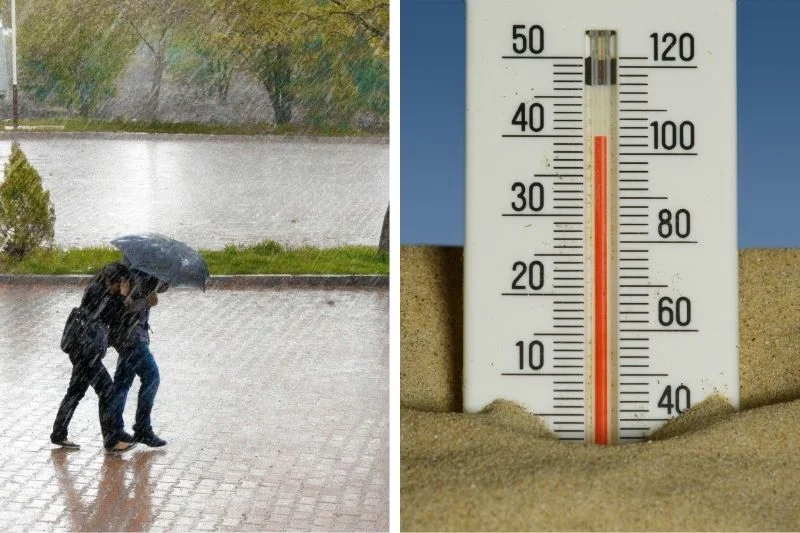

India is facing two sharp weather risks in the same week. The south, west coast and Northeast are dealing with heavy rain, while parts of north, central and northwest India continue to face heatwave conditions.
The India Meteorological Department’s 8 June 2026 update said the southwest monsoon has moved into more parts of the Arabian Sea, Maharashtra, Karnataka, Andhra Pradesh and Telangana. At the same time, IMD warned of heatwave conditions in isolated pockets of Delhi, Punjab, Rajasthan, Uttar Pradesh, Madhya Pradesh, Vidarbha and nearby regions.
Why Heavy Rain And Heatwave Are Happening Together?
India often sees this split weather pattern in early June because the monsoon does not cover the full country in one move. Moist winds from the Arabian Sea and Bay of Bengal bring rain to southern, coastal and northeastern regions first. Areas ahead of the monsoon line can still stay hot because dry land winds, rising temperatures and delayed moisture keep heat trapped.
This week, that split is visible. IMD said isolated heavy to very heavy rainfall of 7 cm to 20 cm is likely over Kerala, Karnataka, Tamil Nadu, Northeast India and Sub-Himalayan West Bengal during the next 7 days. It also warned of isolated extremely heavy rainfall over Karnataka and Kerala on 8 and 9 June 2026.
IMD Press Release, 8 June 2026
The heat side is also strong. IMD reported maximum temperatures above 40°C over Rajasthan, Punjab, Haryana, south Uttar Pradesh, Madhya Pradesh, Chhattisgarh, Coastal Andhra Pradesh and Yanam, north Madhya Maharashtra, Gujarat and Vidarbha. Brahmpuri in Maharashtra recorded the highest maximum temperature at 45.2°C.
That is why the weather map looks confusing for many people. Bengaluru, Kochi or Guwahati may worry about flooding, lightning and traffic disruption, while Delhi, Hisar, Jaipur, Agra or Bhopal may face heat stress, dust, strong winds and high afternoon temperatures.
Which States Need To Watch Heavy Rain This Week?
The heaviest rain risk is mainly around the monsoon belt and the rain-bearing systems near the coast, hills and Northeast. IMD said widespread rainfall is likely over Coastal Karnataka, Kerala, Mahe and Lakshadweep from 8 to 14 June. It also forecast heavy rainfall over Tamil Nadu, Puducherry, Karaikal, Kerala, Coastal Karnataka, Telangana and parts of Karnataka during different dates this week.
Northeast India also needs close attention. Arunachal Pradesh, Assam, Meghalaya, Nagaland, Manipur, Mizoram and Tripura are likely to see fairly widespread to widespread rainfall from 8 to 14 June. IMD also forecast very heavy rainfall over Arunachal Pradesh, Assam and Meghalaya during parts of the week.
Sub-Himalayan West Bengal and Sikkim are also in the rain risk zone. These regions are sensitive because heavy rain can affect hilly roads, low-lying towns, bridges, tourist routes and river catchments. IMD recorded very heavy rainfall at isolated places over Sub-Himalayan West Bengal, Sikkim, Assam and Meghalaya in the 24 hours ending 8 June morning.
IMD Weather Warning Post On X highlighted the same two-part alert. It said the southwest monsoon had advanced into more parts of the Arabian Sea, Maharashtra, Karnataka, Andhra Pradesh and Telangana on 8 June 2026. It also flagged heavy to very heavy rain and heatwave conditions in different parts of India.
Where Heatwave Conditions May Continue?
Heat risk remains active in north, northwest and central India because the monsoon has not fully reached these zones yet. IMD said heatwave conditions are very likely in isolated pockets over East Madhya Pradesh on 10 and 11 June, East Uttar Pradesh on 9 and 10 June, Haryana, Chandigarh and Delhi from 8 to 11 June, Punjab from 8 to 11 June, Vidarbha from 8 to 10 June, West Rajasthan from 8 to 11 June, and West Uttar Pradesh from 9 to 11 June.
Delhi and NCR also need care. IMD’s Delhi forecast said maximum temperatures may stay around 41°C to 43°C on 8 June, 42°C to 44°C on 9 and 10 June, and 40°C to 42°C on 11 June. It also warned of strong winds, thundery development and dust storm activity later in the period.
This means people should not treat a cloudy sky as automatic relief. Heat can remain dangerous even when winds rise or thunderstorms appear nearby. Outdoor workers, delivery riders, construction teams, traffic police, elderly people, children and people with heart or kidney conditions should reduce direct afternoon exposure.
Weather & Travel Updates Worth Reading
Planning A Valley Of Flowers Trip?
Check out the latest timings, ticket rates, and travel rules.
Want To Cut Power Costs?
Find simple ways to lower electricity bills during extreme heat.
Could Your AC Fail Unexpectedly?
Uncover key warning signs and safety steps to prevent damage.
How Can You Save More?
See practical tips to reduce AC usage and monthly expenses.
Is Northeast Travel Safe Right Now?
Look into current landslide risks and rain-related road disruptions.
Final Word
India’s weather this week is not following one single pattern. The monsoon is bringing strong rain to some regions, while heat remains active in places still waiting for steady moisture. The safest step is simple: check official IMD alerts daily, follow local advisories, and plan travel around both rain and heat risks.
For the latest alerts, readers should keep checking the IMD official website, district warnings and verified IMD social media updates.
FAQs
1. Why Is India Seeing Heavy Rain And Heatwave Together?
The monsoon has reached some regions, while dry heat remains active ahead of it.
2. Which States May See Heavy Rain This Week?
Kerala, Karnataka, Tamil Nadu, Northeast India, West Bengal and Sikkim need close weather tracking.
3. Which Areas Face Heatwave Conditions?
Delhi, Punjab, Rajasthan, Uttar Pradesh, Madhya Pradesh and Vidarbha may see heatwave conditions.
4. Should Travellers Avoid Rain-Hit Areas?
Travellers should check IMD alerts, avoid flooded roads, and follow district advisories before leaving.
5. Where Can People Check Official Weather Alerts?
People can check IMD’s website, district warning page, fishermen warnings and official X updates.


