
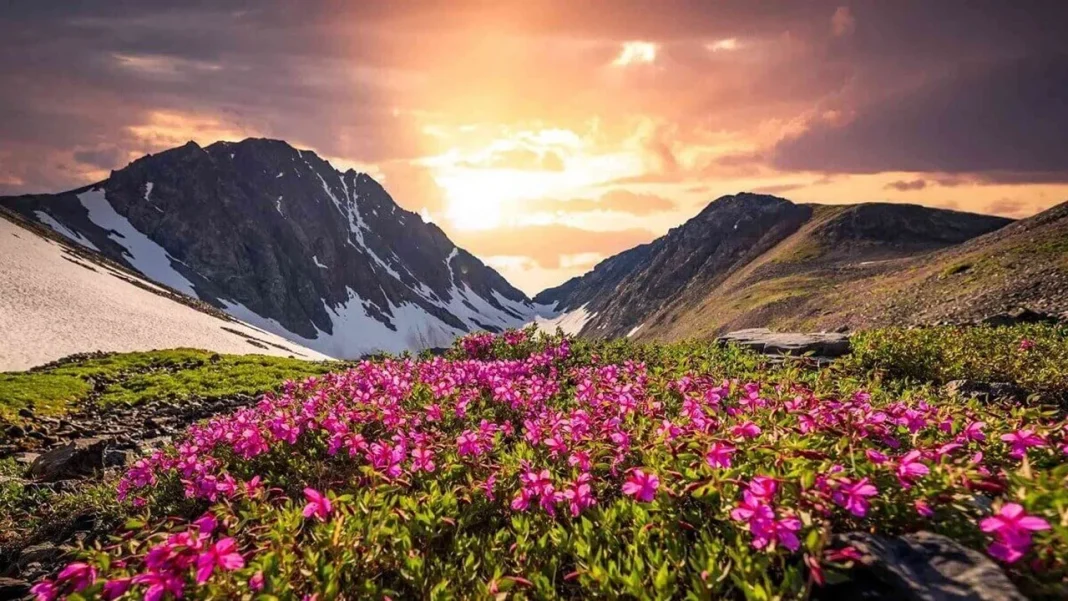

Uttarakhand’s Valley of Flowers has reopened for the 2026 season from today, giving trekkers, pilgrims, and monsoon travellers another window to enter one of India’s most loved alpine landscapes. News reports on June 2 said the park is now open to visitors, with entry permits available both online and offline, and the season set to continue till October 31, subject to weather and route conditions.
For travellers planning a June, July, or August trip, this year’s most important updates are simple: reach early, keep your permit ready, expect stricter eco-checks, and do not carry plastic waste into the valley. The Valley of Flowers remains a protected UNESCO-linked landscape in Chamoli district, and the rules are tighter because the trail is fragile, wet, and heavily dependent on clean visitor behaviour during the monsoon window.
What Has Changed For 2026 Visitors
The key travel update for 2026 is that the valley is open from June 1, and current travel guidance widely points to daytime access with early entry. Multiple current 2026 guides and last season’s reported timings align around gate access beginning at 7:00 AM, last entry around 2:00 PM, and exit by 5:00 PM. Because some official public pages are still light on exact gate-hour formatting, travellers should treat these timings as the working schedule and recheck before leaving Ghangaria.
Ticket pricing is the other major point. Recent reporting and current 2026 trekking guides largely converge around ₹200 for Indian visitors and ₹800 for foreign visitors, though some older travel listings still show lower historical rates. That is why travellers should keep a little buffer in budget and verify on the official state portal or at the forest counter before entry.
Air News also carried the reopening on its official Instagram presence, which helped confirm that the 2026 season has now started.
Entry Timings, Tickets, And Permit Tips
The Valley of Flowers is not a casual walk-in stop. It runs on a permit system, and permits are being issued online as well as offline this season. News On Air reported that both routes are active from opening day, which should help reduce the old last-minute queue problem at Ghangaria.
Before starting, keep these basics in mind:
- Reach the gate early because the weather usually gets less friendly as the day moves on.
- Keep a valid ID and permit copy ready, even if you booked online.
- Plan for a same-day return because an overnight stay inside the national park is not allowed.
Why Early Morning Entry Is A Better Call
June travellers often think opening week will be empty and easy. It is not always that simple. The trail can turn slippery after rain, clouds can build quickly, and visibility can drop without warning. Starting early gives more walking time, a safer pace on wet stone patches, and a better chance of seeing the valley before afternoon mist rolls in. Current travel reporting also notes that July to September remains the peak bloom period, while June gives fresher greenery and a thinner flower spread.
More Travel Ideas Worth Exploring
Which Weekend Escape Fits You?
Discover culture, beaches, and nature in one trip.
Can Jaipur Be Done Fast?
Check out the top experiences in just two days.
Why Did Argentina Leave WHO?
Uncover the reasons and global impact behind the move.
When Should You Visit Varkala?
Find the best months and scenic spots to explore.
Looking For Hidden India Gems?
Explore underrated destinations beyond the usual tourist trail.
Mandatory Plastic Rules and What You Cannot Ignore
The biggest rule for 2026 travellers is straightforward: do not treat this as a picnic trail. Current Valley of Flowers guidance for 2026 stresses no littering, no plastic waste, no flower plucking, no overnight stay inside the valley, and no drones. Older UNESCO-linked conservation material also shows why this line has hardened over time: the route has battled heavy waste pressure in the past, including plastic and cans.
That means packaged snacks, disposable bottles, wrappers, and throwaway plastic should be kept to the bare minimum or avoided altogether. Carry refillable bottles, reusable rain covers, and a small bag for your own waste. On this trek, “leave no trace” is not a stylish line. It is the rule.
What Travellers Should Expect On The Trail This Season
The Valley of Flowers remains one of the most watched monsoon treks in India because it mixes bloom, pilgrimage traffic toward Hemkund Sahib, and weather-led route changes in the same short season. The valley sits inside a protected high-altitude zone and is known for hundreds of flower species, with bloom peaking later in the season rather than on opening week itself.
Recent reporting from previous seasons also showed that route repair, temporary bridges, and landslide-prone stretches can shape the daily experience more than brochure photos do. That is the real trend around this trek now: visitors are returning, but the mountain still sets the pace. Anyone travelling in June should watch weather alerts, road conditions toward Govindghat, and state tourism advisories before locking hotel or transport plans.
FAQs
When did Valley Of Flowers open in 2026?
It reopened from June 1, 2026, and visitors started entering from the first day onward.
What are the entry timings now?
Current reporting points to 7 AM entry, 2 PM last entry, and 5 PM exit.
How much is the ticket price?
Most current reports show ₹200 for Indians and ₹800 for foreign visitors this season.
Is plastic allowed inside the valley?
No. Visitors are advised against plastic waste, littering, flower plucking, and other damaging activity.
Can travellers stay overnight inside the park?
No, overnight stay inside Valley Of Flowers National Park is not permitted for visitors.