

Spain’s 2026 FIFA World Cup victory produced a trophy, a second star and celebrations across Madrid. Yet one of the most powerful reactions came away from the podium. Iñaki Williams wrote an emotional message to his younger brother Nico Williams after Spain beat Argentina 1-0 in extra time, calling him a world champion and thanking him for carrying their family story onto football’s biggest stage.
Nico entered the final from the bench and helped create Ferran Torres’ 106th-minute winner. For Iñaki, however, the night was bigger than one assist or one medal. It was about Félix and María Williams, the parents who left Ghana, crossed the Sahara and built a life in Spain before either son became a professional footballer.
Iñaki Williams’ Tribute After Nico’s World Cup Triumph
Iñaki opened his official X message with words any older brother would struggle to write without emotion: Nico had won the World Cup and made history. He then moved beyond football, thanking him for making immigrant parents proud and helping Spanish supporters connect with families who leave home seeking safer, better futures.
The tribute landed because it did not sound prepared for cameras. It read like an older brother looking back at every early morning, school run, training session and family sacrifice. Iñaki ended with admiration, love and the simplest title Nico will ever carry: world champion.
Key Highlights
- Spain defeated Argentina 1-0 after extra time in the 2026 FIFA World Cup final.
- Nico Williams helped build the move finished by Ferran Torres in the 106th minute.
- Iñaki linked Nico’s achievement to immigrant families, sacrifice, work and hope.
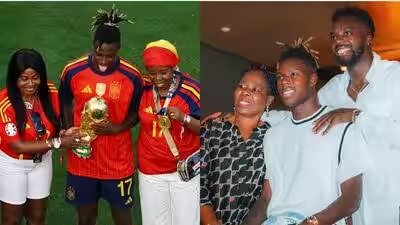
- Nico reportedly placed his winner’s medal around his mother María’s neck after the final.
Spain’s victory ended a 16-year wait for another men’s World Cup, following the 2010 triumph in South Africa. It also placed Nico among a rare group of players who have won the European Championship and World Cup in consecutive major tournaments.
From A Dangerous Journey To Football’s Biggest Stage
The Williams family story began long before packed stadiums and national-team shirts. Félix and María left Ghana and travelled through the Sahara, a journey Iñaki later described in a detailed family interview with The Guardian. María was pregnant with Iñaki during that period. After reaching Spain, the couple received help from people connected to Catholic charity work and eventually settled in the north.
Iñaki was born in Bilbao in 1994, while Nico was born eight years later in Pamplona. Their childhood was shaped by limited money, long working hours and a family determined to stay together. Football arrived as an opportunity, but never as an easy escape.
Iñaki Became More Than An Older Brother
With their father spending periods away for work, Iñaki often took on duties usually handled by a parent. He helped Nico get ready for school, prepared food, collected him and took him to football training. That bond later followed them into Athletic Club, where they became first-team teammates and won the Copa del Rey together in 2024.
Their international paths split without dividing the family. Iñaki chose Ghana, honouring his roots and a wish from his grandfather. Nico continued with Spain. FIFA had already highlighted the unusual Williams brothers’ World Cup journey when they represented two countries at the 2022 tournament.
Why Nico Williams’ Medal Carried Weight Beyond Spain
Nico’s rise has often been told through speed, dribbling and fearless wing play. The final added another chapter. Spain controlled Argentina for long stretches before Torres scored in extra time, with Nico involved in the decisive attack. The World Cup final report confirmed Spain’s second global title after a tense night in New Jersey.
The medal scene with his mother gave the achievement a quieter ending. María had carried Iñaki during the family’s migration and later watched both sons reach World Cups for different countries. Nico handing her the medal turned a sporting prize into a family keepsake.
There was a wider image too. Spain now holds the men’s World Cup after winning the women’s global title in 2023, while Nico belongs to a younger, more multicultural generation of Spanish players. Iñaki’s tribute captured that shift without turning his brother into a slogan. His point was personal: families can endure frightening beginnings, raise children between cultures and still see those children welcomed at the centre of a national celebration.
FAQs About Iñaki And Nico Williams
What did Iñaki Williams say about Nico’s World Cup win?
He praised Nico’s history-making victory and dedicated the moment to immigrant families seeking better futures.
How did Nico Williams influence the 2026 World Cup final?
Nico entered as a substitute and helped create Ferran Torres’ extra-time winning goal for Spain.
Where were Iñaki and Nico Williams born?
Iñaki was born in Bilbao, while younger brother Nico was born in Pamplona, northern Spain.
Why do the Williams brothers represent different national teams?
Iñaki represents Ghana to honour family roots, while Nico continued his international career with Spain.
What club do Iñaki and Nico Williams play for?
Both brothers play for Athletic Club, where they have shared matches and a domestic trophy.