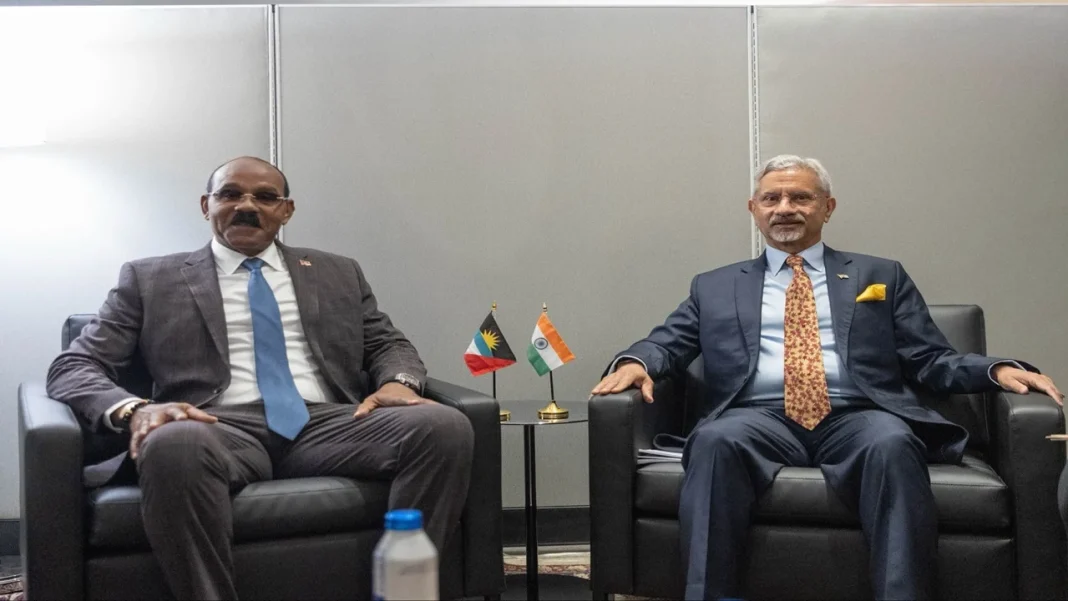

India and Pacific Island Countries have opened another round of high-level talks at the United Nations, with External Affairs Minister S. Jaishankar chairing the second FIPIC Foreign Ministers’ Meeting in New York on September 23, 2026. Held on the sidelines of the 81st UN General Assembly, the meeting reviewed progress since the 2023 FIPIC Summit and looked at the next areas for cooperation.
The talks covered healthcare, renewable energy, climate action, disaster resilience, education and capacity building. India also highlighted work on sea ambulances, solar-powered homes, digital training, space applications and ocean research. An official Fiji Foreign Ministry update said the meeting also discussed shared priorities and the changing Indo-Pacific landscape.
What Happened At The Fresh FIPIC Meeting At UNGA81?
This was the second Foreign Ministers’ Meeting under the Forum for India-Pacific Islands Cooperation, or FIPIC. Representatives from Samoa, Fiji, Marshall Islands, Palau, Papua New Guinea, Solomon Islands, Tuvalu, Tonga, Micronesia, Vanuatu and Nauru attended, along with the Pacific Islands Forum Secretary-General.
The ministers reviewed the 12-point Action Plan announced by Prime Minister Narendra Modi at the third FIPIC Summit in Port Moresby in May 2023. The original FIPIC III announcement included a regional speciality hospital, dialysis units, sea ambulances, IT support, scholarships and renewable-energy initiatives for the Pacific countries.
Jaishankar also wrote about the meeting on his official X account, describing India’s approach to Pacific cooperation as based on local demand, development and people-focused projects. His official X post from the meeting was published on September 23.
Healthcare And Renewable Energy Could See Faster Delivery
Healthcare is among the most visible parts of the current India-Pacific agenda. Work is progressing on a 100-bed super-speciality hospital in Fiji. India has also supplied haemodialysis machines to Papua New Guinea, Solomon Islands, Samoa, Palau, Nauru, Kiribati and the Marshall Islands, with more deliveries in progress.
Another closely watched project is the sea-ambulance programme. India has received requests from 12 member states for 20 units, with procurement underway and delivery expected by March 2027. An artificial-limb fitment camp planned in Fiji in October is expected to cover around 650 eligible patients.
Renewable energy is moving alongside health. According to the DD India government report, India has completed solarisation of 2,800 households across 14 Pacific Island Countries and trained 70 women solar engineers. Jaishankar also encouraged wider participation in the International Solar Alliance and Coalition for Disaster Resilient Infrastructure.
Digital Skills, Climate Resilience And Ocean Research Are Expanding
Training and technology could become a larger part of the partnership. India has proposed customised capacity-building programmes in which Pacific professionals could travel to India for focused training designed around priorities chosen by their governments. IT centres and trainer programmes have already been completed in several Pacific countries.
Climate risks remain central. Pacific governments have repeatedly placed climate change, disaster resilience and adaptation high on their regional agenda. At the New York meeting, India referred specifically to El Niño-related pressures and offered further cooperation covering climate adaptation, renewable energy and resilient infrastructure.
The newer areas are space and ocean science. India has reiterated plans for a Space Technology Application Centre in Papua New Guinea and a Sustainable Coastal and Ocean Research Institute at the University of the South Pacific. Progress has been slower than originally expected, but India said both commitments remain active.
What Could Change Next For India-Pacific Island Cooperation?
A notable diplomatic development is India’s placement in the Pacific Islands Forum’s “strategic partner stream”. Jaishankar said the development could help deepen regional cooperation. India also reiterated support for the Pacific Islands Forum’s 2050 Strategy for the Blue Pacific Continent, which covers climate, oceans, development, security, technology and regional cooperation.
The next phase could therefore concentrate on several visible areas:
- Faster sea-ambulance and health-equipment delivery; more solar and disaster-resilience projects; tailored training in India; space and ocean research; and closer coordination in regional and multilateral forums.
Fiji’s UNGA81 update also highlighted the Pacific Resilience Facility and called for continued partner investment in climate adaptation. That indicates island governments will continue seeking projects tied closely to Pacific priorities while India expands its development engagement across the region.
FAQs
What Is FIPIC?
FIPIC is India’s cooperation forum with 14 Pacific Island Countries covering development, climate and diplomacy.
Where Was The Latest FIPIC Foreign Ministers’ Meeting Held?
It was held in New York during the 81st United Nations General Assembly high-level week.
Which Cooperation Areas Were Discussed?
Ministers discussed healthcare, renewable energy, climate action, disaster resilience, education, technology and capacity building programmes.
What Is India Providing Under The Sea-Ambulance Programme?
India will deliver 20 sea ambulances requested by 12 Pacific member states by March 2027.
Why Is The Pacific Islands Forum Status Important?
It gives India another structured channel to engage Pacific governments on their regional priorities directly.
Global Diplomacy: India’s Growing Strategic Influence
Which Countries Back India’s UN Bid?
Check out the four European countries supporting India’s permanent UNSC seat.
What Did Jaishankar Discuss With Wang Yi?
Find out how border peace and trade shaped India-China talks.
Why Is UAE Among Influential Nations?
Uncover why the UAE ranked ninth among influential countries.
How Is India Deepening UAE Ties?
Explore Jaishankar’s Abu Dhabi visit and its broader strategic significance.