
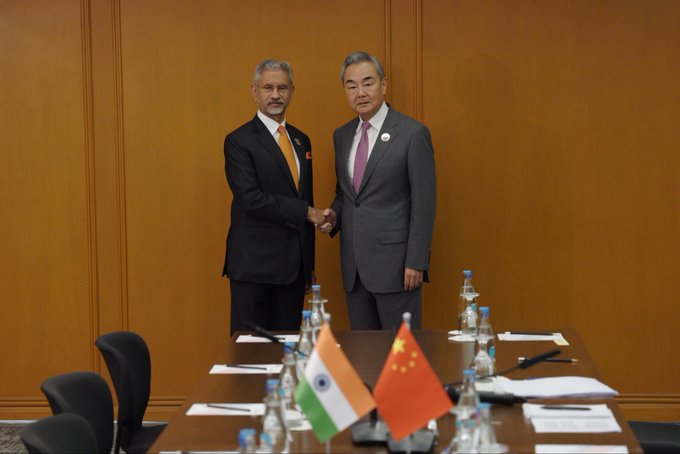

External Affairs Minister S Jaishankar and Chinese Foreign Minister Wang Yi met in Manila on July 22, placing border stability, trade barriers and supply-chain reliability at the centre of another India-China diplomatic push. Both ministers were attending ASEAN-related forums in the Philippines amid a tense global backdrop.
No dramatic agreement followed. Still, Jaishankar’s remarks showed where New Delhi believes the relationship must improve. India welcomed renewed travel and official exchanges, but made it plain that normal ties cannot rest on diplomacy alone while border and commercial concerns remain unsettled.
What Jaishankar Told Wang Yi In Manila
In his official X post, Jaishankar published his opening remarks and described the conversation as wide-ranging. He said relations had been gradually normalising since Prime Minister Narendra Modi and President Xi Jinping met in Kazan in October 2024. Their later Tianjin meeting during the 2025 SCO Summit reinforced that direction. The Ministry of External Affairs’ full remarks also recorded India’s concerns over trade, supply chains and dialogue mechanisms.
Jaishankar said a stable relationship should be built on mutual respect, mutual interest and mutual sensitivity. He also repeated a familiar diplomatic line: differences should not become disputes, and diplomacy must manage them.
The main signals from his remarks were:
- Peace along the border remains necessary before broader ties can operate normally.
- Fair market access and a less uneven trade relationship are high Indian priorities.
- Supply chains must become more predictable for Indian businesses and manufacturers.
- Direct flights, visas, pilgrimage routes and border trade should keep moving forward.
- Existing bilateral mechanisms need regular meetings and stronger political support.
The talks came during the ASEAN Foreign Ministers’ Meeting cycle. The official ASEAN schedule places the Manila gatherings between July 18 and 24, including the East Asia Summit Foreign Ministers’ Meeting and ASEAN Regional Forum.
Why Border Peace Remains The First Test
The border message was the sharpest part of Jaishankar’s statement. He called peace and tranquillity in border areas a prerequisite for normal relations. That wording links progress in trade, travel and political contact directly to stability along the Line of Actual Control.
India and China reached a patrolling arrangement for Depsang and Demchok in October 2024, clearing the final friction points left from the eastern Ladakh standoff. Modi and Xi met in Kazan days later and agreed to revive diplomatic mechanisms. The official Kazan meeting note said both leaders wanted relations handled from a long-term strategic perspective.
Yet disengagement does not settle the boundary question. Patrol arrangements require steady implementation, while commanders and diplomats must prevent fresh confrontations. Jaishankar’s call for “constant attention” indicates that New Delhi does not view recent improvement as irreversible.
Trade Deficit And Supply Chains Move Centre Stage
The Manila meeting also pushed economics higher up the agenda. India imported about $132 billion in goods from China during 2025-26. Bilateral trade reached roughly $151.10 billion, leaving India with a deficit above $100 billion. These figures explain why Jaishankar raised fair market access rather than speaking only about larger trade volumes.
Indian factories depend heavily on Chinese machinery, electronics, solar components, chemicals and industrial inputs. That dependence makes export controls, customs delays or supply interruptions costly. New Delhi wants reliable access to essential inputs while seeking better entry for Indian pharmaceuticals, agricultural goods, technology services and other exports.
India has also eased some investment restrictions for Chinese companies in selected industries. Direct flights have resumed, business-visa processing has been simplified, and border trade is expected to restart on August 1 after a six-year pause. These moves show cautious reopening, not a return to the pre-2020 relationship.
What Happens Next For India-China Ties
Several visible links have returned: direct air services, an updated visa regime, the Kailash Manasarovar Yatra and plans to restart border trade. Jaishankar also thanked China for supporting activities during India’s 2026 BRICS chairship. The next phase will depend on smooth implementation and whether trade discussions deliver measurable access for Indian exporters.
Wang Yi’s June visit to New Delhi added momentum before Manila. China said it was ready to implement the leaders’ consensus, improve trust and properly handle sensitive issues. That language is positive, but India’s position remains guarded: border stability must hold, economic friction must reduce, and diplomatic channels must stay active.
The Manila exchange therefore looks less like a breakthrough and more like a repair job. Relations are moving, travel is reopening, and leaders are talking again. The harder work lies in preventing border setbacks and converting diplomatic warmth into balanced, dependable cooperation.
Frequently Asked Questions
Why did Jaishankar meet Wang Yi in Manila?
Both ministers attended ASEAN-linked meetings and reviewed border, trade, travel and wider geopolitical developments together.
What did Jaishankar say about the India-China border?
He said lasting border peace remains necessary before relations between neighbours can normalise again gradually.
Which economic concerns did India raise with China?
India raised market access, its trade deficit and unpredictable supply chains affecting domestic manufacturers directly.
What people-to-people measures have resumed?
Direct flights, revised visas, Kailash Manasarovar Yatra and border trade have returned or begun restarting.
Did the Manila meeting announce a new agreement?
No major pact was announced, but both sides continued diplomatic engagement across difficult bilateral issues.