

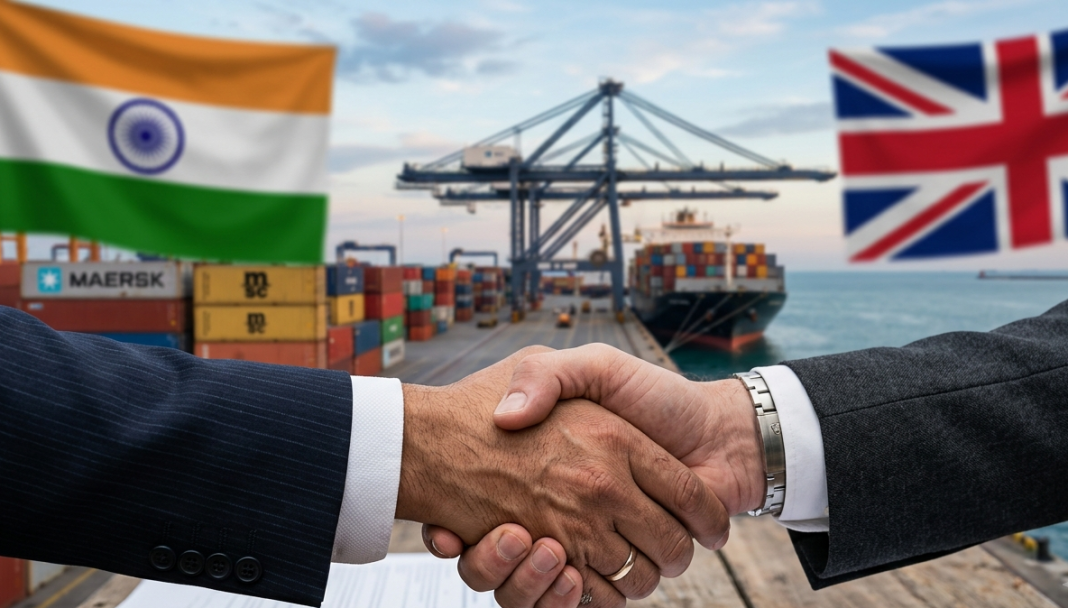

The India-UK Free Trade Pact enters into force on July 15, 2026, turning a deal signed nearly a year ago into an active trading framework. From today, eligible goods can claim lower or zero tariffs, provided exporters follow product-origin and customs rules.
The first claims can now be filed at customs under the new terms. The rollout covers more than merchandise. The Comprehensive Economic and Trade Agreement, or CETA, begins alongside a social-security arrangement for temporary workers. Together, the measures could reshape exports, premium imports, professional assignments, and business bids between both countries. The official Department of Commerce post on X confirms the July 15 start.
What Changes Under The India-UK Free Trade Pact From Today?
The first visible shift is tariff access. According to the Ministry of Commerce and Industry’s CETA announcement, nearly 99% of Indian exports receive zero-duty access to the UK, covering almost all current trade value. Britain says India will remove tariffs on 64% of its tariff lines immediately, with 85% becoming duty-free after phased reductions over 10 years.
Key changes beginning from July 15 include:
- Zero UK customs duty for qualifying Indian textiles, garments, leather goods, footwear, marine products, and processed foods.
- Lower Indian tariffs on several British products, including whisky, gin, cosmetics, machinery, and medical equipment.
- A five-year social-security contribution exemption for eligible employees temporarily posted between India and Britain.
- Wider services access covering IT, finance, engineering, education, healthcare, telecommunications, and professional consulting.
- New opportunities for British suppliers to compete for covered Indian government procurement contracts.
The agreement does not remove every duty overnight. Product schedules, quotas, and transition periods differ, while rules of origin decide whether a shipment qualifies. Exporters claiming preferential treatment must keep the required records and use declarations dated July 15, 2026, or later, as explained in the UK government’s rules of origin guidance.
Which Indian Export Sectors Could Gain First?
Labour-intensive industries are among the immediate winners. UK tariffs previously reaching 12% on textiles and clothing, 16% on leather and footwear, 21.5% on marine products, and 70% on some processed foods can fall to zero for qualifying Indian goods. That gives exporters from Tiruppur, Surat, Kanpur, Agra, Kochi, and other manufacturing centres a sharper price position.
Pharmaceuticals, chemicals, auto components, engineering goods, gems, jewellery, and handicrafts also gain improved access. Yet tariff removal alone will not secure orders. British buyers will still check safety standards, labelling, traceability, delivery reliability, and environmental claims.
Services form another large part of the pact. India says the agreement covers 137 service sub-sectors and creates annual mobility opportunities for 1,800 Indian chefs, yoga instructors and classical musicians. IT companies, consultants, engineers, and education providers may also find contractual work easier to pursue, although normal visa conditions remain in place.
Will British Whisky And Luxury Cars Become Cheaper?
Whisky is the headline consumer story. India’s tariff on qualifying British whisky and gin drops from 150% to 75% on day one, then gradually reaches 40% by year 10. The UK trade deal summary also provides quota-based tariff cuts for British cars, with duties potentially falling from up to 110% to 10% for eligible vehicles.
Shop prices may not fall in the same proportion. State alcohol taxes, registration charges, exchange rates, freight costs, and dealer margins will still shape final bills. Car concessions are also limited by quotas and eligibility conditions, so every imported model will not automatically receive the lowest rate.
What Should Exporters, Employers, and Consumers Watch Next?
Businesses should first check tariff codes, origin conditions, quotas, and documentary requirements. A product shipped from India does not qualify merely because the exporter is Indian. It must meet the pact’s origin test and complete customs procedures correctly.
Employers will closely monitor the Double Contributions Convention. Eligible workers temporarily sent by an India-based employer to Britain, or vice versa, can continue contributing only to their home system for up to 60 months. The official DCC explainer says this applies to detached workers, not everyone moving abroad for a new job.
Consumers should expect a gradual movement rather than a July 15 price reset. Fresh contracts, customs clearances, and inventory cycles take time. The larger test will be whether businesses use the pact to widen supply, cut landed costs, and build lasting trade routes. UK modelling estimates bilateral trade could rise by £25.5 billion annually in the long run, though such forecasts remain uncertain.
FAQs
When did the India-UK Free Trade Pact start?
The pact entered into force on July 15, 2026, after both countries completed ratification procedures.
Will all Indian exports enter Britain duty-free?
Nearly 99% receive zero-duty access, but exporters must fully meet origin, documentation, and customs requirements.
Will Scotch whisky become cheaper immediately in India?
Import duty falls immediately, though taxes, margins, freight, and existing stock may delay retail reductions.
Does the pact create new UK work visas?
No, it supports specified business mobility routes while leaving Britain’s immigration and visa rules unchanged.
Who benefits from the social-security agreement?
Eligible posted employees and employers avoid dual contributions during assignments lasting up to 60 months.