

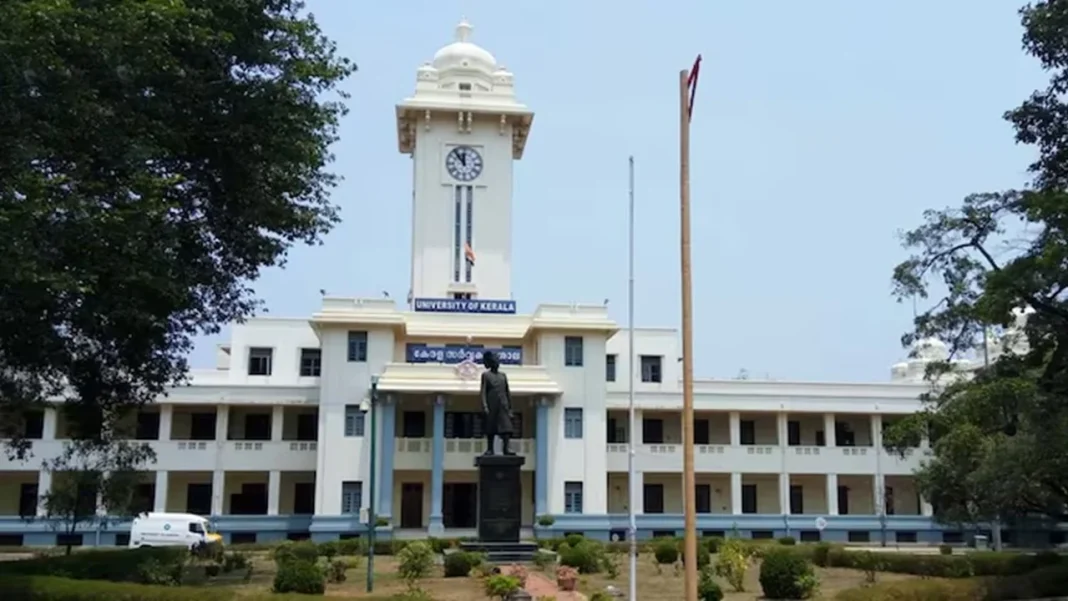

Kerala’s Higher Education Minister Roji M John has said there is no decision to ban student politics at the University of Kerala. His clarification came after a draft Students’ Code of Conduct triggered claims that campus political activity, protests and student-organisation work could face sweeping restrictions. The minister said the circulating document is only a preliminary draft before a Syndicate sub-committee, not an approved university rule.
The row has arrived at a tense moment for Kerala University, where student-union elections and recent protests have already kept campus politics in the headlines. For students, the key distinction is simple: a draft is being discussed, but no ban has been formally adopted.
What Roji M John Actually Said About Student Politics
Speaking to reporters on September 20, John rejected the claim that Kerala University had decided to end student politics. He said the government’s position is the opposite: political participation by students should continue on campuses, and students old enough to vote should also be able to take part in campus democratic activity.
Key points from the minister’s clarification:
- No final decision has been taken to ban student politics at Kerala University.
- The document being circulated is a draft prepared for discussion, not an approved regulation.
- A Syndicate sub-committee is expected to examine it and suggest changes.
- Student organisations are expected to be consulted before any final version reaches the Syndicate.
- John said the government would not support a rule that removes students’ organisational or democratic rights.
John also argued that universities should not be reduced to classrooms, examinations and degrees. In his view, campuses should remain places where students debate public affairs, elect representatives and take part in democratic processes.
Where Did The Kerala University ‘Ban’ Claim Come From?
The controversy began with a draft titled the Kerala University Students’ Code of Conduct Regulations 2026. Reports said the proposal contained restrictions on political slogans, protests, political campaigning and organisational activity in university departments and affiliated colleges.
That language quickly produced the impression that a broad ban was on the way. But John said the document had not been approved by the Syndicate. He said it emerged from work connected to Kerala High Court directions asking universities to frame rules governing political activity and campus discipline.
The court process followed petitions concerning campus violence, including the 2018 murder of student leader Abhimanyu at Maharaja’s College in Kochi. The High Court had referred to a 2005 Mahatma Gandhi University draft code as a possible model for other universities.
That older document is important because some of its clauses were controversial even when first proposed. The present Kerala University exercise is therefore a regulatory discussion, not proof that a ban has already become policy.
Why The Issue Has Become Politically Sensitive Again
The timing has added heat. Only days earlier, KSU activists protested at Kerala University headquarters over alleged bias towards SFI in college-union elections. Some protesters climbed the university building, bringing police and fire personnel to the scene. ANI’s official X account posted video of the September 18 protest. Watch ANI’s official X post
That episode did not concern the new draft code directly, but it showed how charged student politics already was on campus before the “ban” reports appeared.
Opposition leader Pinarayi Vijayan criticised the reported restrictions, while SFI, KSU and sections of university employees also objected to the draft. John responded that critics were treating an unfinished document as though it were already in force.
The University of Kerala’s official website also shows that college-union election activity was continuing in September, including a September 17 notice postponing elections at two colleges after a KSU protest. Check the University of Kerala’s official notices. That makes the distinction between an active campus-political system and a proposed code especially relevant.
What Happens Next For Kerala University Students?
The draft still has several steps to clear. According to the minister, the sub-committee must examine the text, propose amendments and seek views from student organisations. Only after further discussion can a final proposal go to the University Syndicate for approval.
Until that happens, reports of a completed student-politics ban go beyond what has officially been decided. The next debate is likely to centre on what limits, if any, can be placed on protests, campaigning and organisational activity while preserving students’ political and organisational rights.
FAQs
Has Kerala University banned student politics?
No. The minister says no final university decision banning student politics has been approved yet.
Why was a student code being prepared?
Kerala High Court directions prompted universities to develop rules covering campus political activity and discipline.
Will student organisations be consulted?
Yes. The minister says student groups will be asked for views before final Syndicate approval.
What did the leaked draft reportedly restrict?
Reports said it proposed curbs on slogans, protests, campaigning and some organised political activity on-campus.
Is the draft already legally in force?
No. It remains under discussion and requires further review, consultation and formal Syndicate approval first.
Kerala in Focus: Key Updates You Should Know
When Will Kerala Officially Become Keralam?
Check out the proposed name change and when it could take effect.
What Happens After The SAY Exam?
Find out what students can expect after passing the Plus Two supplementary exam.
Which KSRTC Routes Get Extra Buses?
Browse the routes receiving additional services during the Onam festival.
Which Kerala Areas Face Rain Risks?
See the areas affected by landslides, flash floods, and heavy rain.
Are Fake Hospital Apps Stealing UPI Money?
Uncover how fake hospital apps can target OTPs and UPI payments.